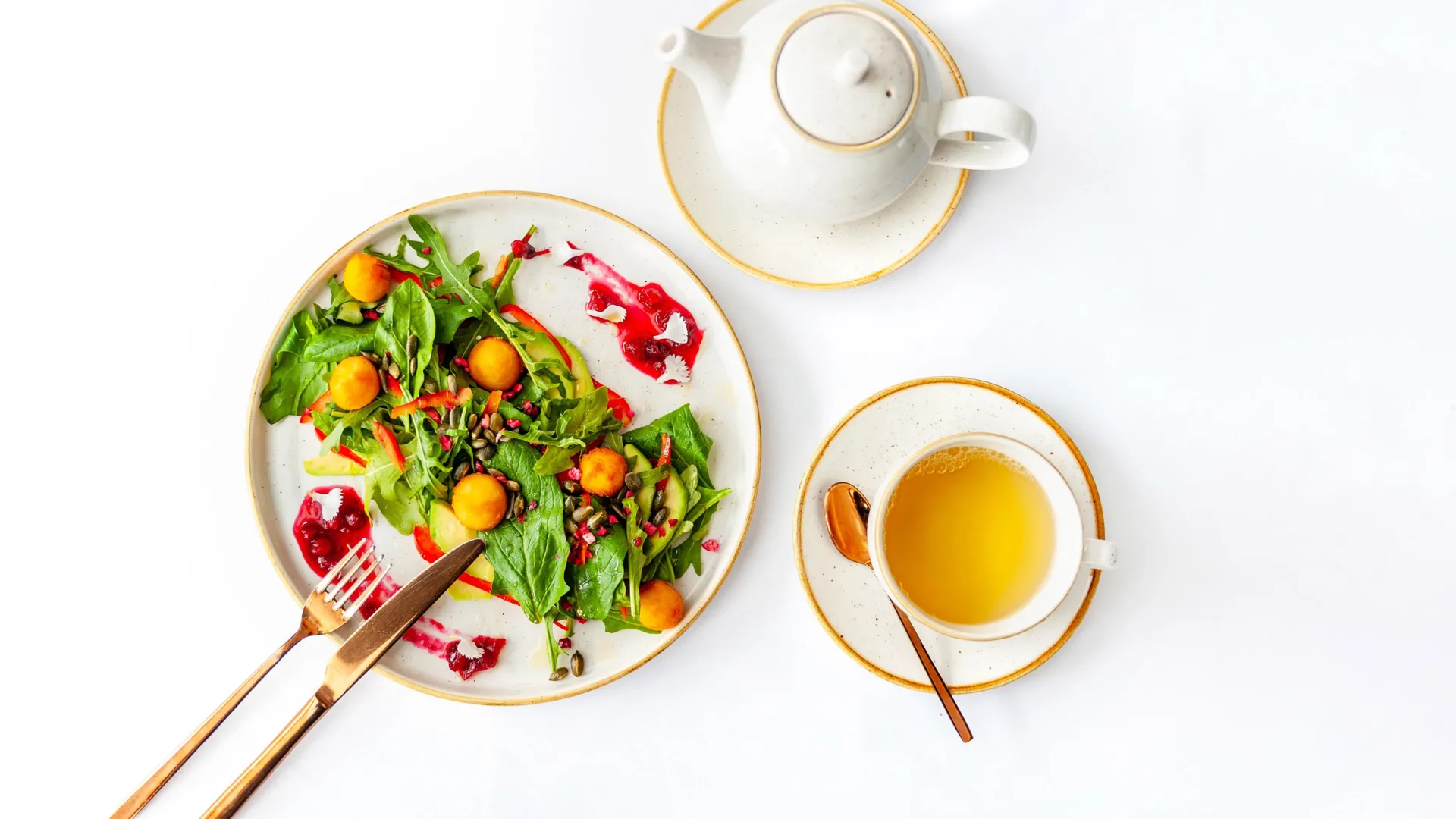
Following a green-Mediterranean diet — which includes green tea and the aquatic plant Mankai — is associated with slower brain aging, according to a study.
The study, published recently in the journal Clinical Nutrition, was co-authored by researchers at Ben-Gurion University, Harvard T.H. Chan School of Public Health, and the University of Leipzig.
Neurological conditions, including mild cognitive impairment and Alzheimer’s disease, have been associated with a higher brain age gap — a brain that’s “older” than would be predicted given a person’s chronological age. To evaluate the impact of diet on brain age, researchers analyzed data from around 300 participants in the DIRECT PLUS trial, one of the longest-running studies on the link between brain and diet. Over the course of 18 months, the participants consumed one of three diets: a standard healthy diet; a traditional calorie-restricted Mediterranean diet, which was low in simple carbohydrates, rich in vegetables, and replaced red meat with poultry and fish; and the green-Mediterranean diet, which additionally included green tea and Mankai.
When the researchers measured protein levels in the participants’ blood, they found that higher levels of certain proteins were associated with accelerated brain aging. Further, they found that those protein levels decreased in participants who followed the green-Mediterranean diet. The researchers hypothesized that the protective effect of the diet could be a result of the anti-inflammatory molecules contained in green tea and Mankai.
“Studying the circulating proteins in blood allows us to observe, in a real-life setting, how the brain’s aging processes are influenced by lifestyle and dietary changes,” said Anat Meir, postdoctoral research fellow at Harvard Chan School, who co-led the study. “This approach gives us a dynamic window into brain health, helping to reveal biological changes long before symptoms may appear. By mapping these protein signatures, we gain powerful new insight into how interventions, such as diet, may help preserve cognitive function as we age.”
Senior author of the study was Iris Shai, adjunct professor of nutrition at Harvard Chan School. Other Harvard Chan School co-authors included Dong Wang, Frank Hu, and Meir Stampfer.