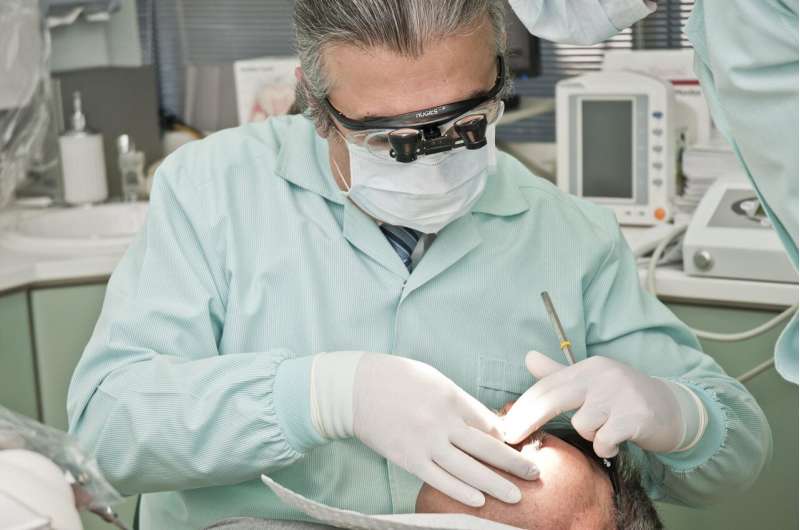
Federally Qualified Health Centers (FQHCs) are a crucial component of the dental safety net and provide oral health services to those who might not otherwise have access to needed care, including low-income individuals, the uninsured and Medicaid beneficiaries.
A new study from the Oral Health Workforce Research Center at the University at Albany’s Center for Health Workforce Studies examined factors influencing the delivery of oral health services at FQHCs. The findings, recently published in the spring issue of the Journal of Public Health Dentistry, shed light on how workforce capacity, federal funding and Medicaid policy shape access to dental care for underserved populations across the United States.
The researchers analyzed data on FQHC utilization from 2012 to 2021 to evaluate trends in oral health services at over 1,000 FQHCs nationwide. Their results indicate that capacity-building steps such as investing in skilled providers and improving infrastructure indeed enable more people to access essential health services. In short, if you build it, they will come.
The study identified three leading factors that increased dental service utilization:
- Increasing the number of oral health staff at FQHCs—particularly dental hygienists and therapists—was associated with more people using preventive and restorative dental services.
- Capital development grants showed a strong return on investment. For every 1% increase in capital development grants added to a center’s total revenue, preventive dental visits increased by 32%. These grants, which are allocated by programs funded by the Health Resources and Services Administration, aim to increase health centers’ capacity to provide quality health care services through initiatives such as expanding school-based health centers and repairing facilities destroyed or damaged by natural disasters.
- FQHCs located in states with comprehensive Medicaid dental coverage for adults saw more people using oral health services (including preventative and restorative care as well as oral surgery), compared to states with emergency-only coverage.
“Our findings provide valuable information for policymakers and health care leaders,” said Center for Health Workforce Studies Director Jean Moore, who is also a research assistant professor at UAlbany’s College of Integrated Health Sciences.
“Strategic investments to expand workforce capacity, infrastructure and Medicaid dental coverage can help improve access to dental services in the safety net and reduce oral health disparities, especially in underserved communities.”
More information:
Jinman Pang et al, Key factors associated with oral health services at Federally Qualified Health Centers, Journal of Public Health Dentistry (2025). DOI: 10.1111/jphd.12659
Citation:
New study identifies key ingredients to expanding dental care in the safety net (2025, July 8)
retrieved 9 July 2025
from https://medicalxpress.com/news/2025-07-key-ingredients-dental-safety-net.html
This document is subject to copyright. Apart from any fair dealing for the purpose of private study or research, no
part may be reproduced without the written permission. The content is provided for information purposes only.