
Recent advancements in digital and immersive technologies underscore the need for transformation in dental education; however, a new international study reveals that their adoption remains strikingly limited. Traditional simulations, such as phantom heads and benchtop exercises, still dominate about 80% of clinical training time, while haptic virtual reality (HVR) and mixed reality together account for only about 14% and are used in just a small minority of postgraduate programs.
Source link
Adoption of immersive technologies in dental education remains limited on a global scale
April 14, 2026
0 Comments
Explore More
Natural tooth count indicates long-term survival following pancreatic cancer surgery
Oral health is known to be linked to overall health, and research has shown relationships with a variety of diseases. Impaired oral health has been linked to prognosis in colorectal
Opportunities, risks, and responsibilities for oral sciences

Credit: Google DeepMind from Pexels A new perspective article jointly published in the Journal of Dental Research and JADA Foundational Science highlights the transformative potential of generative artificial intelligence (AI)
Space conditions can cause gum inflammation and bone loss, say scientists
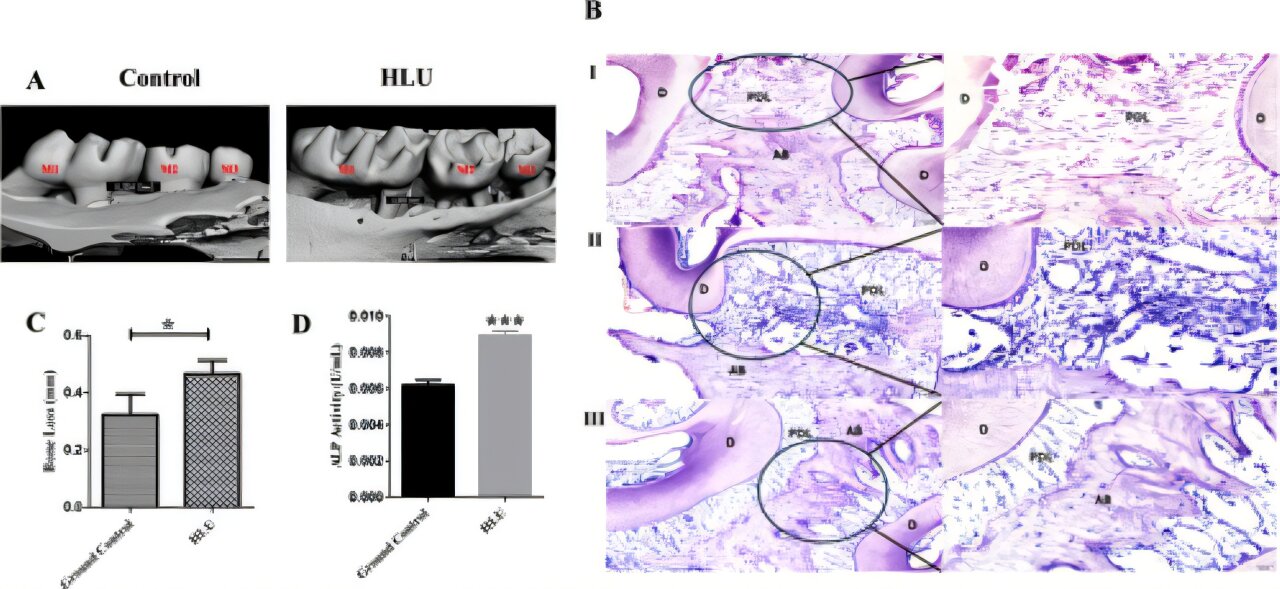
Micro-CT analysis and 3D reconstructions of the left maxillary bone with ligature-induced periodontitis between the first and second molars in ground control and hindlimb unloaded (HLU) ligature-induced periodontitis mice. Credit: