
National Eye Institute (NEI) scientists have found that the way the retina metabolizes glucose directly controls which genes get switched on and off in light-sensing photoreceptors. The findings suggest that metabolic disruptions seen in aging and disease may directly destabilize the gene expression needed to keep photoreceptors healthy, opening new avenues for treating retinal diseases such as age-related macular degeneration (AMD), a leading cause of vision loss. The work is published in PLOS Genetics.
Source link
How sugar fuels sight: Glucose metabolism linked to epigenetic and gene expression changes in the retina
May 5, 2026
0 Comments
Explore More
Scientists reveal new genetic risk for severe macular degeneration
A new study published in Nature Communications reveals the specific genetic factors linked to the presence of reticular pseudodrusen—deposits that drive vision loss and are found on the retina of
Gene therapy can improve vision in young children with AIPL1-associated retinal dystrophy

Methods to measure visual acuity and visual evoked potentials. Credit: The Lancet (2025). DOI: 10.1016/S0140-6736(24)02812-5 Researchers from the NIHR Moorfields Biomedical Research Centre and University College London have found that
Scientists create artificial retina phantom to standardize eye disease diagnosis equipment
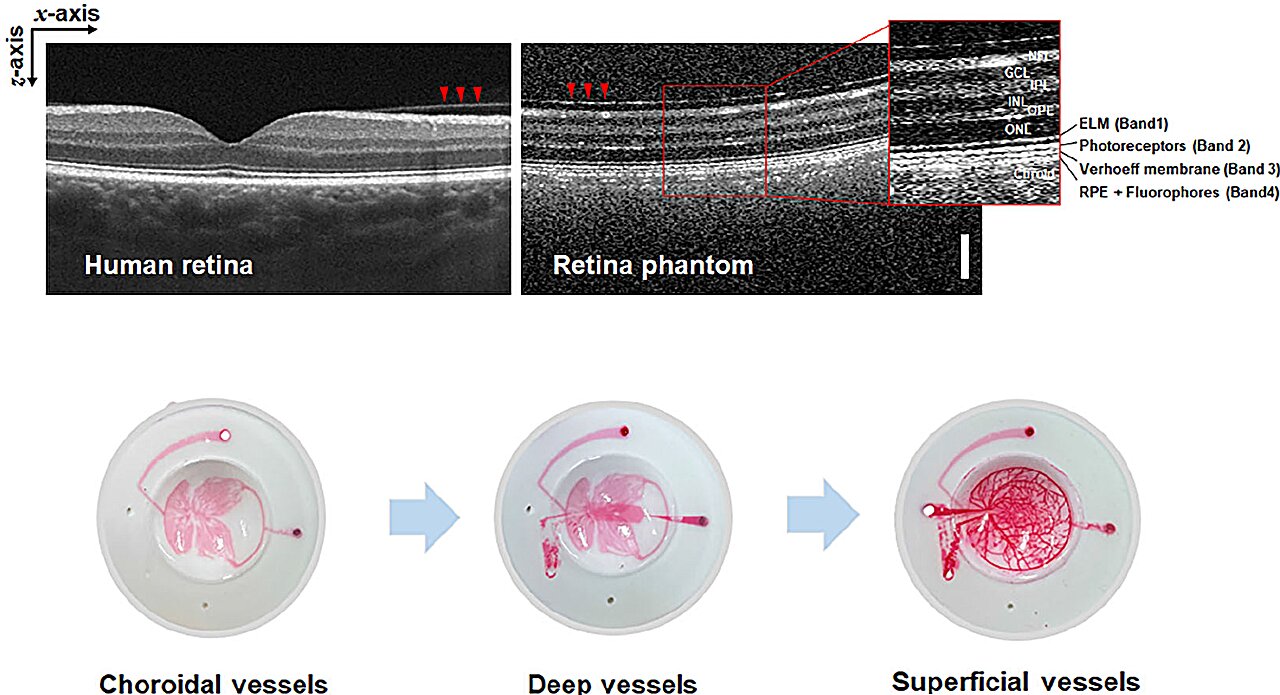
Structure of the retina-mimicking eye phantom developed by KRISS. Credit: Korea Research Institute of Standards and Science (KRISS) The Korea Research Institute of Standards and Science (KRISS) has developed a