
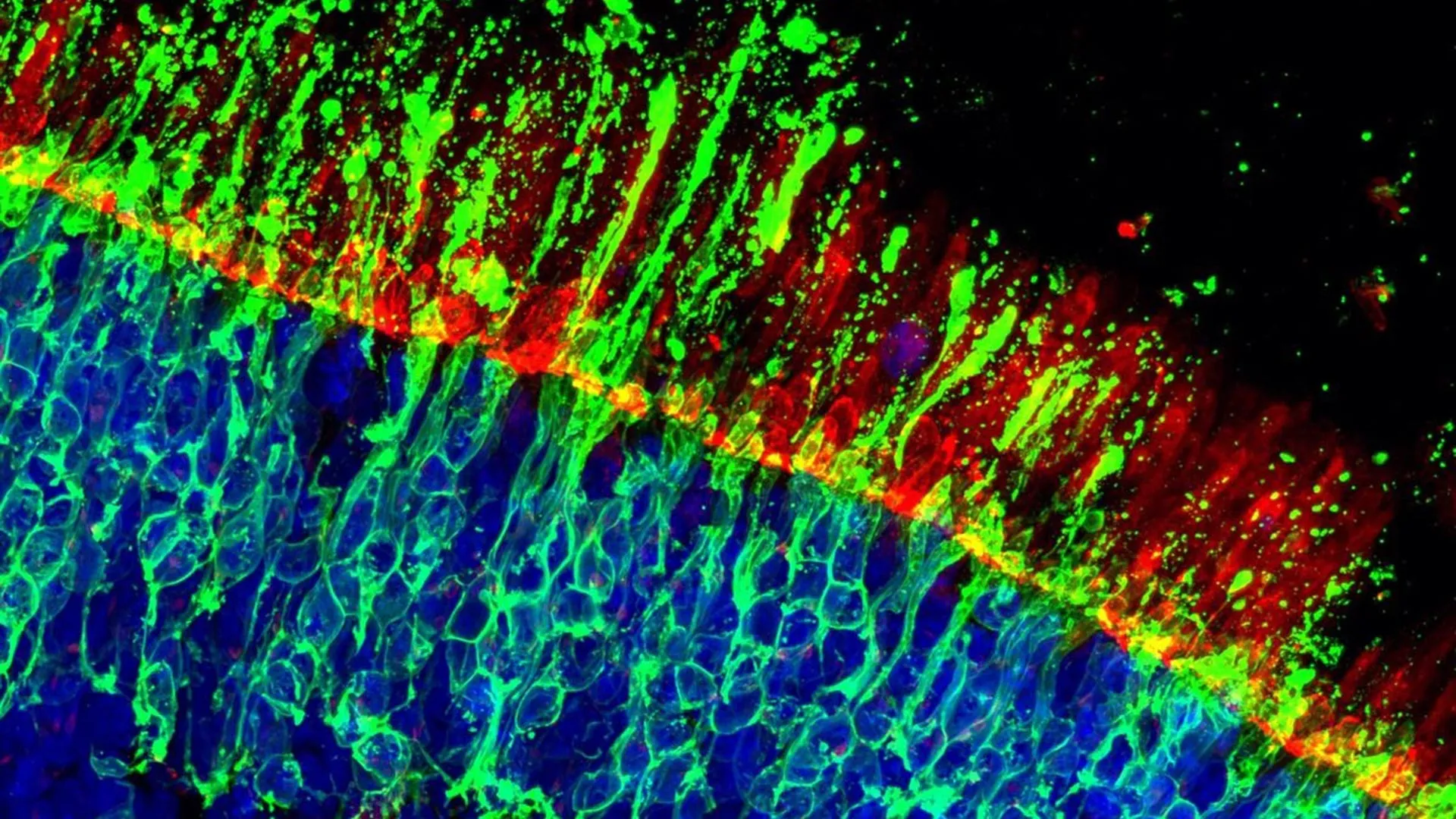
A research team led by Botond Roska at the Institute of Molecular and Clinical Ophthalmology Basel (IOB), together with collaborators, has uncovered genetic pathways and compounds that can help protect cone photoreceptors. These cells are damaged in diseases such as age-related macular degeneration, a leading cause of vision loss.
Cone photoreceptors are concentrated in the macula and are essential for reading, recognizing faces, and seeing color. When these cells die, as they do in many inherited retinal disorders and macular degeneration, central vision is lost. Despite decades of scientific effort, no approved treatments can stop this process. This study, led by first authors Stefan Spirig, Alvaro Herrero Navarro and colleagues, aims to address this gap using a human-based experimental system.
Large-Scale Screening of Compounds in Human Retinal Models
To explore potential treatments, researchers tested more than 2,700 compounds across 20,000 human retinal organoids. The results revealed both promising leads and important safety concerns:
- Some classes of compounds damaged cone cells, highlighting potential risks
- Several molecules were found to protect cone photoreceptors from degeneration
- Blocking casein kinase 1 emerged as a key protective strategy
Scientists selectively labeled cone photoreceptors so they could track how these cells responded over time under controlled stress conditions that mimic disease. This setup made it possible to systematically evaluate compounds with known molecular targets.
Key Protective Mechanism Confirmed
The analysis revealed consistent patterns. Two kinase inhibitors repeatedly showed strong protective effects, helping cone cells survive for extended periods. These benefits were observed across different stress conditions and were also confirmed in a mouse model of retinal degeneration, suggesting the findings may apply more broadly.
In addition to identifying protective pathways, the team has released a detailed dataset covering all tested compounds, their molecular targets, and their effects on cone survival in human tissue. This resource is expected to support the development of therapies aimed at preserving central vision and help researchers assess potential retinal toxicity more systematically.
Moving Closer to Preventing Vision Loss
By combining retinal biology, organoid technology, and large-scale compound screening, this research provides a strong foundation for future treatments. It advances a long-standing goal in ophthalmology: protecting the cells that make vision possible.

