Digital health editor

 Getty Images
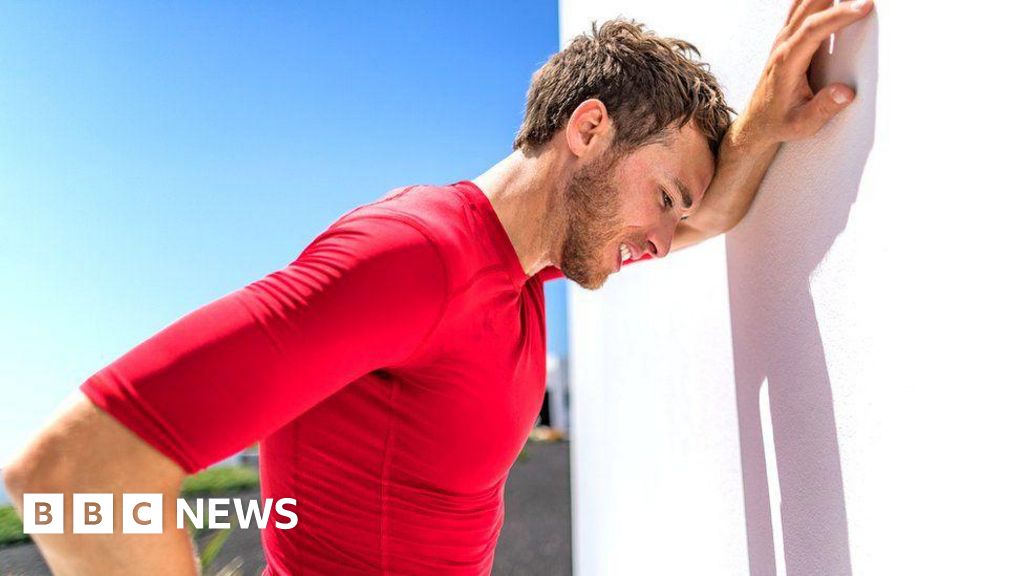
During hot weather, it can be easy to overheat.
Although heat exhaustion is not usually serious – as long as you can cool yourself down – heatstroke is a medical emergency which requires immediate treatment.
What is the difference between heat exhaustion and heatstroke?
Heat exhaustion happens when your body becomes too hot and struggles to regulate its temperature.
An obvious sign is excessive sweating, as well as feeling very hot and unwell – which is your body’s way of warning you to cool down, fast.
Other symptoms include:
- headache
- dizziness and confusion
- loss of appetite and feeling sick
- cramps in the arms, legs and stomach
- fast breathing or pulse
- temperature of 38C or above
- being very thirsty
Young children, who might not be able to tell you about how they are feeling, may become floppy and sleepy.
Heat exhaustion can affect anyone, including fit and healthy people – especially if they have done strenuous exercise in high temperatures or have been drinking alcohol in the sun all day.
It can come on quickly, over minutes, or gradually, over hours.
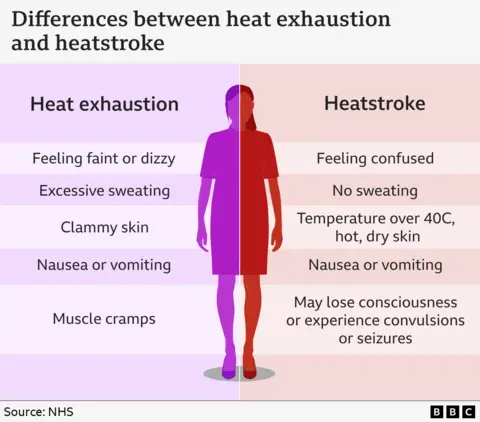
Heat exhaustion can turn into heatstroke, which is a medical emergency. It means your body can no longer manage the heat and your core temperature is rising too high. You should get urgent medical help.
The signs to watch for and quickly act on:
- feeling unwell after 30 minutes of resting in a cool place and drinking plenty of water
- not sweating even while feeling too hot
- a temperature of 40C or above
- fast breathing or shortness of breath
- feeling confused
- a fit (seizure)
- loss of consciousness
- not responsive
Older adults and young infants, as well as people with long-term health conditions, are particularly at risk.
The body’s ability to regulate its temperature is not fully developed in the young and may be reduced by illness, medications or other factors in older adults. Being overweight or obese may also make it harder to cool down.
What should you do if you think someone has heat exhaustion or heatstroke?
If someone has heat exhaustion:
- get them to rest in a cool place – such as a room with air conditioning or somewhere in the shade
- remove any unnecessary clothing, to expose as much of their skin as possible
- cool their skin – use whatever you have available, a cool, wet sponge or flannel, spray water, cold packs around the neck and armpits, or wrap them in a cool, wet sheet
- fan their skin while it is moist – this will help the water to evaporate, which will help their skin cool down
- get them to drink water – sports or rehydration drinks are fine too
Stay with them until they are better.
They should start to cool down and feel better within 30 minutes.
If they do not improve after 30 minutes of rest, and you think they may have heatstroke, you should get urgent medical help. Call 999 immediately.