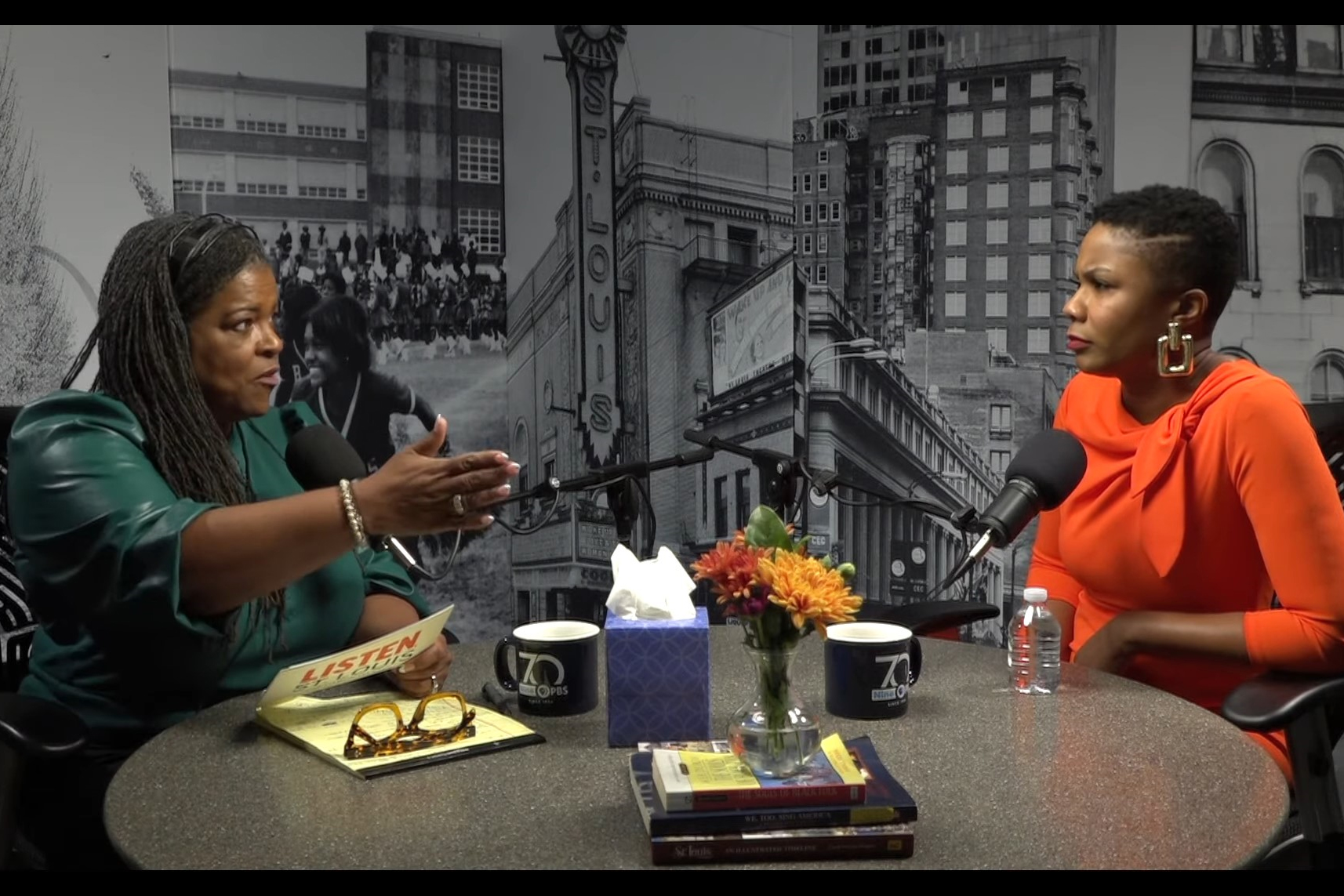
KFF Health News Midwest correspondent Cara Anthony appeared in a two-part special of Nine PBS’ “Listen, St. Louis with Carol Daniel” to discuss her reporting for the “Silence in Sikeston” project.
The first conversation, which aired Oct. 9, explores the connections between a 1942 lynching and a 2020 police shooting in a rural Missouri community — and what those killings say about the nation’s silencing of racial trauma. The second episode, which premiered Oct. 16, explores the health effects of such trauma with mental health counselor Lekesha Davis.
These conversations stem from the “Silence in Sikeston” multimedia project by KFF Health News, Retro Report, and WORLD, which includes a documentary film, educational videos, digital articles, and a limited-series podcast.
Explore more of the “Silence in Sikeston”project:
LISTEN: The limited-series podcast is available on PRX, Apple Podcasts, Spotify, iHeart, or wherever you get your podcasts.
WATCH: The documentary film “Silence in Sikeston,” a co-production of KFF Health News and Retro Report, is available to stream on WORLD’s YouTube channel, WORLDchannel.org, and the PBS app.
READ: KFF Health News Midwest correspondent Cara Anthony wrote an essay about what her reporting for this project helped her learn about her own family’s hidden past.