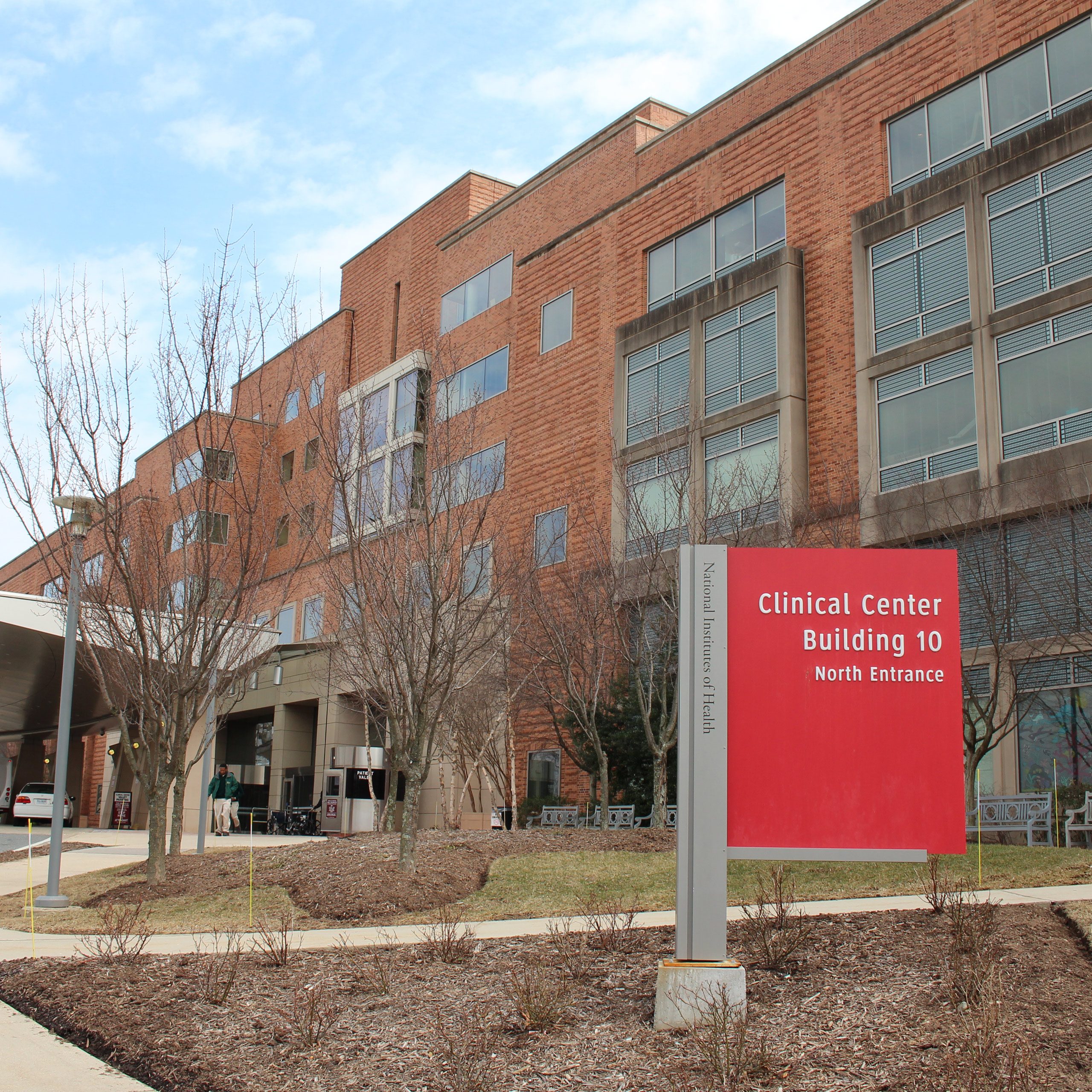
Government documents viewed by KFF Health News show a drop in patients receiving care this year at the National Institutes of Health’s renowned research hospital, a 200-bed facility at NIH headquarters in Maryland.
We previously reported a decrease in the number of patients being treated at the NIH Clinical Center from February through April. Since then, we’ve obtained newer data showing the drop has continued.
As of mid-August, the average daily number of patients treated at the hospital was around 60. There has been a steady drop since February, coinciding with the Trump administration’s mass firings of government employees, its broad immigration crackdown, and the gutting of scientific research.
By contrast, last October, about 80 patients a day, on average, were at the hospital, the documents show.
Current and former government workers cite multiple reasons for the decline. An exodus of clinicians, scientists, and other staffers has limited the number of people who can be treated. Researchers are leaving, which means they’re not recruiting patients to come to the NIH for trials.
And, the workers say, it’s likely that fewer patients who lack legal status in the U.S. are seeking care at the NIH hospital. That’s because of the Trump administration’s immigration policies and the federal government’s tighter rules for visitors from abroad.
In a statement, HHS spokesperson Andrew Nixon said the decline in the number of patients “has been ongoing for years” and the clinical center “remains fully operational and continues to provide world-class clinical research and patient care.”
Are you a cancer patient whose care at the National Institutes of Health Clinical Center in Maryland, or another hospital, has been affected by the Trump administration’s cuts? Are you a family member or caregiver of a cancer patient who has received care at the NIH? We’d like to hear about your experience. Tell us here.
KFF Health News is a national newsroom that produces in-depth journalism about health issues and is one of the core operating programs at KFF—an independent source of health policy research, polling, and journalism. Learn more about KFF.
USE OUR CONTENT
This story can be republished for free (details).
We encourage organizations to republish our content, free of charge. Here’s what we ask:
You must credit us as the original publisher, with a hyperlink to our kffhealthnews.org site. If possible, please include the original author(s) and KFF Health News” in the byline. Please preserve the hyperlinks in the story.
It’s important to note, not everything on kffhealthnews.org is available for republishing. If a story is labeled “All Rights Reserved,” we cannot grant permission to republish that item.
Have questions? Let us know at KHNHelp@kff.org