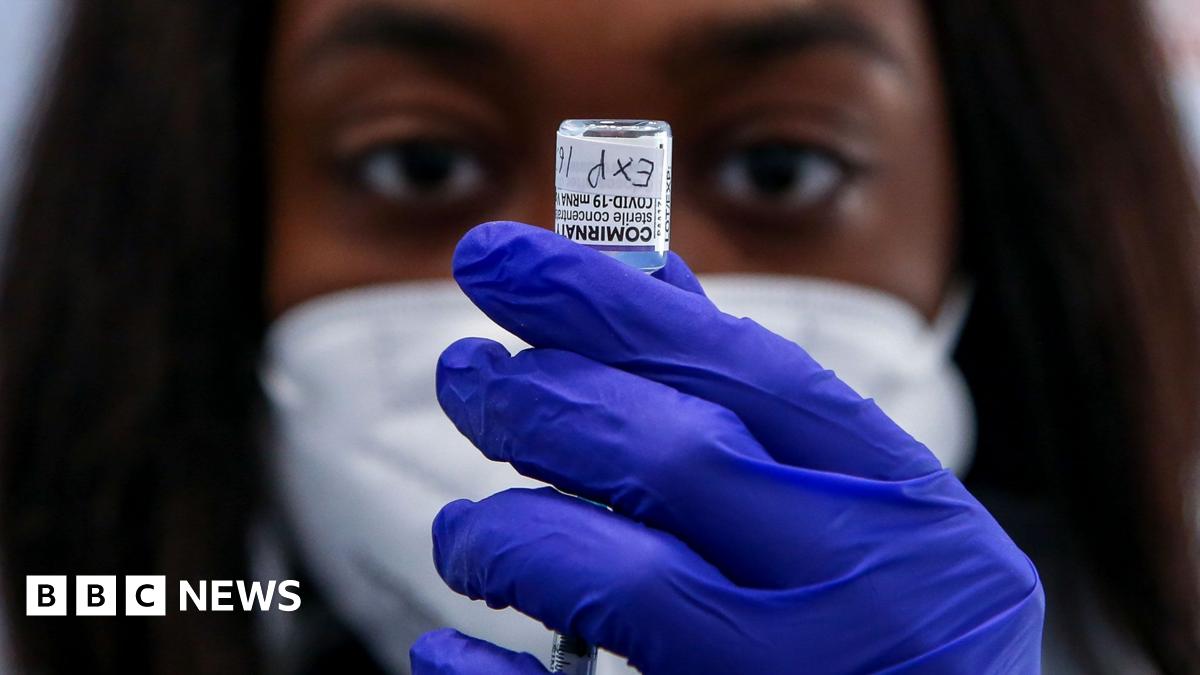
Misinformation spread online about vaccines during the pandemic both damaged uptake of the Covid jab and has subsequently affected confidence more generally in childhood vaccines that have nothing to do with Covid, says the inquiry.
High levels of distrust in authority in certain communities, including ethnic minority groups and people living in deprived areas, was and is also a factor.
Both issues need addressing, it says, but the inquiry also raises interesting questions over the government’s attempts to force some people to get the jab.
In June 2021, the government announced care workers in England had to be vaccinated if they were to work in care homes.
Within months ministers said they would extend that to all health and care staff. But they scrapped that policy before it was introduced and revoked the mandate on care homes staff amid mounting evidence the jab’s ability to stop infections and therefore curtail spread of the virus was limited – instead its major benefit was protecting those vaccinated against serious illness.
Vaccine mandates are likely to have contributed to alienation and increased hesitancy, the inquiry suggests.
More must be done to rebuild trust in all vaccines, the inquiry concludes.