
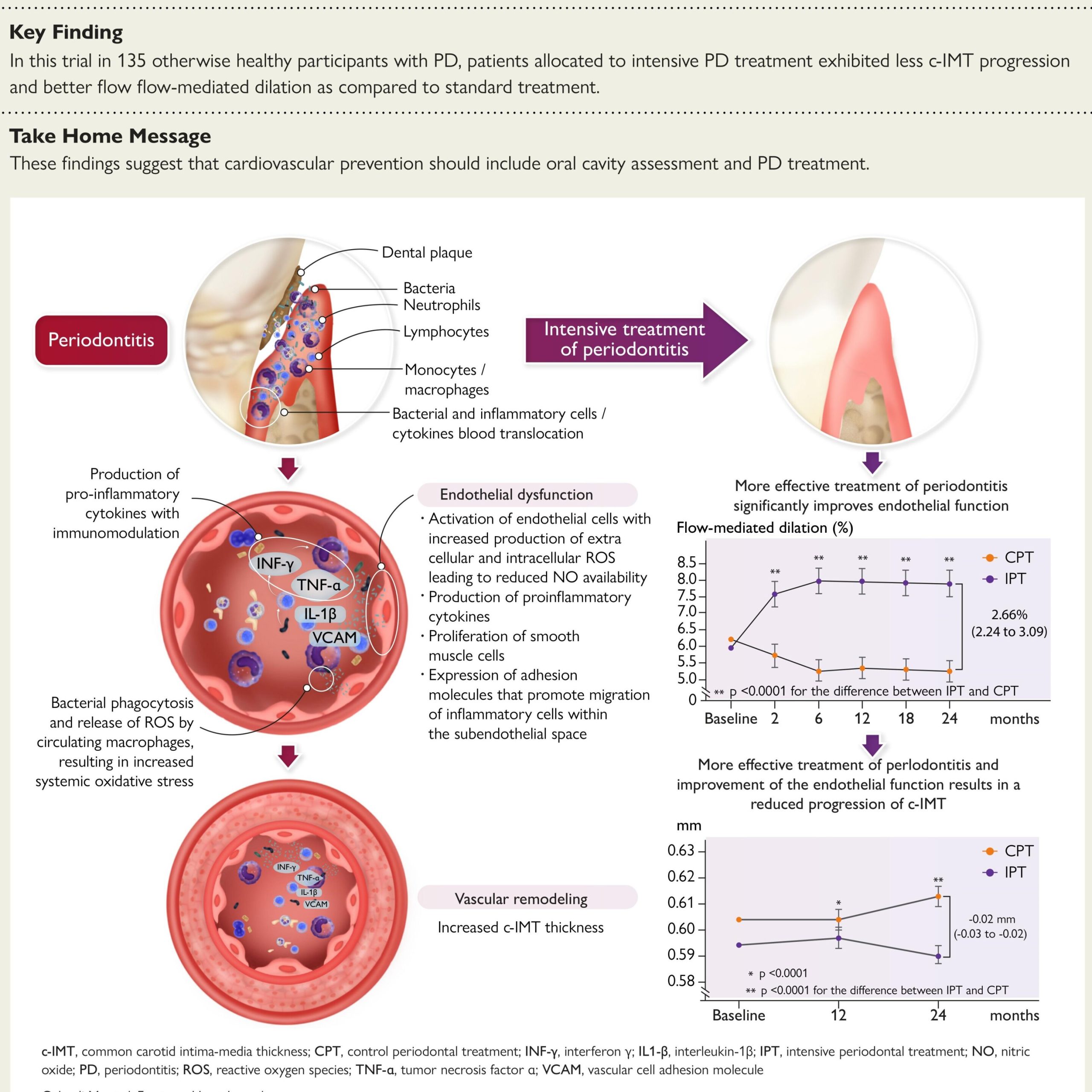

Intensive treatment of severe gum disease can help prevent arteries from becoming clogged, supporting heart health and reducing the long-term risk of developing cardiovascular diseases such as coronary heart disease and stroke, according to a new clinical trial by researchers.
In the study, published in the European Heart Journal, researchers found that intensive treatment of periodontitis—a severe form of gum disease—reduced the amount of gum inflammation and bacteria entering the bloodstream and helped slow the thickening of the carotid arteries, the major blood vessel supplying oxygen to the brain, face and neck.
Changes in carotid artery thickness are known predictors of cardiovascular diseases (CVD) such as angina, stroke and heart attacks. The findings suggest that improving oral health could be a valuable public health strategy to reduce the global burden of CVD disease and related deaths.
Periodontitis is a chronic inflammatory condition affecting the gums and bone that support the teeth. Risk factors include poor oral hygiene, genetic predisposition, smoking and uncontrolled diabetes. Affecting an estimated 40% of adults worldwide, periodontitis can cause bleeding, swelling and tenderness of the gums, and, if left untreated, can lead to tooth loss.
While previous studies reported mixed findings on whether treatment of periodontitis can influence vascular health, this new randomized trial provides strong evidence that intensive treatment of periodontitis can slow arterial thickening and reduce cardiovascular risk in otherwise healthy individuals.
The trial involved 135 adults with periodontitis who had no known chronic health conditions. Participants were randomly assigned to receive either intensive gum disease treatment (a full-mouth deep cleaning under local anesthetic) or standard care involving a routine scale and polish.
Participants were monitored over two years, with carotid artery thickness measured at the start of the trial, after 12 months and after 24 months. The researchers also measured vascular elasticity, arterial stiffness, and endothelial function—key indicators of cardiovascular health that reveal an artery’s ability to dilate in response to increased blood flow.
After 12 months and 24 months, the thickening of the arteries was considerably lower in the participants who received the intensive periodontitis treatment compared with the control group.
Dr. Marco Orlandi, Co-Principal Investigator of the trial from UCL Eastman Dental Institute and a Consultant at UCLH, said, “After 24 months, the participants who received the intensive gum disease treatment had a 0.02mm reduction in the thickening of their carotid arteries. This is a significant result, as even a 0.01mm reduction corresponds to a 10% decrease in cardiovascular disease risk—suggesting participants reduced their risk by around 10% each year.”
Professor Francesco D’Aiuto, Co-Principal Investigator of the trial from UCL Eastman Dental Institute and Honorary Consultant at UCLH, said, “These findings offer compelling evidence that oral and systemic health are profoundly interconnected. I believe there is a major opportunity for medical and dental professionals to collaborate more closely in recognizing and addressing the cardiovascular implications of gum disease. Identifying and managing periodontitis should be part of a broader strategy to reduce long-term health risks.”
Professor John Deanfield, Chief Investigator of the trial and Director of Cardiovascular Prevention at UCL, said, “This is among the most robust evidence to date that oral and cardiovascular health are interconnected. Addressing periodontitis could become a powerful tool in preventing serious heart and brain events such as heart attacks and strokes.”
The findings add to growing evidence that addressing gum disease could be an effective, scalable, and cost-efficient strategy for reducing cardiovascular disease deaths globally.
More information:
Marco Orlandi et al, Periodontitis treatment and progression of carotid intima-media thickness: a randomized trial, European Heart Journal (2025). DOI: 10.1093/eurheartj/ehaf555
Citation:
Treating gum disease could reduce risk of heart attacks and strokes (2025, November 5)
retrieved 6 November 2025
from https://medicalxpress.com/news/2025-11-gum-disease-heart.html
This document is subject to copyright. Apart from any fair dealing for the purpose of private study or research, no
part may be reproduced without the written permission. The content is provided for information purposes only.
