
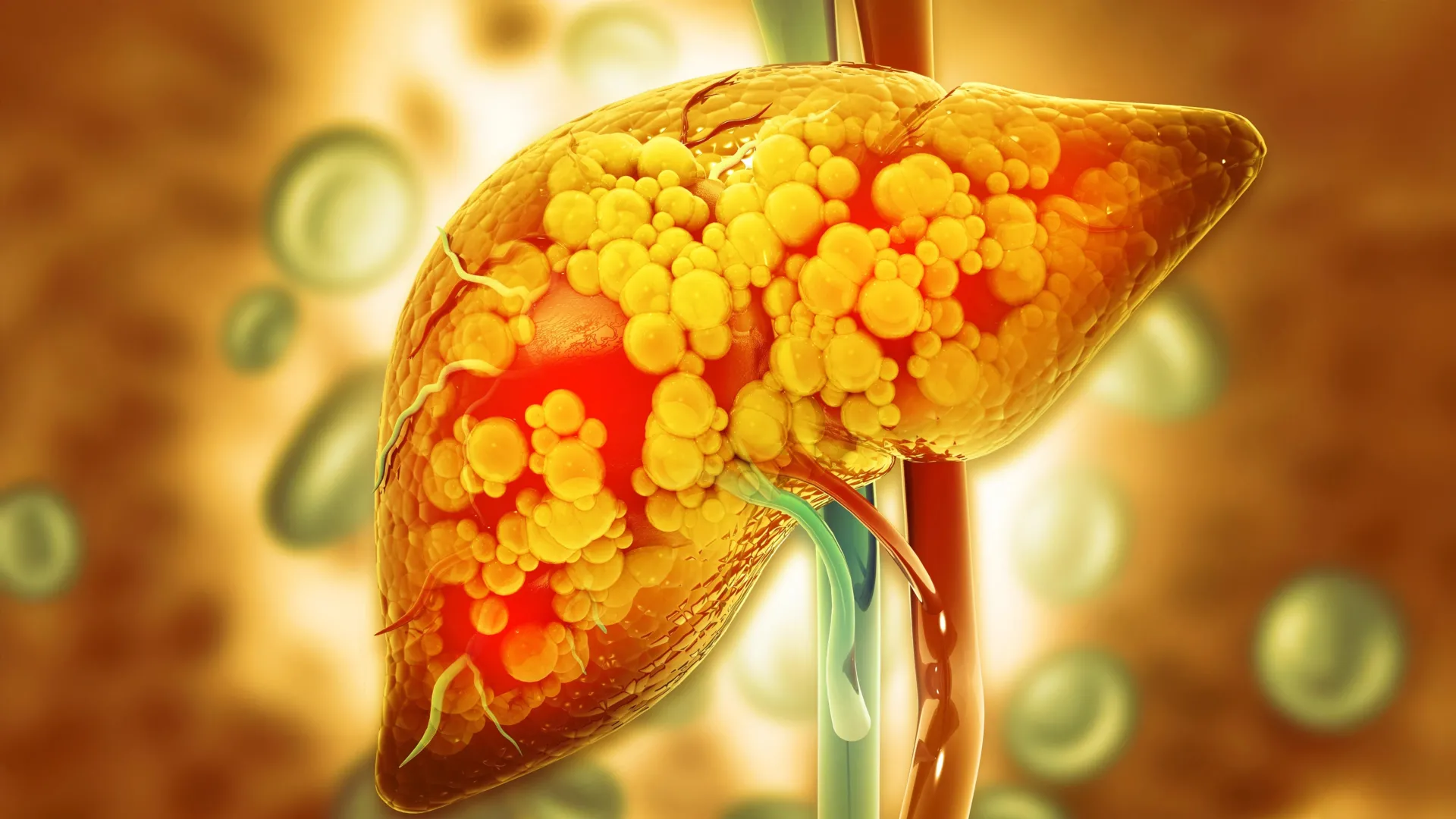
Mayo Clinic researchers have pinpointed how excessive alcohol consumption contributes to fatty liver disease, a condition that affects more than one in three people in the U.S. Also known as Metabolic Dysfunction Associated Steatotic Liver Disease, it is a long-lasting disease that can lead to type 2 diabetes and even liver cancer. Excessive alcohol can contribute to this fatty disease as well — and Mayo Clinic researchers recently discovered a reason why.
The researchers found that exposure to excessive alcohol alters an important enzyme that recycles damaged proteins.
How the liver works
The liver is the primary filter for everything you ingest. Liver cells, or hepatocytes, support this organ’s giant job by releasing dozens of various proteins while collecting, sorting, degrading and recycling nearly everything that passes through this massive, sieve-like organ. Fat coming from the gut, for example, is absorbed then stored in hepatocytes as lipid droplets, which are globular structures that store fat. The body can use these lipid droplets as an energy source, especially during periods of fasting. However, too many lipid droplets can lead to fatty liver disease.
The researchers found the key lies with an important enzyme called the valosin-containing protein (VCP). VCP plays a role in many important processes including recycling unwanted proteins and is found in cells throughout the body.
“We were surprised to see VCP removing a specific protein from the surface of the lipid droplet. When that particular protein called HSD17β13 accumulates, the fat content in liver cells balloons and contributes to fatty liver disease,” says Mark McNiven, Ph.D., senior author on the study, which was published and highlighted in the Journal of Cell Biology.
In people without fatty liver disease, the enzyme, VCP, appears to keep the protein, HSD17β13, in check to prevent lipid droplets from over-accumulating in the liver cells.
However, the researchers found that exposure to excessive alcohol removes VCP almost completely from the lipid droplet surface, allowing HSD17β13 to significantly accumulate.
The researchers also saw and captured the elaborate recycling mechanism of VCP. They witnessed VCP working with a chaperone protein to deliver damaged proteins to an organelle called a lysosome, which then broke apart the unwanted proteins.
“It was astounding to see this. We tried several experiments to confirm what we were seeing, and every result indicated VCP directs the HSD17β13 protein from the lipid droplet to the lysosome,” says Sandhya Sen, Ph.D., a Mayo Clinic research fellow and lead author of the study.
Their findings mean HSD17β13 is a target for potential new therapies to prevent or treat fatty liver disease, says Dr. McNiven.
“This study increases our understanding of the biology of lipid droplets, the central culprit of fatty liver, and how the hepatocyte works in an effort to reduce its fat content,” Dr. McNiven says. “It also could help predict which patients are prone to the detrimental effect of excessive alcohol consumption on their liver if this cellular system is compromised.”
The research is part of a larger effort at Mayo Clinic called the Precure initiative focused on developing tools that empower clinicians to predict and intercept biological processes before they evolve into disease or progress into complex, hard-to-treat conditions.
Review the study for a complete list of authors, disclosures and funding.

