
The eye is an immune-privileged tissue because of the need to keep blood vessels away from the central pathway of light and to restrict entry of inflammatory cells that could cause damage. This has prompted questions about how the eye manages inflammation when it occurs.
A new study led by Thomas Jefferson University researchers has revealed insights into how the eye handles inflammation, particularly in autoimmune uveitis, an inflammatory disease that bypasses the eye’s immune privilege and can damage healthy eye tissue.
The study is published in The American Journal of Pathology.
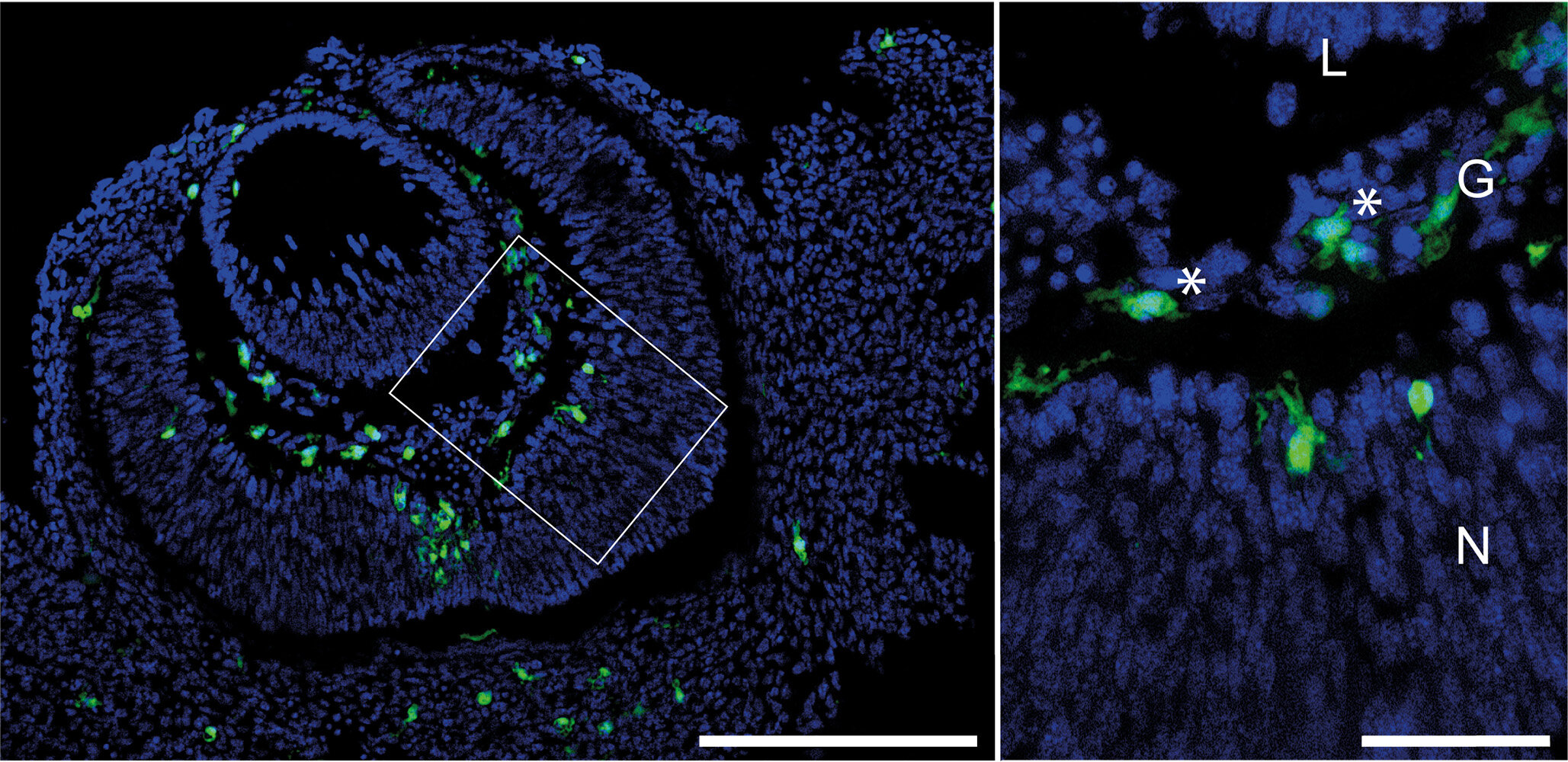
Previous studies by Jefferson researcher Sue Menko, Ph.D., had revealed that immune cells populate the surface of the lens in response to acute injury and prolonged inflammation in other regions of the eye. While this was the first demonstration of immune cells recruited to the lens surface, it also raised questions about their role in ongoing surveillance, and whether they may help resolve the inflammation.
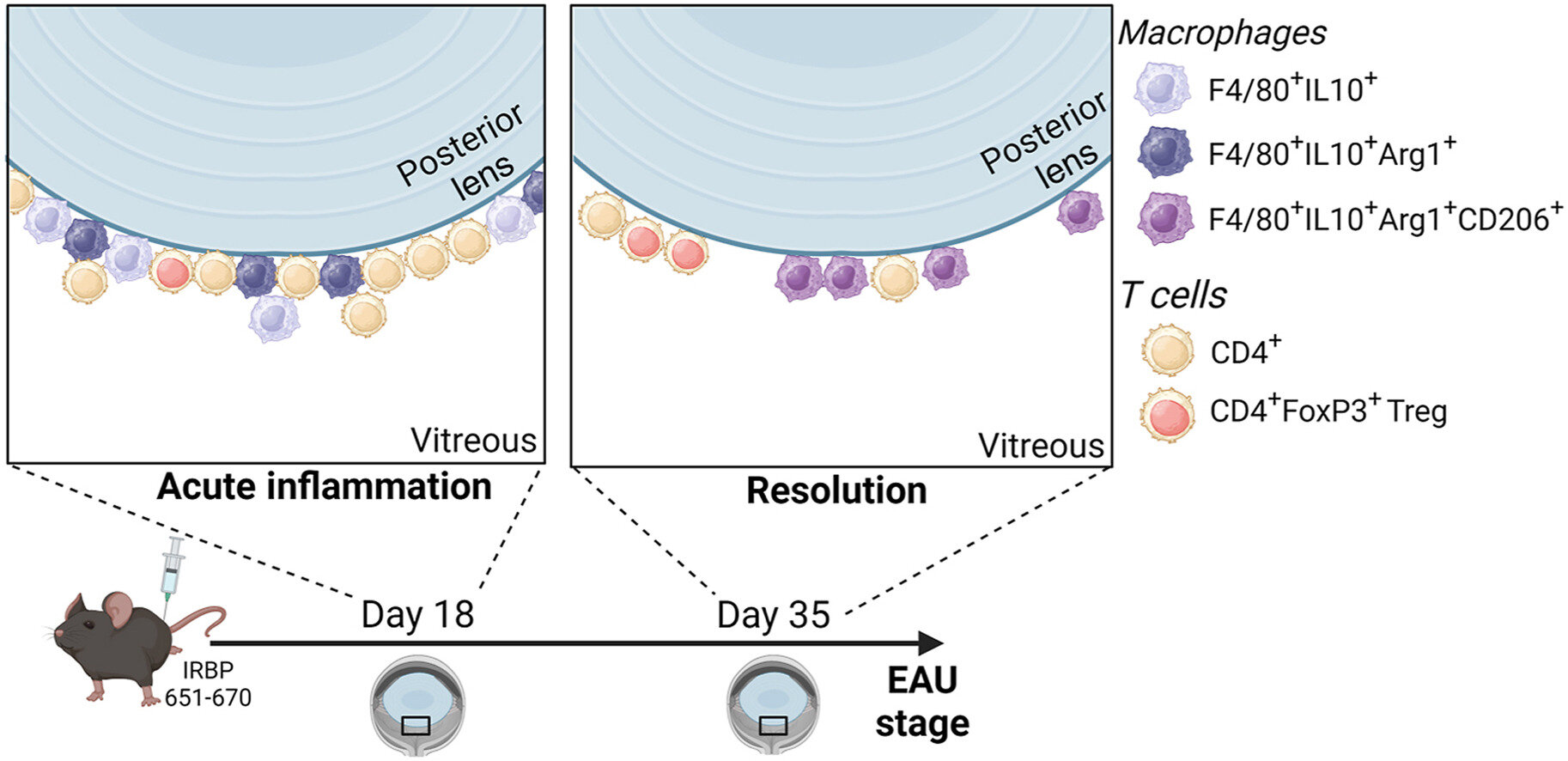
Her team’s latest study answers these questions. The researchers found that macrophages with an immunoregulatory phenotype and Tregs are the immune cells actively recruited to the lens surface during inflammation. These immunoregulatory cells help restore balance and reduce inflammation. They also found that these immune cells remain on the lens surface until the inflammation is resolved.
“Debunking the thought that the eye could not care for itself is a big deal,” says Dr. Menko. “This helps us understand disease processes like uveitis and how they’re resolved in the eye. Maintaining a non-inflammatory condition in the eye is crucial to preserve vision, and we now know that the eye has inherent mechanisms to do that.”
MD-Ph.D. student and first author Phuong Lee contributed to the study, alongside researchers from the National Eye Institute and George Washington University.
The study highlights the importance of understanding the eye’s natural defenses, which could eventually lead to more effective treatment strategies for autoimmune uveitis. The next steps in Dr. Menko’s research focus on uncovering the mechanisms that recruit immune cells to the lens and identifying the earliest alert systems that trigger this immunoregulatory inflammation in uveitis and other inflammatory eye conditions.
More information:
Phuong M. Le et al, Immunoregulatory Properties of Immune Cells that Associate with the Lens Capsule Surface during Acute and Resolution Phases of Experimental Autoimmune Uveitis, The American Journal of Pathology (2024). DOI: 10.1016/j.ajpath.2024.07.021
Citation:
Researchers discover new role of immune cells in eye health (2024, September 24)
retrieved 28 September 2024
from https://medicalxpress.com/news/2024-09-role-immune-cells-eye-health.html
This document is subject to copyright. Apart from any fair dealing for the purpose of private study or research, no
part may be reproduced without the written permission. The content is provided for information purposes only.