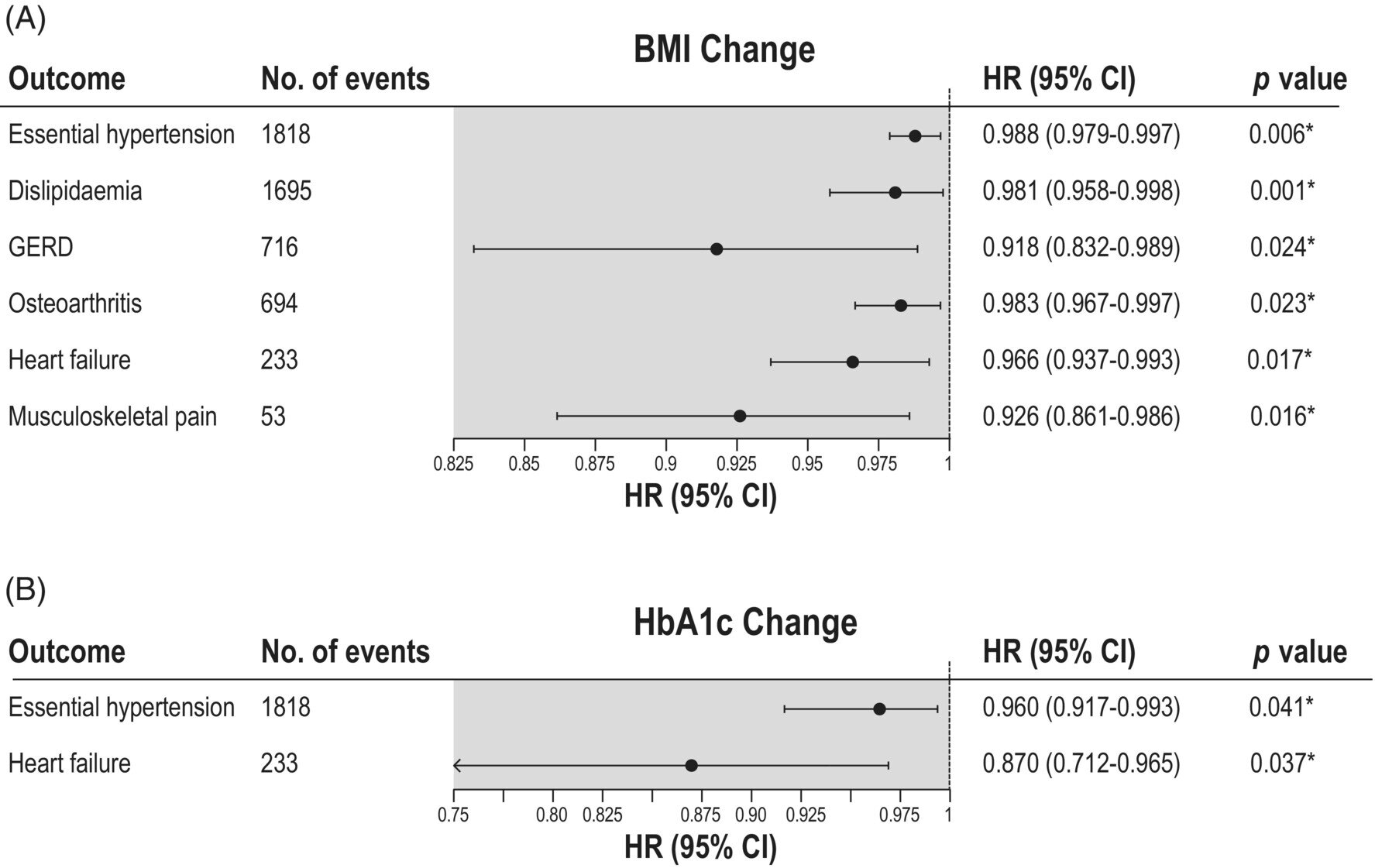

A Cleveland Clinic research team has published the first study assessing the independent real-world impacts of weight loss and blood sugar control on clinical outcomes in people with type 2 diabetes treated with antidiabetic medications, and specifically with GLP-1RAs (the class of drug that includes Ozempic and Wegovy).
The study found that for every 1% decrease in BMI, regardless of change in blood sugar, there was a 4% decrease in cardiovascular risk. Further, blood sugar control, independent of weight change, was linked to a lower risk of chronic kidney disease. These findings are clinically meaningful and highlight the importance of treating people with type 2 diabetes for both glycemic control and obesity.
The retrospective findings, published in Diabetes, Obesity and Metabolism, used deidentified electronic health record-derived data from more than 1,300 patients with type 2 diabetes evaluated at Cleveland Clinic.
More information:
Anukriti Sharma et al, Elucidating the role of weight loss and glycaemic control in patients with type 2 diabetes, Diabetes, Obesity and Metabolism (2024). DOI: 10.1111/dom.15896
Citation:
Research assesses impact of weight loss and blood sugar control in type 2 diabetes (2024, September 18)
retrieved 21 September 2024
from https://medicalxpress.com/news/2024-09-impact-weight-loss-blood-sugar.html
This document is subject to copyright. Apart from any fair dealing for the purpose of private study or research, no
part may be reproduced without the written permission. The content is provided for information purposes only.