

The symptoms of amyotrophic lateral sclerosis (ALS)—a neurodegenerative disease that involves loss of nerve cells that control movement—tend to emerge in adulthood. To Davide Trotti, Ph.D., a neuroscientist at Thomas Jefferson University, this suggests that some unknown trigger causes a shift from a quiescent state to a biochemical storm causing neuronal death.
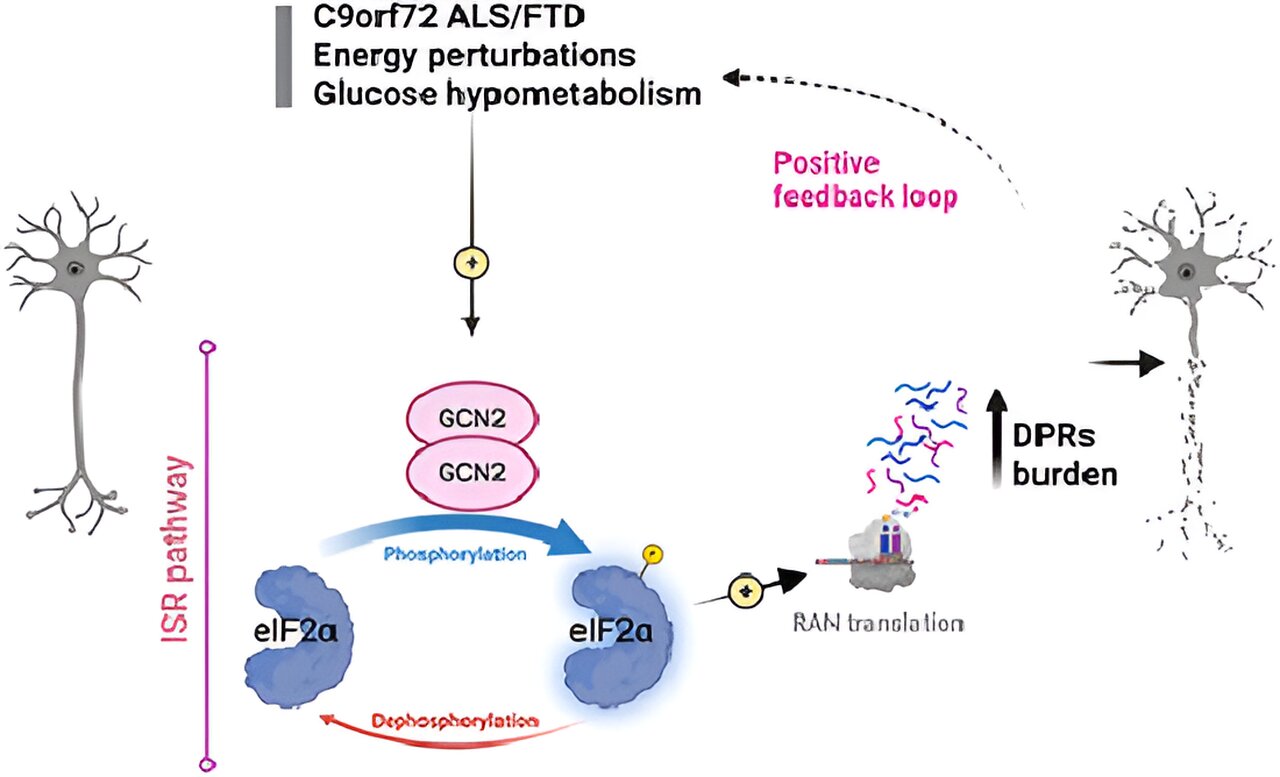
One hypothesized trigger is dysfunction of energy pathways in the central nervous system. The metabolism of glucose in the brain is altered in people with a specific ALS-linked genetic mutation, called C9-NRE, and this change occurs many years before the onset of muscle weakening that characterizes the disease.
Dr. Trotti and his collaborators embarked on molecular detective work to describe how altered energy metabolism is linked to neuronal dysfunction. In a recent paper, published in EMBO Reports, the team showed how altered glucose metabolism in the brain and spinal cord are damaging to motor neurons in preclinical models that carry the genetic C9-NRE mutation.
Neuronal dysfunction, in turn, further undermines energy pathways in a vicious cycle of stress responses. This feedforward loop of problems that the researchers observed in cell culture and in animal models likely plays a role in the neurodegeneration seen in ALS patients.
In carefully teasing out the molecular pathways involved, Dr. Trotti says he hopes to identify potential therapeutic targets whereby a drug might interrupt the chain reaction. The idea is to prevent the triggering event and hopefully stave off or slow down disease progression in patients with the genetic mutation.
“There are drugs on the market that can affect these processes,” he says, “and they are already FDA approved.” Dr. Trotti has hope for medications that are prescribed for diabetes, a condition that also involves altered glucose metabolism. Testing such drugs in preclinical models is the next step to see if they correct the metabolic imbalance.
More information:
Andrew T Nelson et al, Glucose hypometabolism prompts RAN translation and exacerbates C9orf72-related ALS/FTD phenotypes, EMBO Reports (2024). DOI: 10.1038/s44319-024-00140-7
Citation:
New insights into the pathogenesis of amyotrophic lateral sclerosis (2024, August 28)
retrieved 13 September 2024
from https://medicalxpress.com/news/2024-08-insights-pathogenesis-amyotrophic-lateral-sclerosis.html
This document is subject to copyright. Apart from any fair dealing for the purpose of private study or research, no
part may be reproduced without the written permission. The content is provided for information purposes only.
