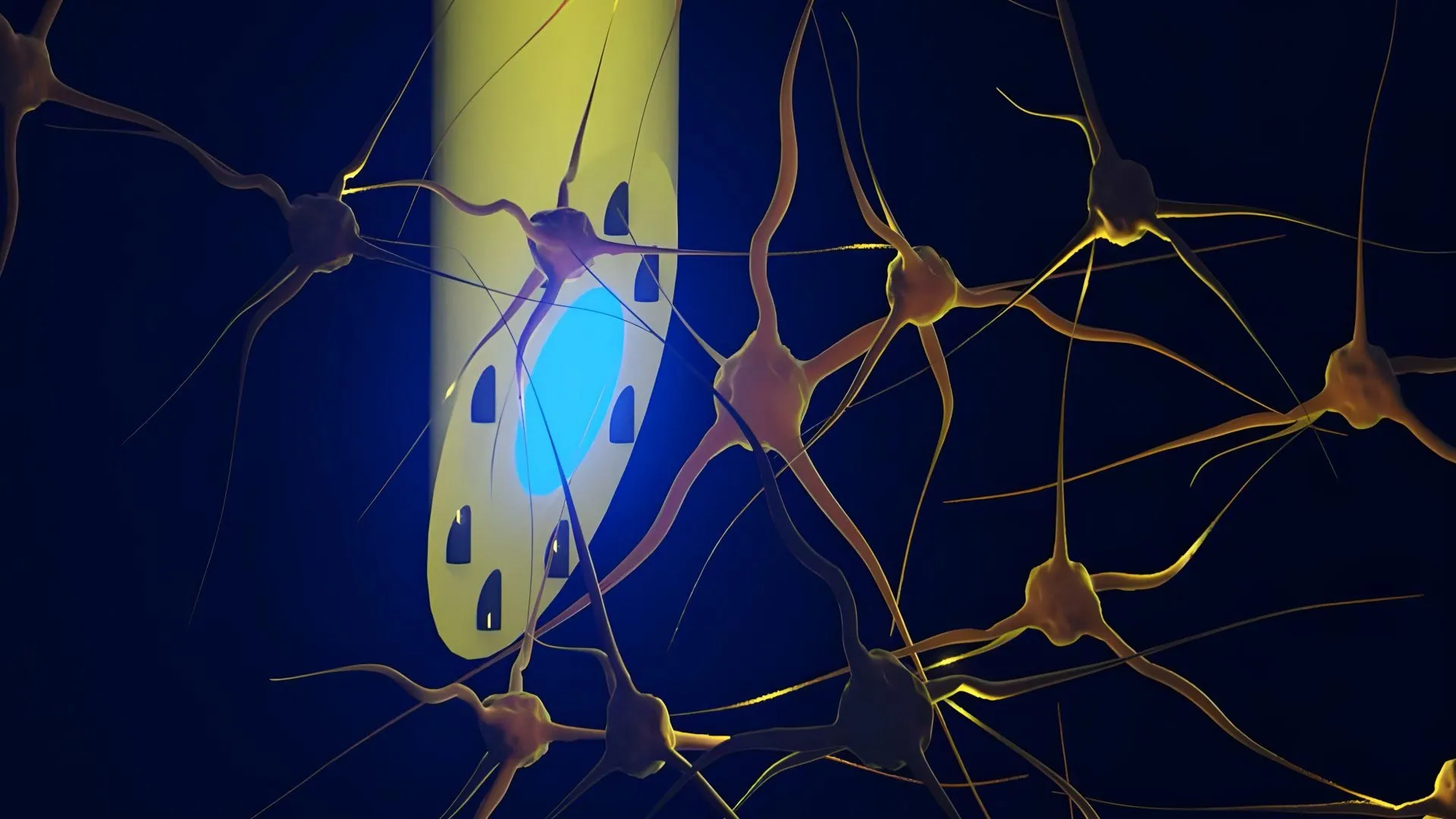
A new study from Hebrew University reveals that acetaminophen doesn’t just work in the brain — it also blocks pain at its source by acting on nerve endings in the body. The researchers found that its active metabolite, AM404, shuts down specific sodium channels in pain-sensing neurons, stopping pain signals before they reach the brain. This discovery not only reshapes our understanding of how one of the world’s most common painkillers works, but also opens the door to developing safer, more targeted pain treatments.
A breakthrough study from the Hebrew University of Jerusalem, published this week in the prestigious journal PNAS (Proceedings of the National Academy of Sciences USA), reveals a previously unknown peripheral mechanism by which acetaminophen (also known as paracetamol, Tylenol®, or Panadol®) relieves pain.
The study was led by Prof. Alexander Binshtok from the Hebrew University’s Faculty of Medicine and Center for Brain Sciences (ELSC) and Prof. Avi Priel from its School of Pharmacy. Together, they uncovered a surprising new way that acetaminophen — one of the world’s most common painkillers — actually works.
For decades, scientists believed that acetaminophen relieved pain by working only in the brain and spinal cord. But this new research, published in PNAS, shows that the drug also works outside the brain, in the nerves that first detect pain.
Their discovery centers on a substance called AM404, which the body makes after taking acetaminophen. The team found that AM404 is produced right in the pain-sensing nerve endings — and that it works by shutting off specific channels (called sodium channels) that help transmit pain signals. By blocking these channels, AM404 stops the pain message before it even starts.
“This is the first time we’ve shown that AM404 works directly on the nerves outside the brain,” said Prof. Binshtok. “It changes our entire understanding of how acetaminophen fights pain.”
This breakthrough could also lead to new types of painkillers. Because AM404 targets only the nerves that carry pain, it may avoid the numbness, muscle weakness, and side effects that come with traditional local anesthetics.
“If we can develop new drugs based on AM404, we might finally have pain treatments that are highly effective but also safer and more precise,” added Prof. Priel.