
A team of biologists, nutritionists and gut biome specialists has found via a trial run at several hospitals in Bangladesh that giving children suffering from severe malnutrition a microbiome-based food helps them recover faster than giving them ready-to-use therapeutic or supplementary foods (RUFs).
For many years, the standard of care for children suffering from severe acute malnutrition has been feeding them RUFs, which are generally made by mixing peanuts, oil, butter, and sugar into a quantity of powdered milk. Such a mix provides a lot of calories in a hurry, helping children who are starving recover as quickly as possible.
In this new study, published in Science Translational Medicine, the researchers have found that a different kind of food might be a better option.
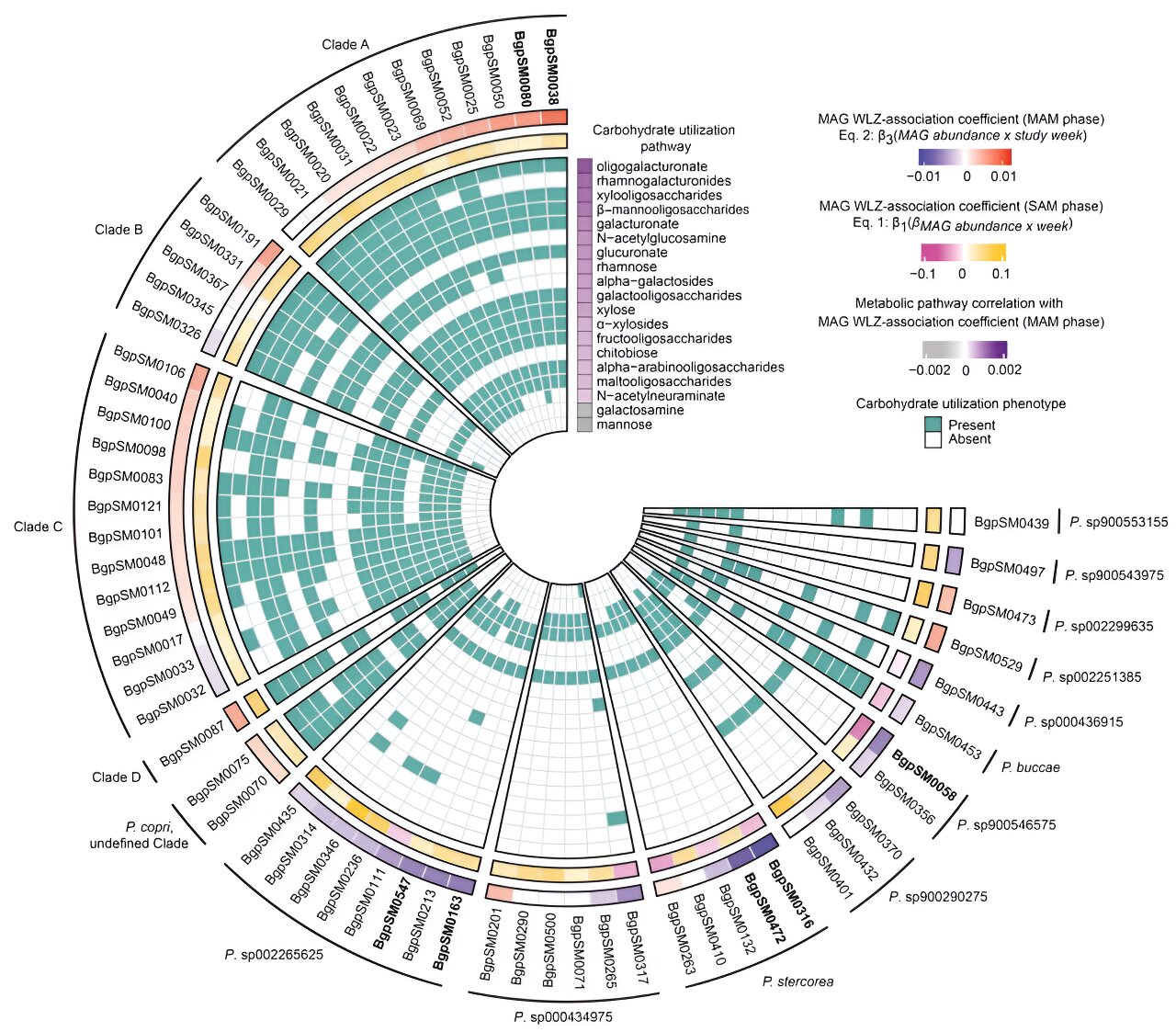
Several years ago, researchers discovered that when children experience a severe lack of food, in addition to losing weight and an ability to ward off diseases, their intestinal biome becomes less diverse—without food to process, gut bacteria levels dwindle. Experiments with mice showed that those who were malnourished who were given food designed to ramp up the biome gained weight faster than those who were placed on just a high-calorie diet.
The researchers wanted to know if the same was true for humans. To find out, they first conducted animal experiments to find the right ingredients that would stimulate the gut biome and then made a supplement with the best of them. They then gave the supplement they had developed to 64 children suffering from severe malnutrition in several hospitals in Bangladesh.
Another 64 children also suffering from severe malnutrition were given RUFs. All the children in the study were assessed over the following three months. The research team found that those children receiving the biome-enhancing supplements gained weight faster than the children given RUFs.
They also found that those children receiving the new supplements had higher concentrations of the types of proteins in their blood that are needed for the proper growth of bones, muscles, and nerve cells in the brain.
The researchers conclude by suggesting that giving malnourished children biome-enhancing food can not only speed up recovery time but also prevent stunted growth.
More information:
Steven J. Hartman et al, A microbiome-directed therapeutic food for children recovering from severe acute malnutrition, Science Translational Medicine (2024). DOI: 10.1126/scitranslmed.adn2366
© 2024 Science X Network
Citation:
Microbiome-directed food speeds recovery in children with severe acute malnutrition, trial finds (2024, October 3)
retrieved 6 October 2024
from https://medicalxpress.com/news/2024-10-microbiome-food-recovery-children-severe.html
This document is subject to copyright. Apart from any fair dealing for the purpose of private study or research, no
part may be reproduced without the written permission. The content is provided for information purposes only.