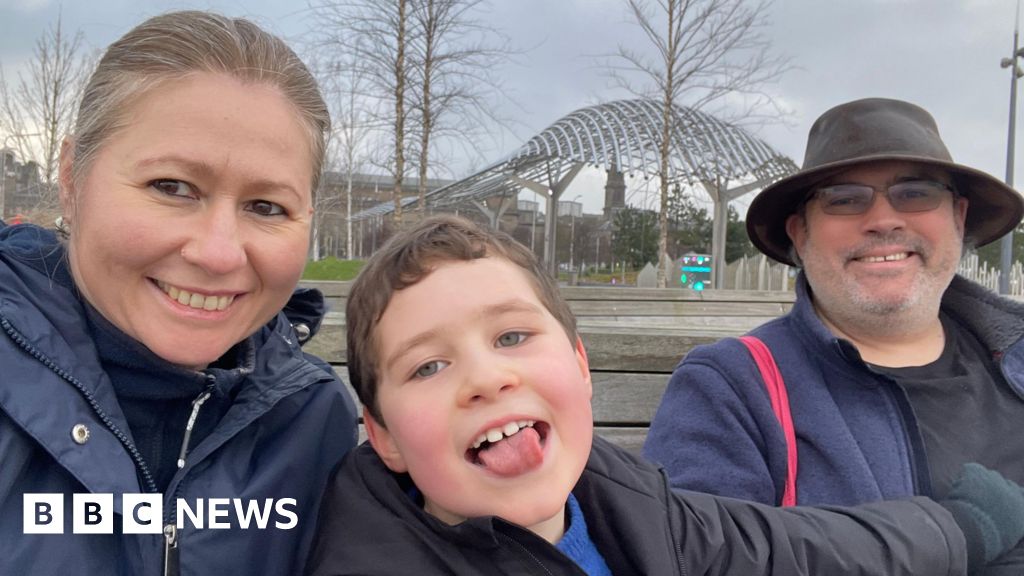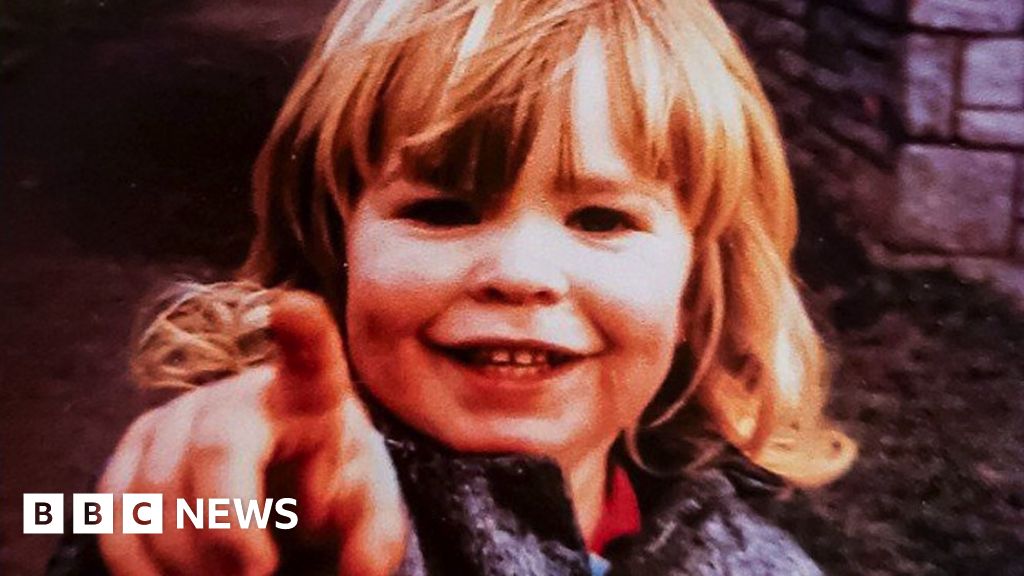
Luke O’Shea-Phillips, 42, has mild haemophilia – a blood clotting disorder that means he bruises and bleeds more easily than most.
He caught the potentially lethal viral infection hepatitis C while being treated at the Middlesex Hospital, in central London, which was administered because of a small cut to his mouth, aged three, in 1985.
Documents seen by the BBC suggest he was deliberately given the blood product – which his doctor knew might have been infected – so he could be enrolled in a clinical trial.
The doctor wanted to find out how likely patients were to catch diseases from a new version of heat-treated Factor VIII. Though he had never been treated for his condition before, Luke was given heat-treated Factor VIII to stop his mouth bleeding.
A letter from Luke’s doctor, Samuel Machin, to another expert in haemophilia, was submitted in evidence to the public inquiry into the infected blood scandal.
Writing to Peter Kernoff, at London’s Royal Free Hospital, Dr Machin detailed the treatment of Luke and another boy, asking: “I hope they will be suitable for your heat-treated trial.”
Months earlier, Dr Kernoff had called on fellow doctors in the field to identify patients suitable for clinical trials. Specifically, he said, they had to be “previously untreated patients”, known as “PUPs” in the medical community.
They were also nicknamed “virgin haemophiliacs” – a term written on Luke’s medical record by Dr Machin.
“I was a guinea pig in clinical trials that could have killed me,” Luke told the BBC. “There is no other way to explain it – my treatment was changed so I could be enrolled in clinical trials. This change in medication gave me a fatal disease – hepatitis C – yet my mother was never even told.”
“To the scientific world, it was an incredible benefit being a virgin haemophiliac,” he added. “To be a clean petri dish to understand science through, I was without question a part of that.”