Nearly 40 million adults in the U.S. have sleep apnea, and more than 30 million of them use a continuous positive airway pressure (CPAP) machine while sleeping. However, the machines tend to be expensive, clunky and uncomfortable—resulting in many users giving up on using them.
High blood pressure is often linked with sleep apnea because the brain works harder to regulate blood flow and breathing during sleep. A recent study at the University of Missouri offers new insight into the underlying mechanisms within the brain contributing to hypertension for those with sleep apnea.
The findings can help pave the way for new drugs that target the brainstem to bring blood pressure back down to normal levels for those with sleep apnea.
The study took place in the lab of David Kline, a professor in Mizzou’s College of Veterinary Medicine and researcher at the Dalton Cardiovascular Research Center.
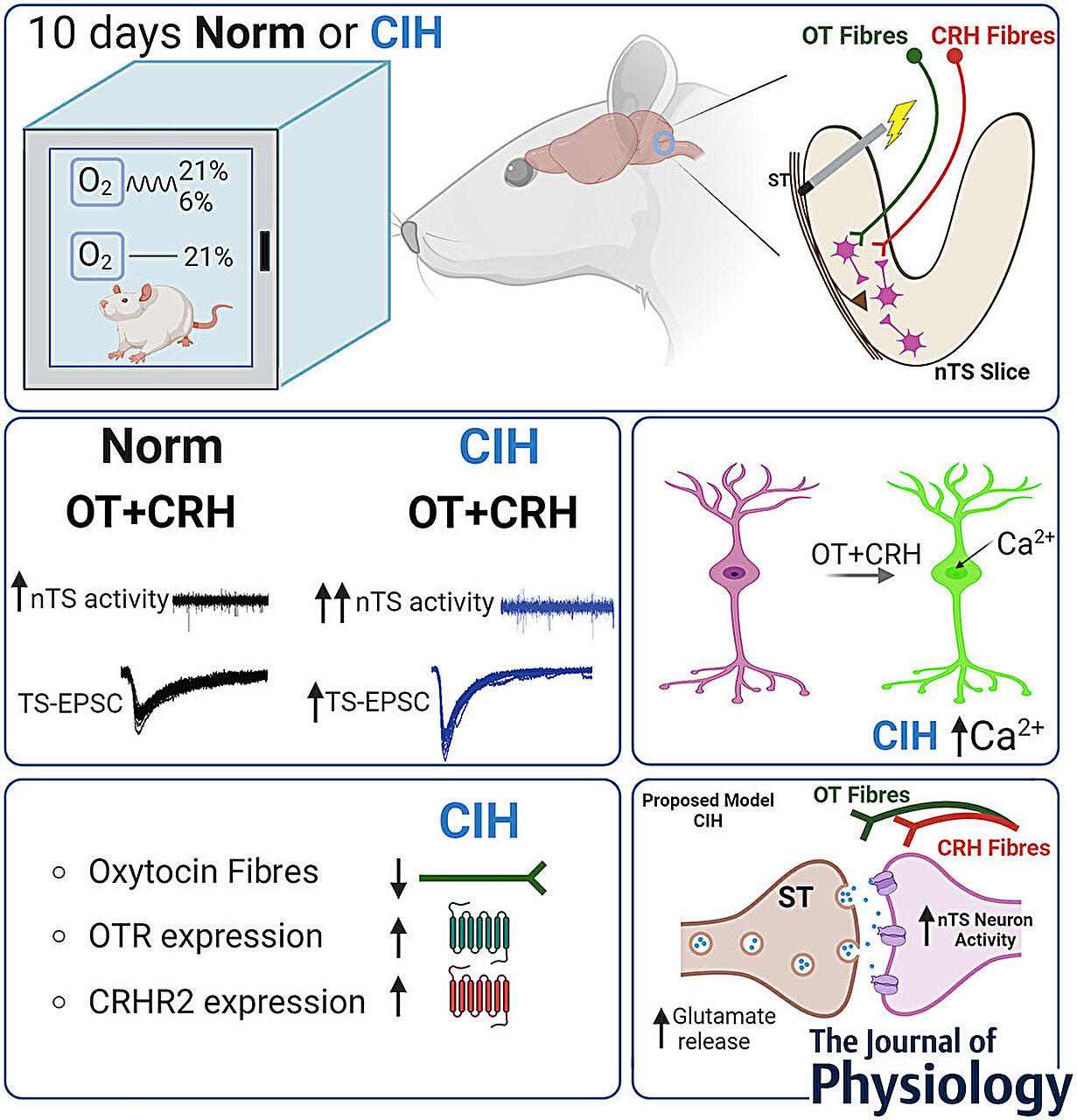
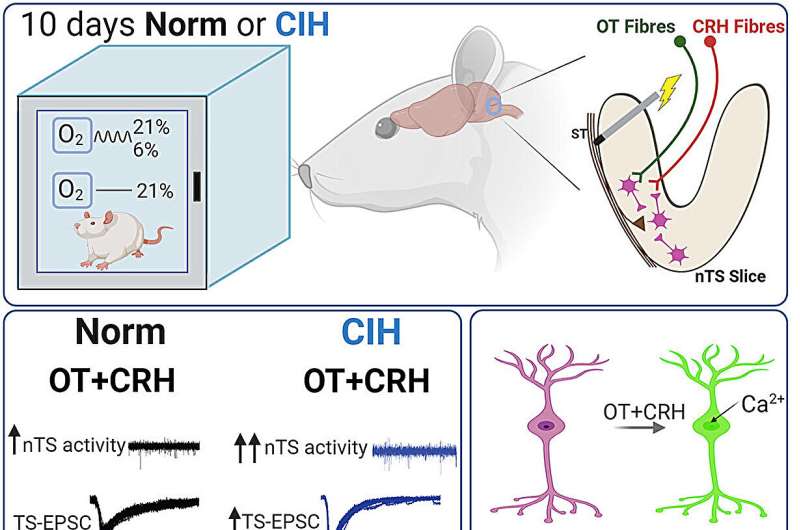
“When oxygen levels in the blood drop during sleep apnea, the forebrain sends warning signals to the brainstem area that controls heart and lung functions,” Kline said. “By studying these signals, we found that two neurochemicals, oxytocin and corticotropin-releasing hormone (CRH), cause the brainstem to become overactive. Over time, this leads to hypertension.”
Hypertension leads to increased risk of stroke, complications for the metabolism and a variety of other health issues.
“Not only do those with sleep apnea often have high blood pressure, but they also lose a lot of sleep, they have more cognitive and memory issues, and they are more prone to injury at work due to sleepiness,” Kline said.
By being the first to identify the role that oxytocin and CRH play in strengthening and overexciting the pathways and mechanisms involved in sleep apnea, Kline and his fellow researchers hope to pave the way for the design of better therapeutic approaches for humans and animals.
“Our ultimate goal is to eventually help clinicians develop specific drugs to target either these neurochemicals or the proteins they bind to in a way that reduces high blood pressure,” Kline said. “This discovery opens the door for future research to block the pathways these neurochemicals use, ultimately helping to bring blood pressure back to normal levels.”
“I have always been fascinated by the brain and how it contributes to the cardiovascular and respiratory systems of our bodies,” Kline said. “I have a great group of interdisciplinary collaborators here at Mizzou who have helped me out tremendously, and seeing others in my lab make scientific discoveries brings me a lot of joy and excitement.”
The study was led by Procopio Gama de Barcellos Filho, a postdoctoral researcher who works in Kline’s lab.
“What makes Dr. Kline such a great supervisor is he is very encouraging and motivating, and while I have always been interested in neuroscience, he has helped me see the bigger picture in terms of how the brain is tied with the cardiovascular and respiratory systems,” Gama de Barcellos Filho said.
“He always wants to hear the thoughts of others in his lab before he makes a final decision, and that is something I will keep in mind if I ever become a principal investigator one day.”
The paper, “Oxytocin and corticotropin-releasing hormone exaggerate nucleus tractus solitarii neuronal and synaptic activity following chronic intermittent hypoxia,” is published in The Journal of Physiology.
More information:
Procopio Gama de Barcellos Filho et al, Oxytocin and corticotropin‐releasing hormone exaggerate nucleus tractus solitarii neuronal and synaptic activity following chronic intermittent hypoxia, The Journal of Physiology (2024). DOI: 10.1113/JP286069
Citation:
How does the brain respond to sleep apnea? Researchers pinpoint two neurochemicals (2024, July 23)
retrieved 13 September 2024
from https://medicalxpress.com/news/2024-07-brain-apnea-neurochemicals.html
This document is subject to copyright. Apart from any fair dealing for the purpose of private study or research, no
part may be reproduced without the written permission. The content is provided for information purposes only.