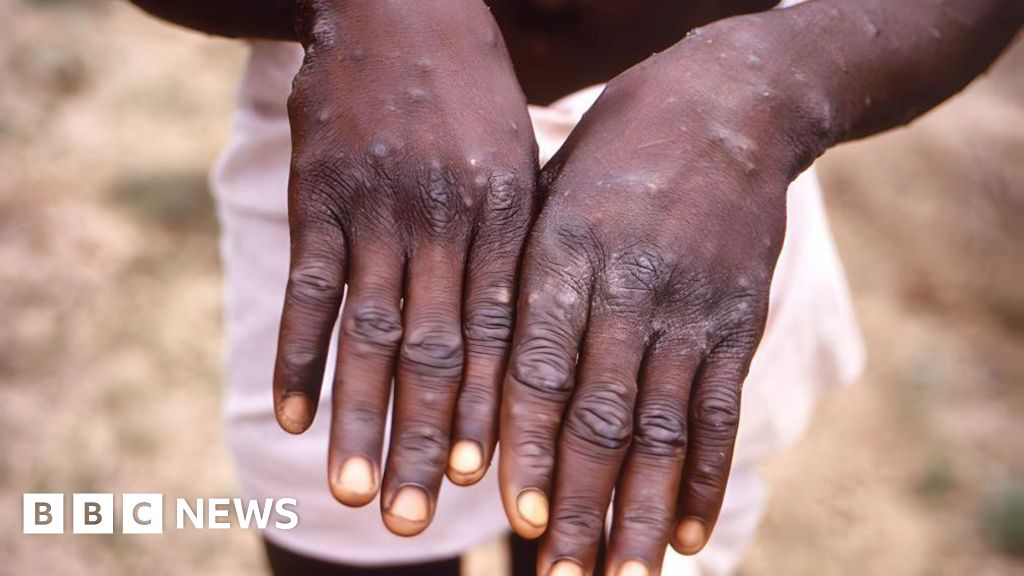
A single case of mpox – formerly known as monkeypox – linked to the recent outbreak in parts of Africa, has been detected in the UK.
It is part of the Clade 1b outbreak, which appears to spread more easily between people.
Mpox was declared a global health emergency by the World Health Organization in the summer.
The UK patient had recently been on holiday in at least one of the affected countries in Africa and began to feel sick 24 hours after flying home.
The patient developed flu-like symptoms on 22 October and a rash two days later.
An mpox rash of pus-filled lesions can last for up to a month. Other symptoms include fever, headaches and low energy.
The infected UK patient is being treated at the Royal Free Hospital’s specialist high consequence infectious diseases unit in London.
Laboratory testing confirmed the infection was Clade 1b. This form of the virus has been causing mounting concern.
It appears able to spread more easily from person to person through close physical contact, including sex, than other types of mpox.
In Africa, the Democratic Republic of Congo, Kenya, Burundi and Rwanda have all reported cases of Clade 1b mpox this year.
Its close relative Clade 1a is largely connected to exposure to infected animals or eating bush meat.
Clade 1b appears to be milder than 1a, although it’s difficult to know for certain because precise figures on the exact numbers of people infected are hard to pin down.
The patient’s close contacts, including those in the same household, are being traced. This is thought to be fewer than 10 people.
“This is the first time we have detected this clade of mpox in the UK, though other cases have been confirmed abroad,” said Prof Susan Hopkins, the chief medical adviser at the UK Health Security Agency (UKHSA).
She said: “The risk to the UK population remains low, and we are working rapidly to trace close contacts and reduce the risk of any potential spread.”
Sweden, India and Germany have all detected cases of this strain of mpox linked to travel to affected countries.
This is a different outbreak to the one that primarily affected gay, bisexual and other men-who-have-sex-with-men in 2022, called Clade II. These mpox infections still happen at low levels.
Health and Social Care Secretary Wes Streeting said : “The government is working alongside UKHSA and the NHS to protect the public and prevent transmission.
“This includes securing vaccines and equipping healthcare professionals with the guidance and tools they need to respond to cases safely.”