
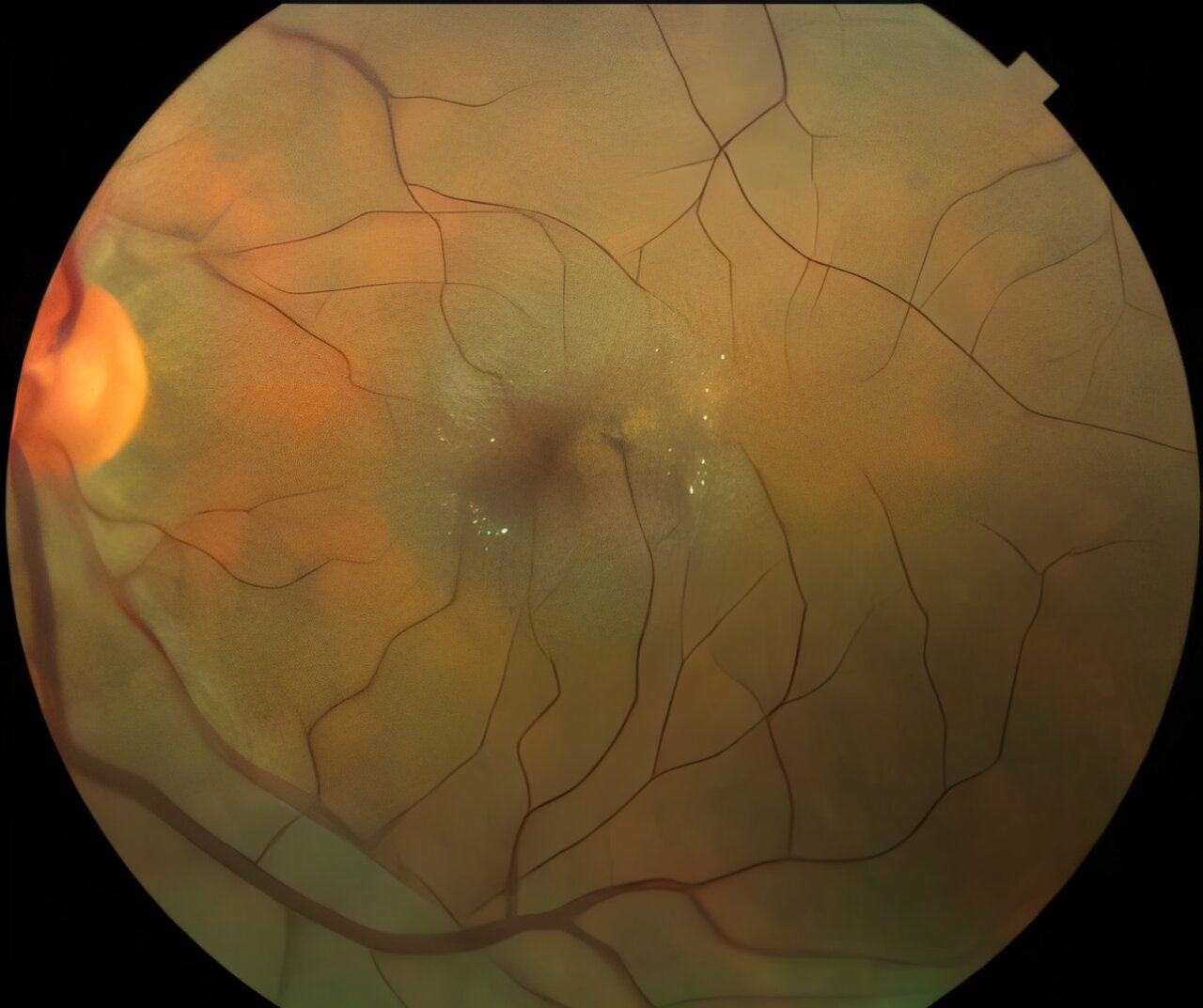

For people diagnosed with macular telangiectasia type 2 (MacTel)—a rare and slowly progressing retinal disease—there have been no FDA-approved (or other) treatments to slow or stop vision loss. That changed on March 6, 2025, with the approval of ENCELTO (revakinagene taroretcel-lwey), a surgically implanted device designed to preserve sight in people with this condition.
Developed by the biotech company Neurotech Pharmaceuticals, ENCELTO’s origins stem from a long-standing partnership between the Scripps Research lab of physician-scientist Martin Friedlander and the Lowy Medical Research Institute. This marks the 17th FDA-approved therapy to emerge from work at Scripps Research. The device is expected to be available to U.S. patients in June 2025.
“The Lowy family’s commitment to finding a treatment through their extraordinary support of the MacTel Project and the Lowy Medical Research Institute—combined with the work produced by Scripps Research, Neurotech, and an international consortium of scientists and clinicians—is a testament to the power of collaboration and the importance of basic science in developing effective treatments for debilitating diseases,” says Friedlander, whose research, along with that of others, helped pave the way for ENCELTO.
MacTel affects the central part of the retina, which is essential for sharp, detailed vision. People with the disease often have trouble reading, recognizing faces or seeing fine detail—symptoms that gradually worsen over time. To slow this progression, ENCELTO delivers a steady dose of ciliary neurotrophic factor (CNTF), a naturally occurring protein that supports the survival and health of nerve cells—including photoreceptors in the retina. CNTF acts as a neuroprotectant, meaning it helps shield these cells from damage to delay the degenerative process.
The FDA’s approval was supported by two phase 3 clinical studies showing that the ENCELTO implant slowed the loss of light-sensing retinal cells in people with MacTel over a 24-month period. Devices removed from patients’ eyes after as long as 14.5 years still produced levels of CNTF comparable to what they were producing at the time of implantation, suggesting the device should remain efficacious well beyond the 2 years observed in the trials. This is being examined further in extended phase 4 trials.
“This is the first time a cell-based therapy delivering a neuroprotectant has been approved to treat a neurodegenerative disease,” notes Friedlander.
Now president of the Lowy Medical Research Institute, Friedlander played an active role in shaping ENCELTO’s scientific foundation and helped lay the groundwork for its clinical development through earlier work by his Scripps Research team.
MacTel was initially believed to be a blood vessel disorder because early imaging showed abnormal, leaky capillaries near the center of the retina. But Friedlander and his lab helped reveal that the real issue was neurodegeneration—the gradual death of photoreceptors and supporting glial cells.
In a key proof-of-concept study published in The Journal of Clinical Investigation in 2009, they showed that gene therapy could be used to deliver a neuroprotectant directly to the retina in a preclinical model resembling the disease, effectively slowing or preventing cell loss.
This early success paved the way for further development of ENCELTO. A few years later, a member of the Lowy family was diagnosed with MacTel. The family’s search for a treatment became the driving force behind developing a lasting, targeted therapy for MacTel—which would eventually become ENCELTO.
Building on his 2009 findings, Friedlander began looking for a way to deliver CNTF to patients in a safe and sustained manner. He reconnected with Neurotech—a company he had worked with in the 1990s—to explore utilizing one of its devices originally developed to treat other retinal conditions. Together, they explored the use of a tiny, collagen-based capsule containing genetically modified retinal pigment epithelial (RPE) cells, which help nourish the retina and support photoreceptor health. Once implanted in the back of the eye, the device releases CNTF in a controlled, long-term way while shielding RPE cells from attack by the body’s immune system.
ENCELTO is also being evaluated for neurovascular degenerative conditions beyond MacTel. Friedlander’s lab is now exploring its potential to deliver other therapeutic molecules for diseases such as glaucoma and age-related macular degeneration.
“The retina is an extension of the brain, so this also implies that a neuroprotectant could be used to prevent neurodegeneration in other diseases,” says Friedlander.
He adds that ENCELTO’s success is the culmination of years of research, persistence and problem-solving by many people—from the earliest lab studies to the final stages of clinical testing.
“There’s no greater satisfaction for a clinician-scientist than to be able to find a treatment that will potentially impact hundreds of thousands of patients,” says Friedlander. “It’s tremendously rewarding to take something from the lab bench and actually bring it to the bedside.”
Citation:
FDA approves a first-of-its-kind eye implant that slows vision loss in rare eye disease (2025, June 4)
retrieved 5 June 2025
from https://medicalxpress.com/news/2025-06-fda-kind-eye-implant-vision.html
This document is subject to copyright. Apart from any fair dealing for the purpose of private study or research, no
part may be reproduced without the written permission. The content is provided for information purposes only.