
Every sunrise and sunset sends the body a signal, keeping the circadian clock running on a roughly 24-hour cycle. This clock evolved so organisms could adapt to Earth’s daily rotation, syncing their biology to the pattern of day and night. Artificial lighting has freed human societies from relying on the sun to go about daily life, extending activity well into the night, but this convenience comes with a trade-off.
Source link
Exposure to bright evening light linked to higher risk of age-related eye disease
June 24, 2026
0 Comments
Explore More
VR headsets may actually reduce risk of dry eye
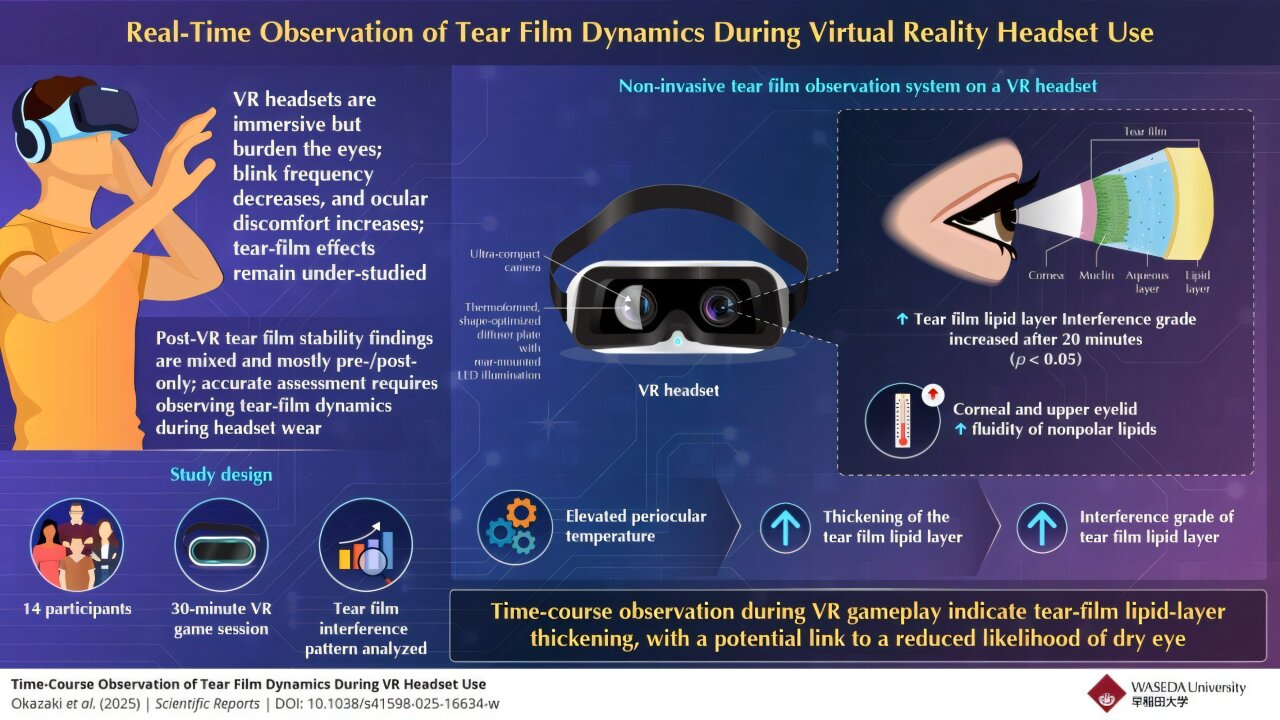
VR headset use may increase lipid layer thickness, potentially helping to prevent dry eye disease. Credit: Yoshiro Okazaki from Waseda University, Japan Virtual reality (VR) gaming has gained significant attention
AI can use a photo of the eye to estimate retinal age, flag risk for major diseases
There may be some truth to the saying “the eyes are the window to the soul.” Age-related changes are reflected in the retina, the light-sensitive tissue at the back of
Adverse effects found following faricimab treatment for eye conditions

The series of B-scans passing through the fovea show macular changes over time, starting with initial swelling including intraretinal fluid (white arrow), progressing through hyperreflectivity of the inner retinal layers