

A new editorial was published in Aging on August 19, 2024, entitled, “Cardiac metabolism in the elderly: effects and consequences.”
As noted in the paper, coronary artery disease (CAD) and heart failure (HF) are highly prevalent in the aging population, making them leading causes of death worldwide. As the heart ages, its ability to recover from myocardial infarction diminishes, leading to significant changes in energy utilization and eventually heart failure. Understanding these mechanisms is crucial for developing new, targeted therapies.
In this editorial, researchers Mohammad Kasim Fatmi, Nadiyeh Rouhi, Lucian Lozonschi, and Ji Li from Nova Southeastern University Kiran C. Patel College of Osteopathic Medicine in Fort Lauderdale, Florida, the University of South Florida in Tampa, Florida, and the University of Mississippi Medical Center in Jackson, Mississippi, explore the relationship between cardiac metabolism dysfunction and heart failure. They emphasize the need for innovative treatments to manage these interconnected cardiovascular conditions.
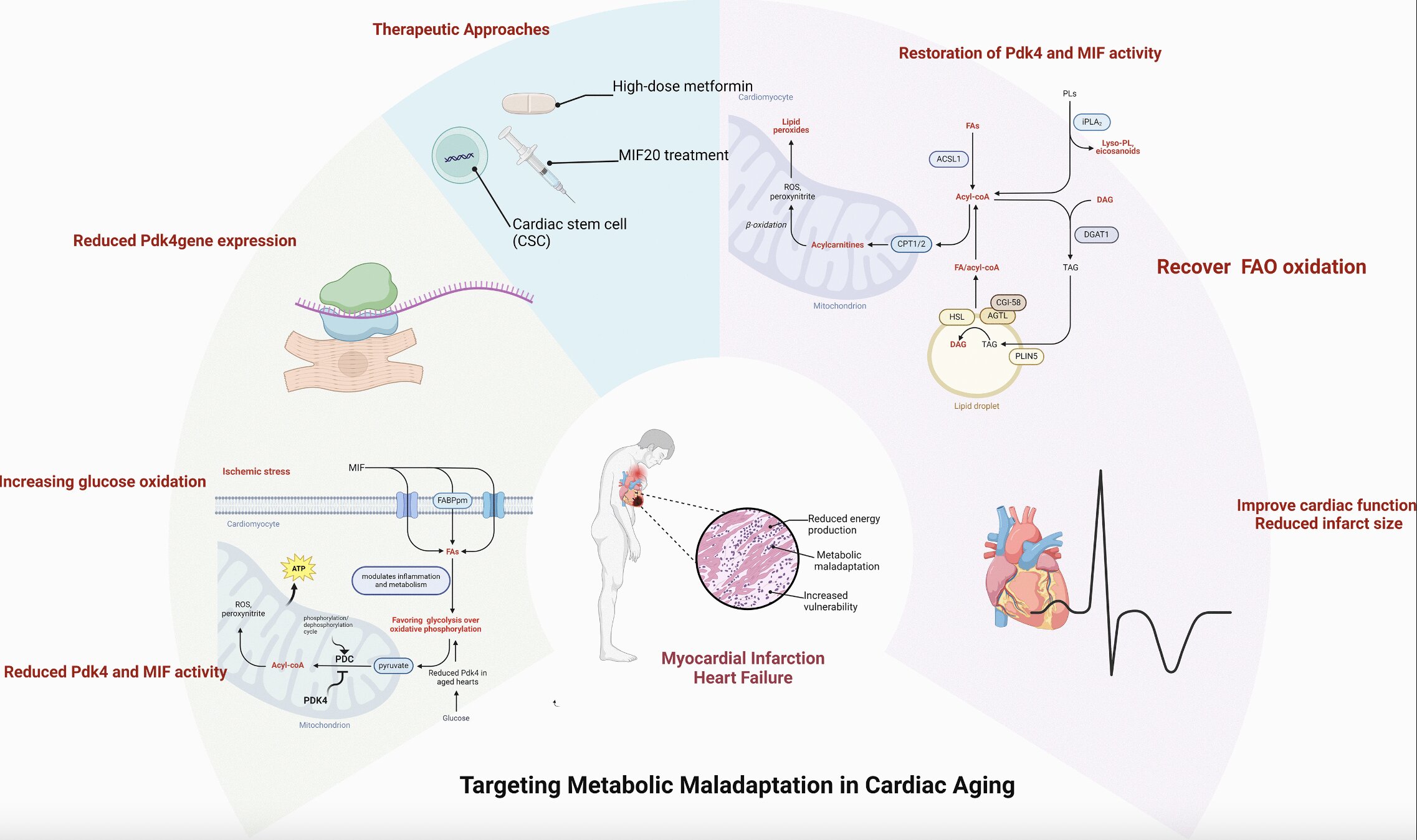
During the anaerobic conditions of myocardial infarction (MI), the heart shifts from fatty acid oxidation (FAO) to the less efficient glucose oxidation. A recent murine study by the researchers revealed that aged left ventricle tissue continues to rely on glucose oxidation post-MI, regulated by Pyruvate Dehydrogenase Kinase 4 (Pdk4), in contrast to younger tissue. This maladaptation in the left ventricle cardiomyocytes post-MI indicates a reduced capacity for the aged heart to recover cardiac output, potentially progressing towards HF.
“We aim to explore the relationship between cardiac metabolism dysfunction and heart failure, emphasizing the need of innovative treatments to manage these interconnected cardiovascular conditions.
“In summary, detailed mechanistic insights into Pdk4 and MIF (macrophage migration inhibitory factor) highlight their critical roles in cardiac metabolism and their potential as therapeutic targets for improving cardiac outcomes in the elderly post-MI,” said the researchers.
More information:
Mohammad Kasim Fatmi et al, Cardiac metabolism in the elderly: effects and consequences, Aging (2024). DOI: 10.18632/aging.206071
Provided by
Impact Journals LLC
Citation:
Effects and consequences of cardiac metabolism in the elderly (2024, September 4)
retrieved 4 September 2024
from https://medicalxpress.com/news/2024-09-effects-consequences-cardiac-metabolism-elderly.html
This document is subject to copyright. Apart from any fair dealing for the purpose of private study or research, no
part may be reproduced without the written permission. The content is provided for information purposes only.


