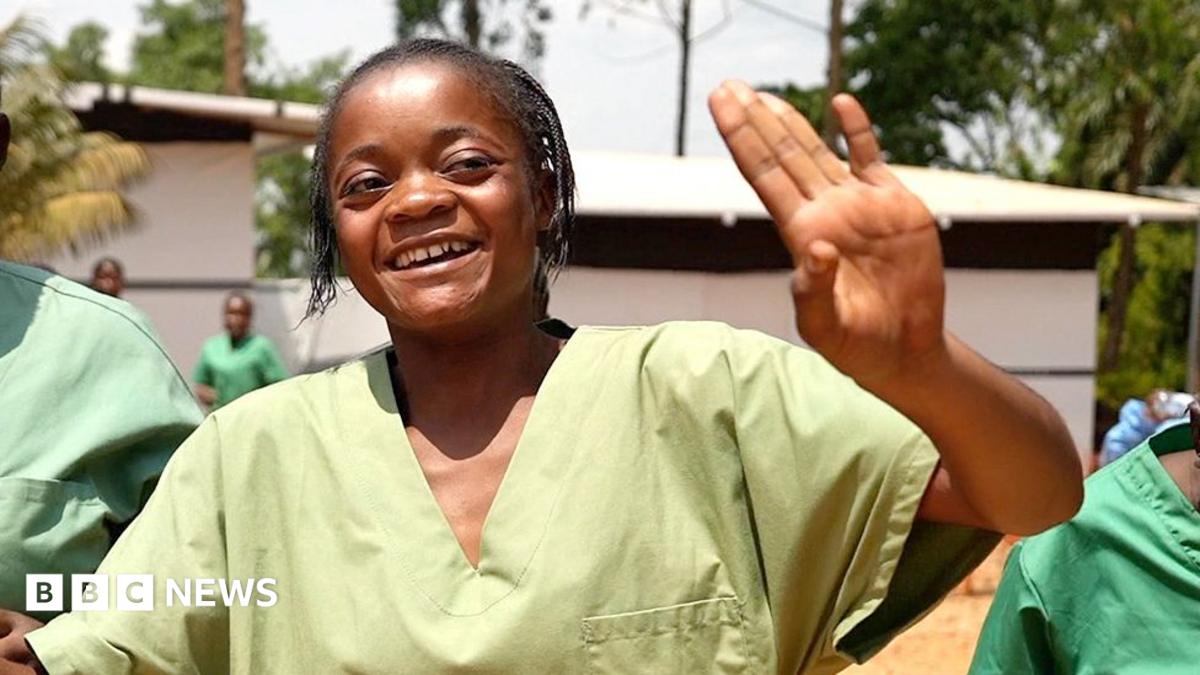
“See… I recovered,” the subsistence farmer said as he raised his hands in the air three times in a victory salute and in praise of God.
“People should seek treatment when they fall ill,” he said as he turned to thank the healthcare workers behind him who were clapping.
Reflecting on how he became infected, Kitambala said he went to see someone in his community who was unwell and pray for him. Shortly afterwards, he fell ill himself.
The virus spreads from one person to another by contact with infected bodily fluids such as blood or vomit.
When Kitambala first became sick, like many people in DR Congo, he initially tried traditional medicine. But when his condition deteriorated, he went to hospital.
“We have seen a huge difference in the community since the first patient recovered and returned home,” said Dr Richard Lukodu, Mongbwalu hospital’s medical director.
“More people are coming here now seeking treatment.”
Fifty-five-year-old pastor Deogratias Kasereka became the first Ebola patient to leave the centre a week ago.
Dr Lukodu is optimistic that the recoveries will help build trust in the healthcare system as his hospital has been a target of violence connected to misinformation.
On 21 May, a tent set up to treat Ebola patients in the hospital’s grounds was set on fire.
Myths about what medics were doing had been circulating since February – three months before the Ebola outbreak was confirmed – when people started dying in noticeable numbers from an unusual illness.
“The people here had been misled to believe that Ebola ended during previous outbreaks after they burned down the treatment centres,” Lukodu said.
During the 2018-2020 outbreak in neighbouring North Kivu province, Ebola treatment centres were attacked and set ablaze multiple times.