
Uveal melanoma is a rare, aggressive cancer that starts inside the eye and often spreads to the liver. Few treatment options exist, and unlike some forms of skin melanoma that can respond well to modern therapies, metastatic uveal melanoma (MUM) remains difficult to treat.
Now, a team of Thomas Jefferson University researchers has tested a potential drug combination for MUM in a clinical trial that uncovered clues about why some tumors are resistant to treatment.
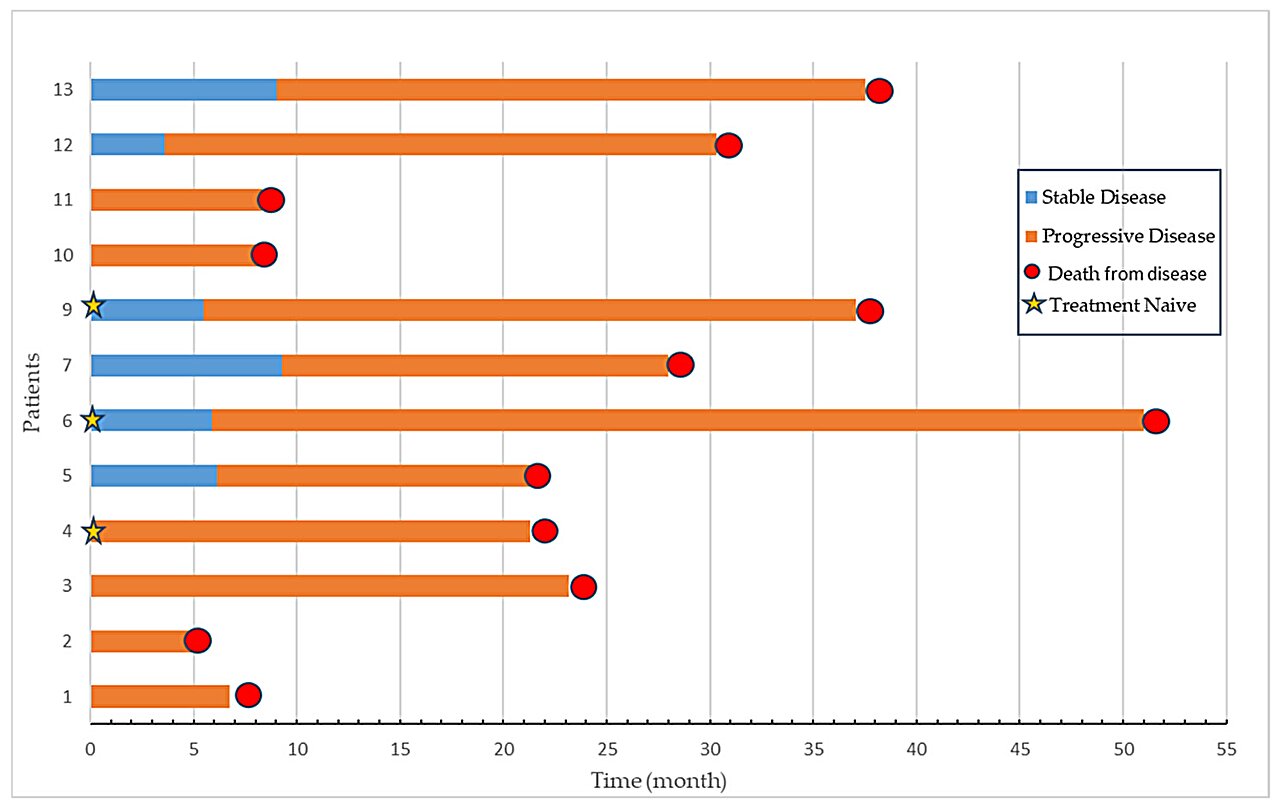
The study, published in the journal Cancers, tested two drugs, defactinib and avutometinib, in 12 people with MUM. A novel technology called “synthetic lethality analysis” indicated that this combination should work to block two different pathways and suppress the growth of MUM cancer cells.
Unfortunately, the treatment did not produce the tumor shrinkage the researchers expected. After two treatment cycles, six patients had stable disease, meaning their tumors did not grow, while six patients’ disease worsened.
“We were hoping that this was going to be a miracle combination,” says oncologist and senior author of the study Takami Sato, M.D., Ph.D.
Although it was not what they had hoped for, the researchers saw an opportunity to learn from the unexpected results. They compared tumor samples taken before and after treatment and looked for differences between tumors that remained stable and those that continued to grow.
They saw that levels of an enzyme called ALDH1A3 increased after treatment in several patients whose disease progressed, while patients whose disease remained stable tended to have lower levels. Previous research has linked high levels of ALDH1A3 with treatment resistance.
The team also found that tumors that progressed maintained biochemical signals that help cancer cells survive. These findings could help researchers identify ways to overcome resistance.
“Patients are still desperate, and we will keep looking,” says oncologist and lead researcher of the study Rino Seedor, M.D. Indeed, the team is now considering a new combination treatment based on the results of this study.
Together, the study highlights how moving discoveries from the laboratory into the clinic and then bringing what is learned back to the laboratory is “crucial to moving the science forward and developing better therapies,” Seedor says.
Publication details
Rino S. Seedor et al, A Phase II Trial of Defactinib Combined with Avutometinib in Patients with Metastatic Uveal Melanoma, Cancers (2026). DOI: 10.3390/cancers18142232
Journal information:
Cancers
Clinical categories


Citation:
Drug combination study reveals new clues to treatment resistance in deadly melanoma (2026, September 23)
retrieved 17 October 2026
from https://medicalxpress.com/news/2026-09-drug-combination-reveals-clues-treatment.html
This document is subject to copyright. Apart from any fair dealing for the purpose of private study or research, no
part may be reproduced without the written permission. The content is provided for information purposes only.