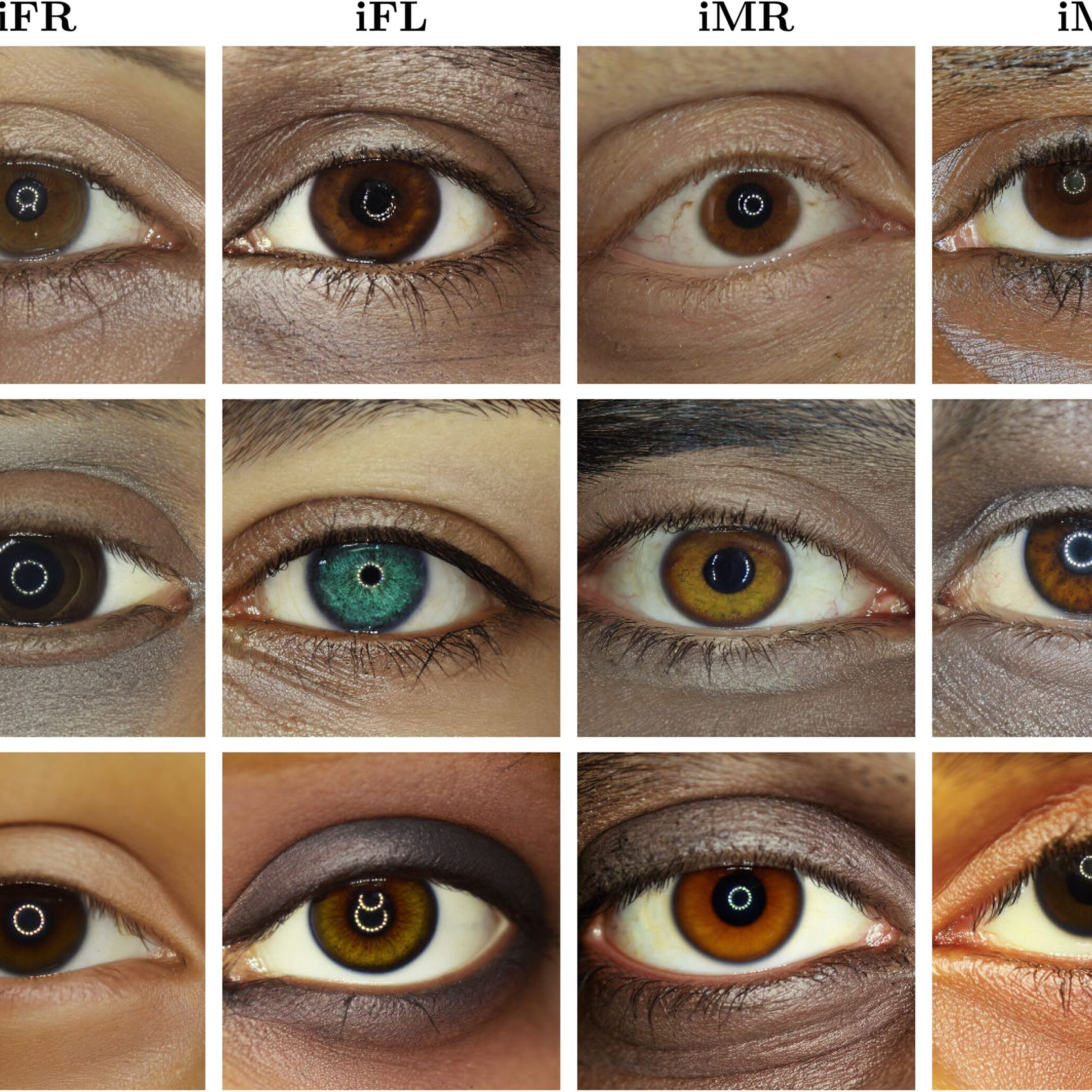

A medical informatics team at Jena University Hospital has introduced a privacy-compliant method for the AI-driven generation of realistic eye images. While the synthetic images remain suitable for diagnostic analysis, it is no longer possible to identify the individuals depicted in the original training data.
The study, published in PLOS Digital Health, presents a novel approach to reconciling the conflicting demands of medical utility and anonymity—a challenge of particular importance in ophthalmology.
Image data form a crucial basis for clinical decisions and play an equally vital role in medical research. At the same time, images often contain features that can be uniquely linked to a specific person, raising significant data protection concerns. This dilemma is particularly evident in ophthalmology, as diagnostic procedures rely on eye images that are highly effective for personal identification.
As part of the Avatar research consortium, a medical informatics team at Jena University Hospital took on the task of providing training data for the development of ophthalmic devices—in a manner that complies with data protection regulations. The first step involved adapting a generative AI model specifically for eye images.
Balancing realism with anonymity
“It uses real images to create synthetic ones that closely resemble the originals and accurately depict pathological features,” explains Sebastian Uschmann. “However, individual biometric details are altered in the process.”
A second step ensures that this modification is sufficient to guarantee anonymity. The researchers developed an analytical metric to assess the similarity between synthetic and original images regarding identity while simultaneously ensuring that essential medical information is preserved. A metric termed “Cone of Privacy” automatically identifies and discards generated images that pose an elevated privacy risk.
Testing the privacy filter
To evaluate the method, the team used a dataset comprising 2,000 eye images from 704 individuals. “The algorithm generated realistic synthetic images suitable for research and development in ophthalmology and reliably identified images that raised privacy concerns,” summarizes Professor Cord Spreckelsen.
“The method can also be applied to other types of medical image data, helping to ensure that medical data can be used for collaborations, as training data and for scientific research while complying with data protection regulations.”
Publication details
Sebastian Uschmann et al, Ensuring data protection for eye images by combining fine-tuned image synthesis and anonymity assessment, PLOS Digital Health (2026). DOI: 10.1371/journal.pdig.0001487
Journal information:
PLOS Digital Health
Clinical categories


Citation:
AI eye-image filter preserves disease signs while protecting patient identity (2026, September 10)
retrieved 17 October 2026
from https://medicalxpress.com/news/2026-09-ai-eye-image-filter-disease.html
This document is subject to copyright. Apart from any fair dealing for the purpose of private study or research, no
part may be reproduced without the written permission. The content is provided for information purposes only.