
Recent advancements in digital and immersive technologies underscore the need for transformation in dental education; however, a new international study reveals that their adoption remains strikingly limited. Traditional simulations, such as phantom heads and benchtop exercises, still dominate about 80% of clinical training time, while haptic virtual reality (HVR) and mixed reality together account for only about 14% and are used in just a small minority of postgraduate programs.
Source link
Adoption of immersive technologies in dental education remains limited on a global scale
April 14, 2026
0 Comments
Explore More
Why is mental illness linked to poorer oral health?

by Bonnie Clough, Amanda Wheeler, Caroline Victoria Robertson, Santosh Tadakamadla, Steve Kisely, The Conversation Credit: Ông Ngọc Dư from Pexels People with poor mental health face many challenges. One that’s
Treating gum disease could reduce risk of heart attacks and strokes
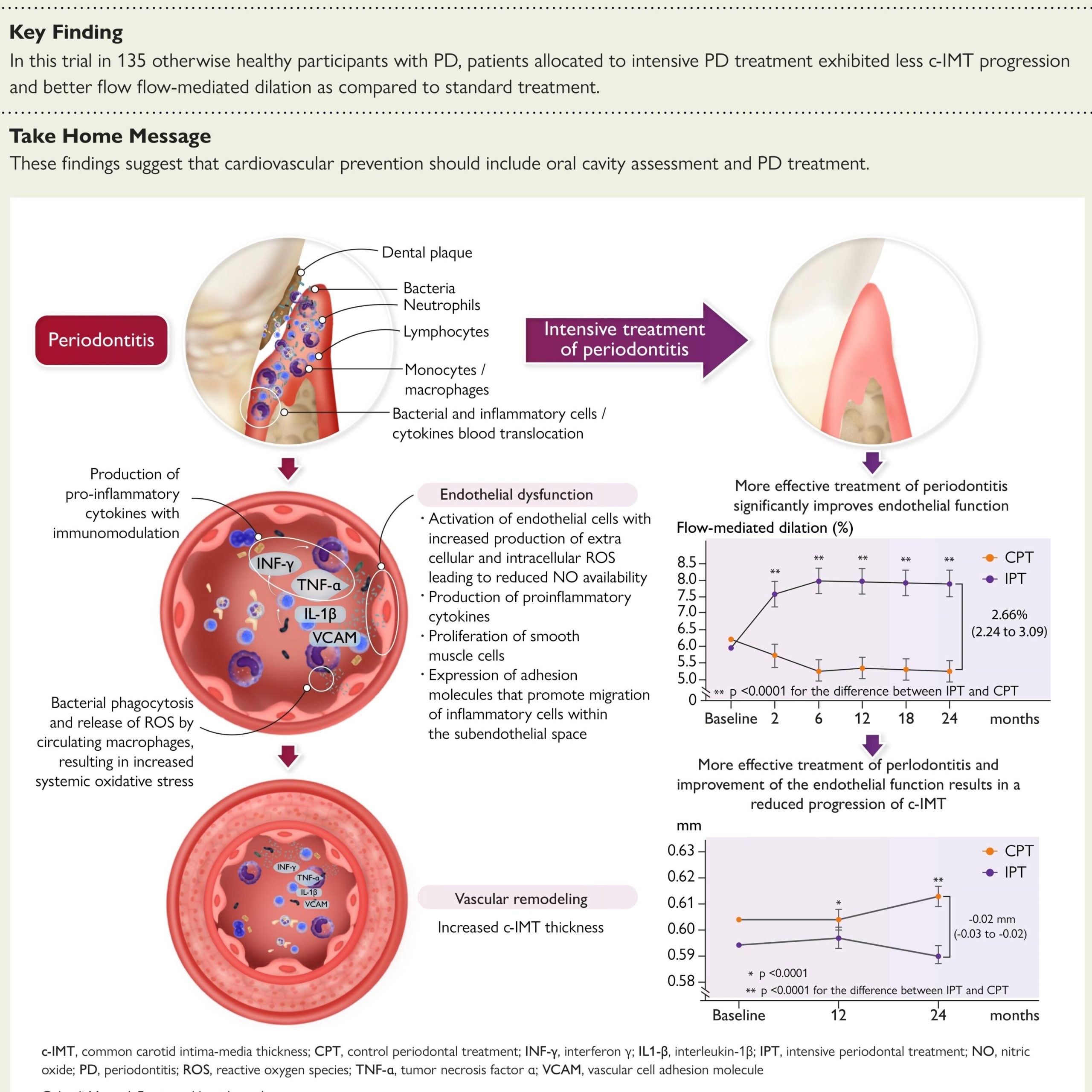
Structured Graphical Abstract. Credit: European Heart Journal (2025). DOI: 10.1093/eurheartj/ehaf555 Intensive treatment of severe gum disease can help prevent arteries from becoming clogged, supporting heart health and reducing the long-term
Proof of concept of new material for long lasting relief from dry mouth conditions

Lactoferrin which is a protein found in milk—colored dark blue—forms the mesh-like architecture of the hydrated microgel, partially coated by a hydrogel made by a polysaccharide κ-carrageenan, colored light blue.