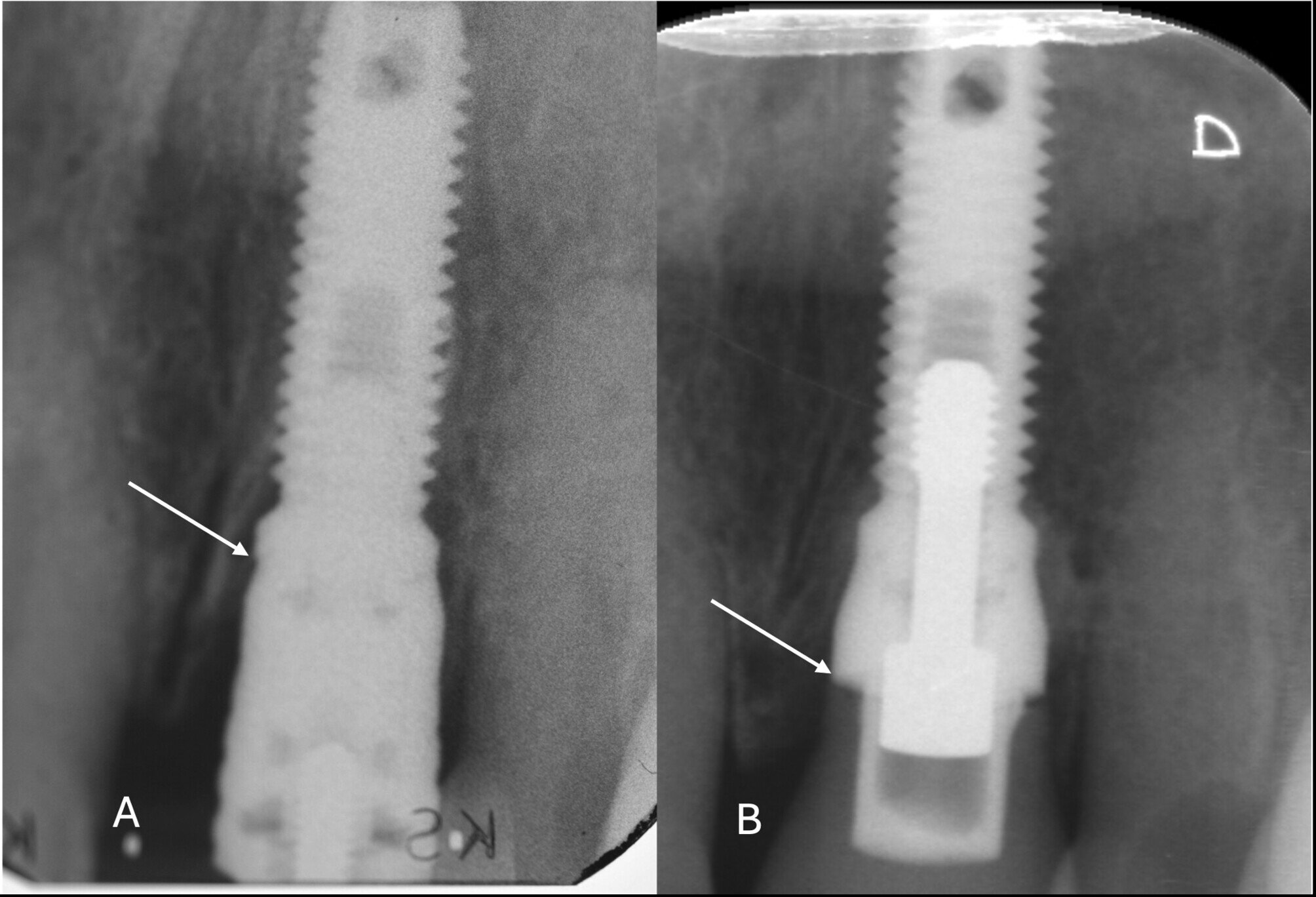

Dental implants used to replace single teeth continue to function well after several decades, according to a study from the University of Gothenburg. After nearly forty years, all examined implants were still in place and fully functional.
The study is the longest follow-up study of single dental implants in the world and is based on a follow-up of a small group of patients who received single implants to replace missing teeth between 1982 and 1985. The implants are a result of research conducted by Professor Per-Ingvar Brånemark at the University of Gothenburg. His discovery of how bone integrates with titanium implants has enabled millions of patients to replace lost teeth with a reliable and long-lasting solution.
The study results have been published in the journal Clinical Implant Dentistry and Related Research.
Stable implants
Of the 16 patients who received implants during the study period, 13 participated in the follow-up, conducted at the Brånemark Clinic, Public Dental Service Västra Götaland. These 13 patients had a total of 18 implants.
“It is impressive that the single implants function so well after such a long time. Even though the study included a small number of patients, the results show that the implants remain in place and that the bone loss around them is virtually unchanged after forty years. This confirms that the foundation Brånemark established still holds,” says Sargon Barkarmo, prosthodontist and senior lecturer at the University of Gothenburg.
A dental implant is an artificial tooth root made of titanium that is surgically placed into the jawbone, where it integrates and becomes stable. A crown is then attached to the implant, providing both functionality and aesthetics.
The crowns placed on the implants had a shorter lifespan than the implants themselves. At the forty-year follow-up, only about 60% of the original crowns remained, with many having been replaced one or more times.
“The study shows that the crowns were mostly replaced for aesthetic reasons rather than technical failures. In the future, implant treatments could be further improved with the development of new crown materials,” says Jan Kowar, prosthodontist and senior lecturer at the University of Gothenburg, and co-author of the study.
Implants and healing
The researchers point out that older implant systems, which have been shown to be highly effective, are unfortunately no longer available on the market. This is due to the continuous introduction of new systems that quickly replace older ones, despite their proven long-term success.
The study concludes that implants placed using well-planned surgical techniques and given sufficient healing time have an excellent long-term prognosis. Sargon Barkarmo again:
“Today, methods that accelerate treatment and healing are commonly used. These approaches also need long-term follow-ups and careful evaluation to ensure equally good results over time,” he says.
More information:
Sargon Barkarmo et al, Outcome of Single Dental Implants Over 38–40 Years: A Long‐Term Follow‐Up Study, Clinical Implant Dentistry and Related Research (2025). DOI: 10.1111/cid.13443
Citation:
Dental implants still functional after 40 years, finds study (2025, March 3)
retrieved 3 March 2025
from https://medicalxpress.com/news/2025-03-dental-implants-functional-years.html
This document is subject to copyright. Apart from any fair dealing for the purpose of private study or research, no
part may be reproduced without the written permission. The content is provided for information purposes only.