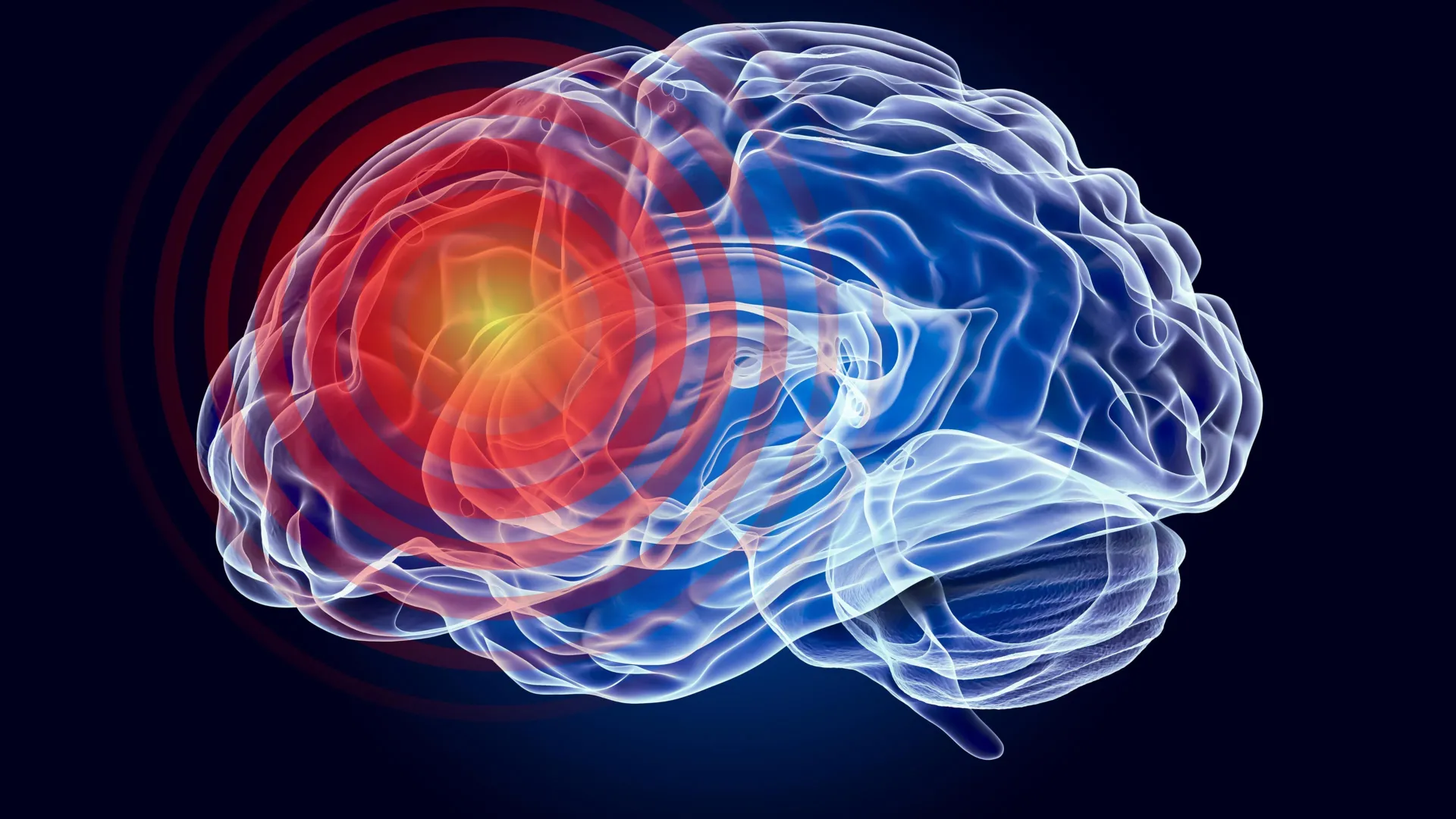
The link between poor sleep and mental health problems could be related to deficits in brain regions that keep unwanted thoughts out of mind, according to research from the University of East Anglia (UEA).
Sleep problems play an important role in the onset and maintenance of many mental health problems, but the reason for this link is elusive.
A new study, published in Proceedings of the National Academy of Sciences (PNAS), offers fresh insight into the cognitive and neural mechanisms underlying the connection between sleep and mental health. These findings could support the development of novel treatments and prevention strategies for mental health problems such as depression and anxiety.
Dr Marcus Harrington, a Lecturer in UEA’s School of Psychology, is lead author of the paper ‘Memory control deficits in the sleep-deprived human brain’. He worked with colleagues at the universities of York, Cambridge, Sussex, and Queen’s University (Canada).
Functional neuroimaging was used to reveal for the first time that deficits in memory control after sleep deprivation are related to difficulties in engaging brain regions that support the inhibition of memory retrieval, and that the overnight rejuvenation of these brain regions is associated with rapid eye movement (REM) sleep.
Dr Harrington said: “Memories of unpleasant experiences can intrude into conscious awareness, often in response to reminders.
“While such intrusive memories are an occasional and momentary disturbance for most people, they can be recurrent, vivid and upsetting for individuals suffering from mental health disorders such as depression, anxiety and post-traumatic stress disorder.
“Given that memories play a central role in our affective perception of the external world, memory control failures may go a long way towards explaining the relationship between sleep loss and emotional dysregulation.
“A better understanding of the mechanisms that precipitate the occurrence of intrusive memories is vital to improving emotional wellbeing and reducing the global burden of mental illness.”
Eighty-five healthy adults attempted to suppress unwanted memories while images of their brain were taken using functional MRI. Half of the participants enjoyed a restful night of sleep in the sleep lab before the task, whereas the other half stayed awake all night.
During memory suppression, the well-rested participants showed more activation in the right dorsolateral prefrontal cortex — a brain region that controls thoughts, actions, and emotions — compared to those who stayed awake all night. The rested participants also showed reduced activity in the hippocampus — a brain region involved in memory retrieval — during attempts to suppress unwanted memories.
Among the participants who slept in the lab, those who spent more time in REM sleep were better able to engage the right dorsolateral prefrontal cortex during memory suppression, pointing to a role for REM sleep in restoring prefrontal control mechanisms underpinning the ability to prevent unwanted memories from entering conscious thought.
Dr Harrington said: “Taken together, our findings highlight the critical role of sleep in maintaining control over both our memories and ongoing thoughts.”