
When Carol Daniel, a veteran broadcast journalist who lives near St. Louis, was diagnosed with thyroid cancer in 2022, her husband encouraged her to seek a second opinion. She was worried that consulting another doctor might seem like a betrayal.
Daniel said she wondered: “Am I cheating on him? Am I going behind his back? Am I acting like I don’t trust him by seeking a second opinion?”
Many patients find themselves in this position, but family medicine physician Jen Caudle said patients shouldn’t feel awkward about asking for a second opinion. In fact, in her practice in New Jersey, she encourages people to have open conversations with their care team.
“We shouldn’t be offended,” Caudle said. “We should support you.”
Patients can also think of their primary care provider as the quarterback of their care team, Caudle said, and ask that doctor for help navigating opinions or diagnoses from specialists.
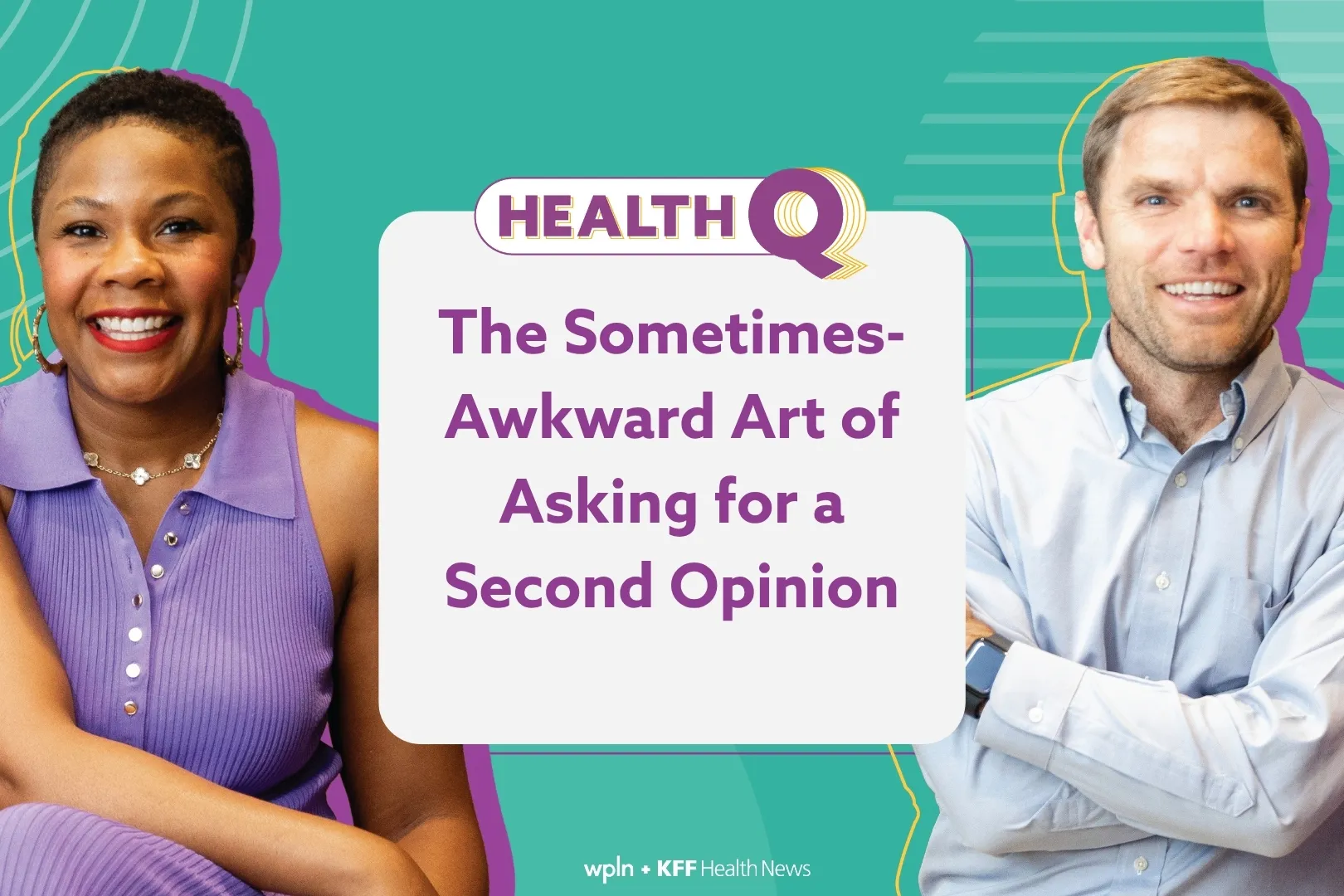
Cara Anthony and Blake Farmer, hosts of the HealthQ series, spoke with Caudle about the sometimes-awkward art of asking for a second opinion.
The QTip:
Your primary care provider can help you navigate first and second opinions from specialists.
Katherine Ruppelt and Emily Siner at Nashville Public Radio contributed to this report.
HealthQ is a health series from reporters Cara Anthony and Blake Farmer, approachable guides to an unapproachable healthcare system. It’s a collaboration between Nashville Public Radio and KFF Health News.

