
Researchers at the Greenwood Genetic Center (GGC) led the discovery of an unexpected connection between inherited blindness and a gene known for causing a rare metabolic disorder.
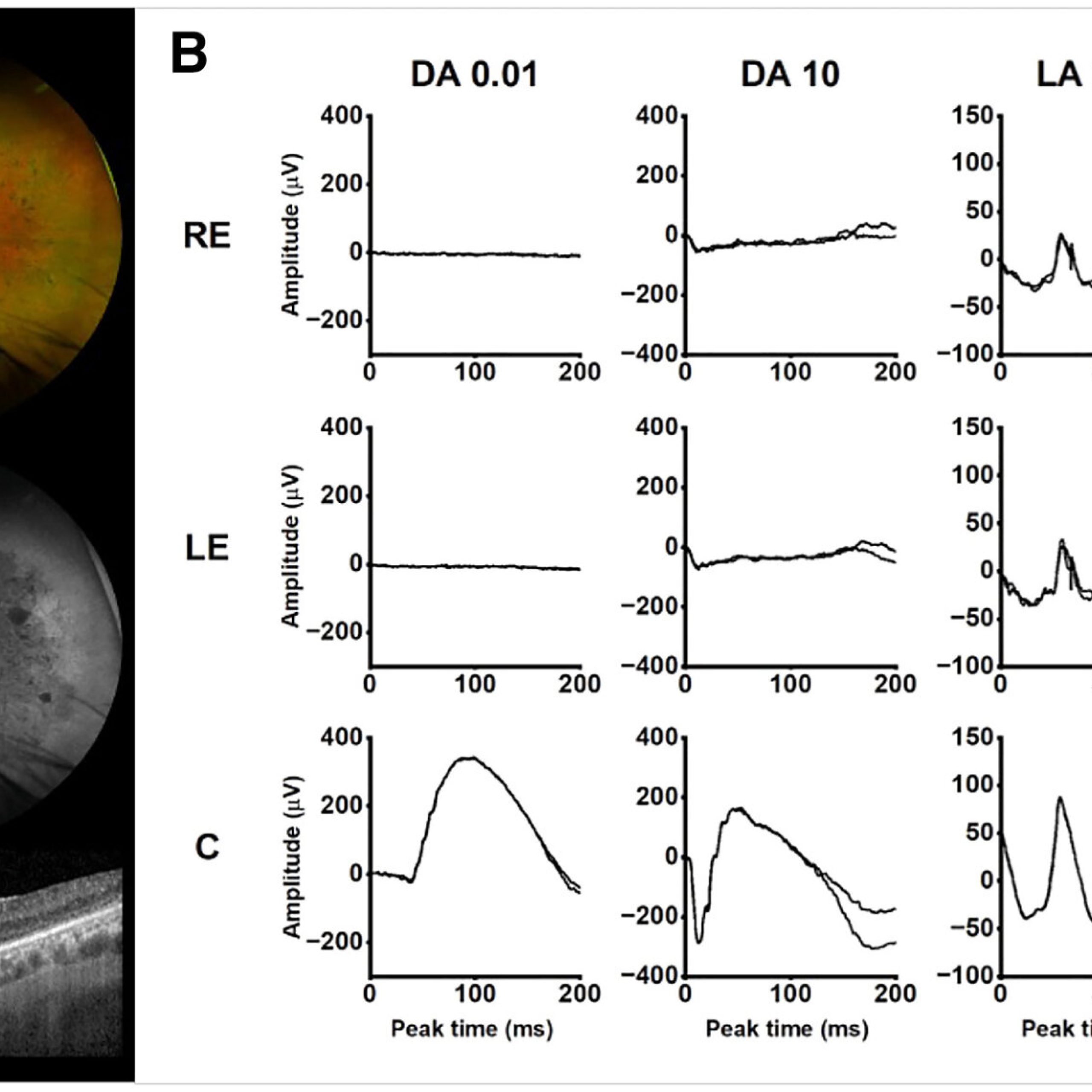
The international study, published in The American Journal of Human Genetics, examined 14 individuals from 12 families who had been diagnosed with retinitis pigmentosa (RP), an inherited eye condition that causes progressive loss of vision. Genetic testing revealed that all carried changes in both copies of the IDUA gene, which is typically associated with a rare metabolic condition called mucopolysaccharidosis type I (MPS I).
What made these cases unusual was that many of the individuals did not have the broader health problems, such as severe physical disability, heart problems and skeletal abnormalities, typically associated with MPS I, even at older ages.
“Genetic conditions do not always follow the patterns we expect,” said Gavin Arno, Ph.D., associate director of research at GGC and the study’s corresponding author. “Our findings show that changes in the same gene can sometimes affect the retina while leaving other parts of the body largely unaffected. This phenomenon may represent a significant cause of blindness in patients who remain undiagnosed.”

GGC researchers used a unique functional platform developed at GGC to investigate how the IDUA gene changes affect the body’s ability to produce a critical enzyme. Their work found that some of the genetic changes allow a very small amount of enzyme activity to remain. This may help explain why these individuals develop retinal disease without the more widespread problems seen in MPS I.
“This is an excellent example of why genetic diagnosis cannot always stop with identifying a variant in a gene,” said Richard Steet, Ph.D., director of research at the Greenwood Genetic Center and a study author. “By combining genetic analysis with laboratory studies, like enzyme levels, we can better understand why a condition may look very different from one person to another.”
The findings broaden the known range of conditions associated with IDUA and have additional implications for genetic testing. Researchers suggest that IDUA should be considered when evaluating patients with inherited retinal disease, even when they do not have the typical features of MPS I.
The study also highlights the importance of understanding how genetic variants affect the body—not just identifying the variants themselves. This information may ultimately help researchers and clinicians recognize patients earlier and better understand potential treatment opportunities.
The international study included researchers from more than 20 institutions, including the Greenwood Genetic Center, University of Manchester and other leading centers in inherited retinal disease and metabolic disorders.
Publication details
Siying Lin et al, Hypomorphic IDUA genotypes are associated with retinitis pigmentosa in individuals without syndromic mucopolysaccharidosis type I, The American Journal of Human Genetics (2026). DOI: 10.1016/j.ajhg.2026.09.008
Journal information:
American Journal of Human Genetics
Key medical concepts
Clinical categories
Provided by
Greenwood Genetic Center


Citation:
Unexpected link identified between rare metabolic disease gene and inherited blindness (2026, October 6)
retrieved 16 October 2026
from https://medicalxpress.com/news/2026-10-unexpected-link-rare-metabolic-disease.html
This document is subject to copyright. Apart from any fair dealing for the purpose of private study or research, no
part may be reproduced without the written permission. The content is provided for information purposes only.