
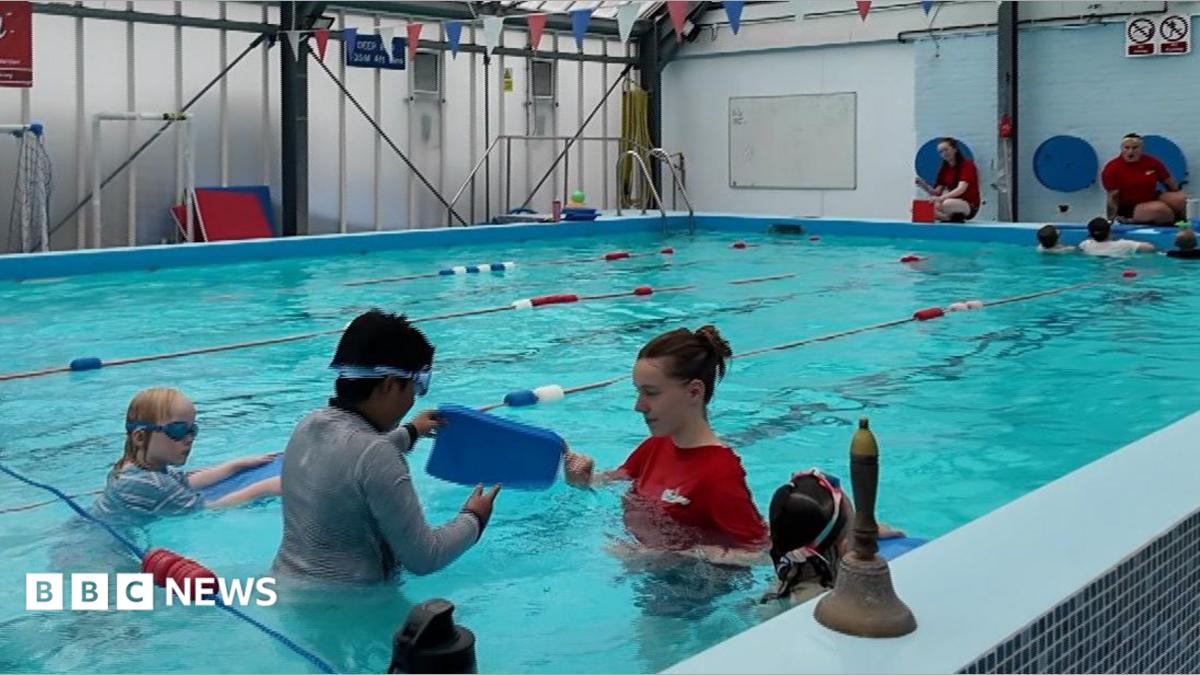
But whilst access to swimming pools remains a problem, the focus is being turned to teaching children how to be safe in the water.
Currently, children are taught how to swim 25 meters in a swimming pool as part of the curriculum in primary schools.
Though compulsory not all schools do it and it’s hard to monitor.
The hope is that with the new Water Safety Code included in the curriculum, children will be taught key safety messages such as “Stop and Think,” “Stay Together,” “Float,” and “Call 999.”
Mike Tipton, professor of physiology at Portsmouth University and chair of the National Water Safety Forum says learning to float is the key to survival.
As recent data showed that 61% of drowning victims aged between 8 and 18 were described by friends and family as being able to swim, according to National Water Safety Forum.
“Because you can swim 25 metres in an indoor pool, that doesn’t necessarily prepare you to be able to survive in open water”. Mike explained.
“So if you find yourself in trouble in cold water because you’ve rushed in, then float to live is the message.
“Roll onto your back, tilt your head back into the water and just just do as little as possible until you get your breathing under control, which will take about a minute.”.

