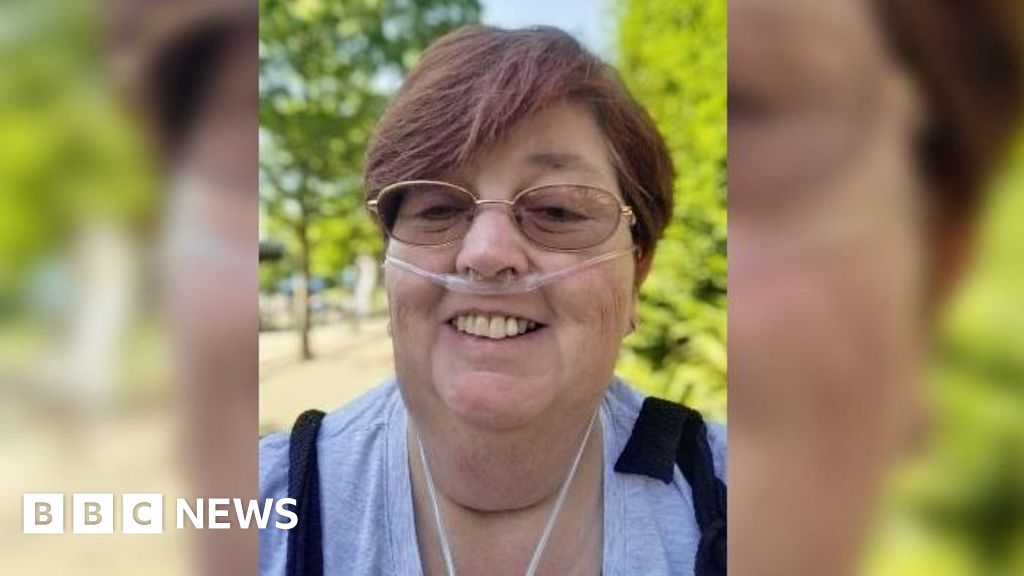

 Sarah McCubbin
A woman says a singing class was a life-saver in improving her breathing and has boosted her overall wellbeing.
Sarah McCubbin, 53, from Amesbury in Wiltshire, has asthma and suffered a type 2 respiratory failure, which causes dangerously low blood oxygen levels, three years ago.
She is one of hundreds of people who have found joining a singing session has improved her lung health and overall wellbeing, a report has revealed.
Ms McCubbin said after a few months she noticed she could say whole sentences without having to take a “big breath” and her anxiety improved, adding: “It know it sounds dramatic, but it was a life-saver.”
She attends the Sing and Breathe project, organised by Sounds Better CIC. This group offers weekly sessions across Wiltshire.
The organisation has released a report which has revealed huge benefits for people attending.
Bosses said “people have gone from not being able to walk very far or up the stairs to being more active with their grandkids”.
Ms McCubbin said when she came out hospital, she was using a zimmer frame and after a while she decided “no more”.
“It’s been three years since I started singing and I’ve not looked back since,” she said.
“It was an-eye opener. I learned ration breathing. I started breathing through my nose more and using my belly.”
 Sounds Better CIC
Liv McLennan, Sounds Better CIC director, said it is common for a lot of people, whether they have respiratory difficulties or not to “forget how to breathe in the most efficient way”.
“[So] we gently reconnect people with their bodies and give them a sense of being able to use it with more efficiency,” she said.
“We’ve seen huge changes people have gone from not being able to walk very far or up the stairs to being more active with their grandkids or children and walk miles. Some people have even been able to reduce their inhaler use.”
Ms McLennan said she is hoping to expand the project to more areas in the future.