With winter on the way and people spending more time inside, the air they breathe becomes a more significant concern. This is especially true during cold and flu season.
Researchers at UBC Okanagan are examining a new air-cleaning device designed to capture airborne pathogens. Their goal is to provide a stronger way to reduce the spread of respiratory illnesses in enclosed settings.
Limitations of Current Ventilation Methods
According to study co-author Dr. Sunny Li, a professor in the School of Engineering, the standard method for reducing infectious disease transmission involves upgrading a building’s ventilation system to manage airflow throughout large areas.
Some systems take things further by sending a stream of clean air directly toward an individual from a fixed location. This setup functions similarly to the air outlets found on passenger airplanes. However, Dr. Li notes several drawbacks. People must remain in the same position for the system to work effectively, or everyone in a shared space would need to use identical equipment at the same time. Constant airflow can also lead to dry eyes and skin, making long-term use uncomfortable.
“Ensuring high air quality while indoors is crucial for mitigating the transmission of airborne disease, particularly in shared environments,” says Dr. Li. “Many Canadians spend nearly 90 percent of their time inside, making indoor air quality a critical factor for health and well-being.”
Why Personalized Ventilation Matters
Postdoctoral researcher Dr. Mojtaba Zabihi, the study’s first author, explains that room configurations and existing heating, ventilation and air conditioning systems can differ widely. These variations make it difficult to implement consistent airflow improvements, which reinforces the need for personalized ventilation options.
“We wanted to develop an innovative system that prevents occupants from inhaling contaminated air while allowing them to use a personalized ventilation system comfortably for extended periods,” he says.
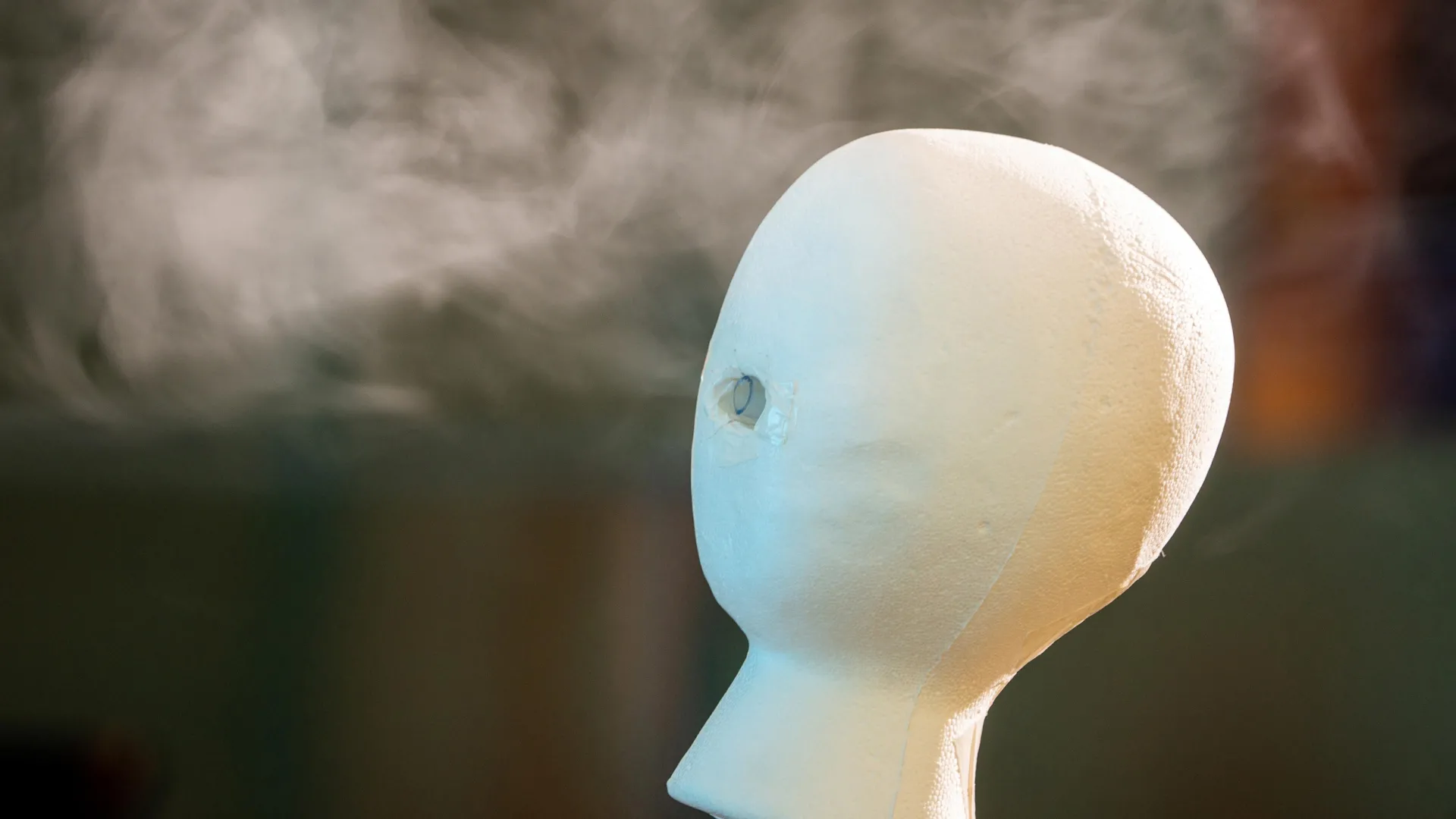
Working within UBC’s Airborne Disease Transmission Research Cluster, the team introduced an induction-removal or jet-sink airflow approach. This method is designed to capture exhaled aerosols before they spread through the room.
A New Approach to Capturing Airborne Particles
Traditional personalized ventilation systems often rely on fast-moving air streams that may feel uncomfortable and become less effective when a person shifts position. The new design takes a different approach by guiding airflow around the user and continuously drawing contaminated particles into a localized purification area.
“Our design combines comfort with control,” says Dr. Zabihi. “It creates a targeted airflow that traps and removes exhaled aerosols almost immediately — before they have a chance to spread.”
To test the system, researchers used computer simulations that modeled breathing, body heat and airflow during a 30-minute consultation scenario. They then compared its performance with standard personal ventilation systems.
Strong Reductions in Exposure Risk
The findings, recently published in Building and Environment, showed a striking difference. The new device lowered the chance of infection to 9.5 percent. By comparison, the risk was 47.6 percent with a typical personal setup, 38 percent with a personal ventilation system using an exhaust design, and 91 percent under regular room ventilation.
When positioned optimally, the device prevented inhalation of pathogens during the first 15 minutes of exposure. Only 10 particles out of 540,000 reached another person, and simulations indicated the system removed up to 94 percent of airborne pathogens.
“Traditional personalized ventilation systems can’t adapt when people move or interact,” explains study co-author Dr. Joshua Brinkerhoff. “It’s a smart, responsive solution for spaces like clinics, classrooms or offices where close contact is unavoidable.”
Future Potential for Safer Indoor Spaces
Dr. Brinkerhoff adds that the study illustrates how airflow engineering, not just filtration, can significantly enhance indoor air quality and safety. The next steps involve refining the system for use in larger rooms and testing physical prototypes in clinical and public environments.
As a member of Canada’s National Model Codes Committee on Indoor Environment, Dr. Zabihi hopes this research will play a role in shaping future ventilation guidelines, ultimately helping create healthier and safer indoor spaces for everyone.