
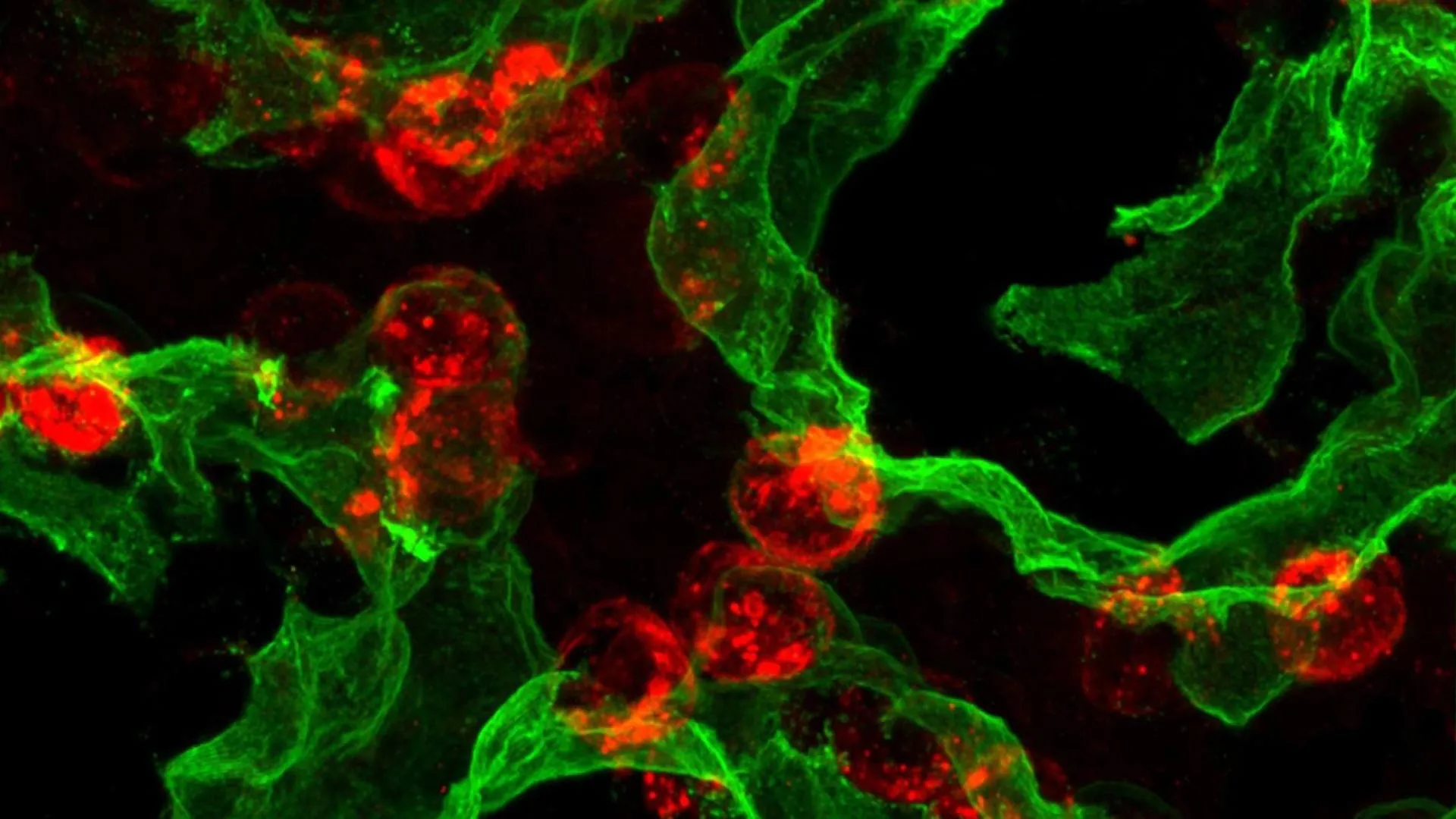
Researchers at Mayo Clinic have uncovered a molecular “switch” inside lung cells that determines when the cells focus on repairing tissue and when they shift to fighting infection. This important finding could pave the way for regenerative treatments for chronic lung conditions.
“We were surprised to find that these specialized cells cannot do both jobs at once,” says Douglas Brownfield, Ph.D., senior author of the study, which was published in Nature Communications. “Some commit to rebuilding, while others focus on defense. That division of labor is essential. And by uncovering the switch that controls it, we can start thinking about how to restore balance when it breaks down in disease.”
Understanding How Lung Cells Repair and Protect
The study focuses on alveolar type 2 (AT2) cells, which are unique because they both safeguard the lungs and act as reserve stem cells. AT2 cells produce proteins that keep the tiny air sacs open for breathing, while also regenerating alveolar type 1 (AT1) cells — the thin, flat cells that line the lung surface and enable oxygen exchange.
Scientists have long known that AT2 cells often struggle to regenerate properly in diseases such as pulmonary fibrosis, chronic obstructive pulmonary disease (COPD), and severe viral infections like COVID-19. What had remained unclear was how and why these cells lose their regenerative capacity.
Mapping the Life Cycle of Lung Cells
Using single-cell sequencing, advanced imaging, and preclinical models of lung injury, the Mayo Clinic team tracked the “life history” of AT2 cells. They discovered that new AT2 cells remain flexible for about one to two weeks after birth before they permanently adopt their specialized identity.
That critical transition is governed by a molecular circuit involving three key regulators — PRC2, C/EBPα, and DLK1. One of these, C/EBPα, acts as a clamp that keeps the cells from behaving like stem cells. To regenerate after injury, adult AT2 cells must release this clamp.
Why Infections Slow Lung Recovery
The same molecular switch also determines whether AT2 cells repair damaged tissue or fight infection. This dual role helps explain why infections can slow down or block recovery in chronic lung diseases.
“When we think about lung repair, it’s not just about turning things on — it’s about removing the clamps that normally keep these cells from acting like stem cells,” says Dr. Brownfield. “We discovered one of those clamps and how it times the ability of these cells to repair.”
Preventing Organ Failure
The findings open new possibilities for regenerative medicine. Drugs that fine-tune C/EBPα activity, for example, could help AT2 cells rebuild lung tissue more effectively or reduce scarring in conditions like pulmonary fibrosis.
“This research brings us closer to being able to boost the lung’s natural repair mechanisms, offering hope for preventing or reversing conditions where currently we can only slow progression,” says Dr. Brownfield.
The study may also help doctors identify early signs of disease by detecting when AT2 cells are trapped in one state and unable to regenerate. Such insights could lead to new biomarkers that detect lung disease in its earliest, most treatable stages.
Linking Discovery to Mayo Clinic’s Regenerative Initiatives
This work aligns with Mayo Clinic’s Precure initiative, which focuses on identifying diseases early — when treatments can have the greatest impact — and preventing progression before organ failure occurs.
It also advances the Genesis initiative, which aims to prevent organ failure and restore function through regenerative medicine. Building on these findings, the research team is now testing ways to release the repressive clamp in human AT2 cells, grow them in the lab, and explore their potential for future cell-based therapies.
