

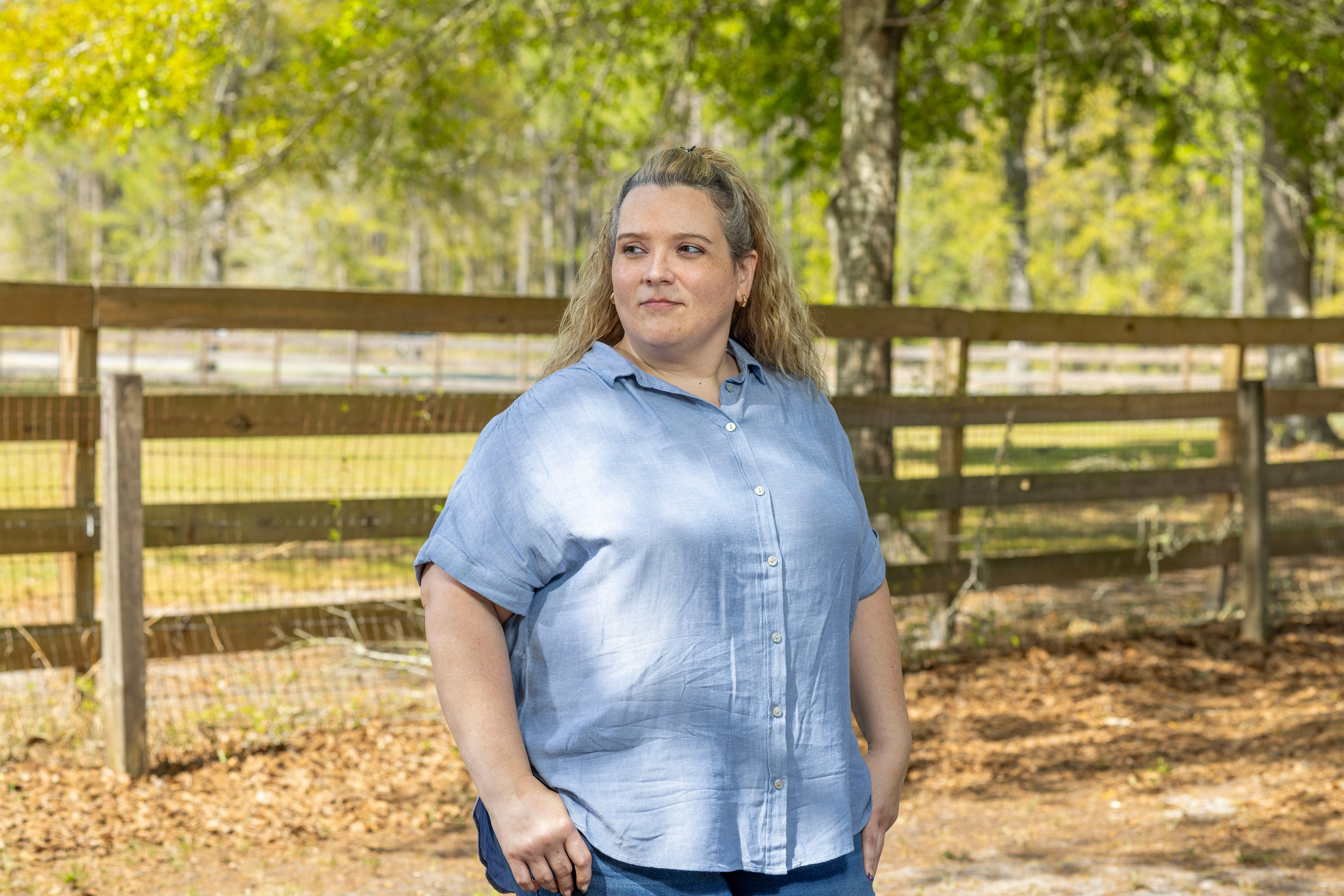
A few days after a harrowing cosmetic surgery procedure, Erin Schaeffer said, she woke up with fluid leaking from an open wound in her stomach.
Schaeffer went on to spend a week in a Florida hospital battling a severe infection after a type of tummy tuck and liposuction at the Jacksonville branch of Sono Bello, a national cosmetic surgery chain.
More than a year later, scars remain on her lower body — and in a lawsuit she is accusing Sono Bello of using an obstetrician-gynecologist who was inadequately trained to remove her excess skin and fat, a procedure she says caused excruciating pain.
“I literally felt like I was skinned alive,” said the 37-year-old, who works as a training manager for United Parcel Service.
Schaeffer and her husband, Jonathan, are suing Sono Bello and Manuel Herrera in Duval County Circuit Court. The suit accuses Herrera, a board-certified OB-GYN, of “performing procedures that he was not trained or qualified to perform.”
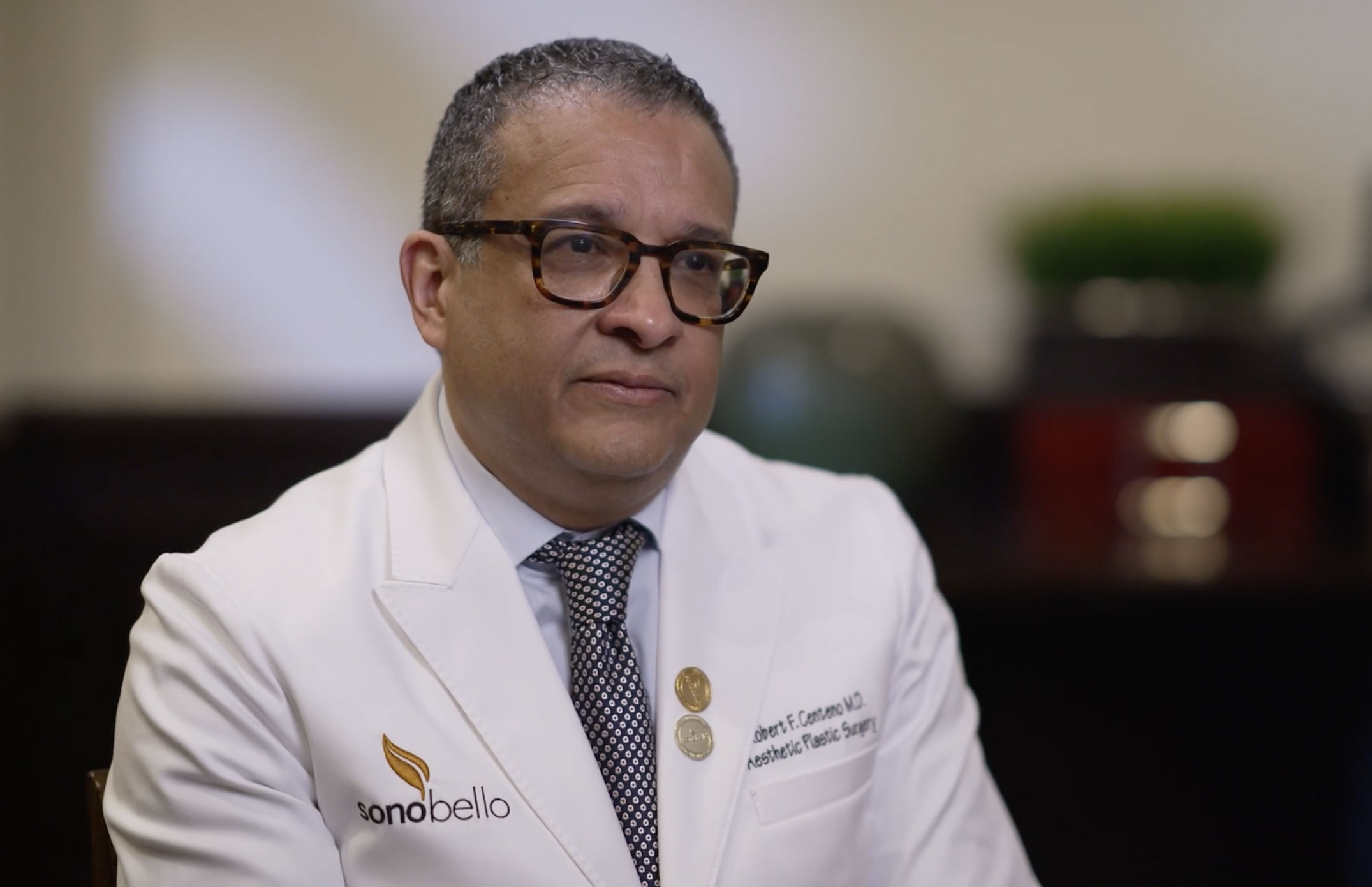
Sono Bello and Herrera denied the allegations in a joint court filing. And in an interview with KFF Health News and NBC News, Robert Centeno, Sono Bello’s medical director for the East region, said its surgeons undergo “very rigorous training.”
Backed by private-equity financing, Sono Bello is the largest of a breed of cosmetic surgery chains vying for a slice of the growing body-contouring market in the U.S. One research firm estimated that the market, which includes procedures ranging from wrinkle removal to liposuction, topped $22 billion in 2024.
The chains sell an array of body-reshaping operations, such as “Mommy Makeovers” and liposuction, targeting customers willing to pay up to $20,000 out-of-pocket for a new figure, often on credit with steep interest rates from companies specializing in credit for elective medical procedures. Sono Bello boasts it is “America’s top cosmetic surgery specialist.”
But a joint investigation by KFF Health News and NBC News found that Sono Bello and other cosmetic surgery chains have been the target of scores of medical malpractice and negligence lawsuits alleging disfiguring injuries — including 12 wrongful death cases filed over the past seven years.
Injured patients have accused the chains of hiring doctors with minimal cosmetic surgery training, of failing to recognize and treat life-threatening infections and other dangerous surgical complications, and of high-pressure sales tactics that minimized safety risks, court records show. Sono Bello and the other companies have denied the allegations in court.
“These people promise to turn you into the fairest person in the land, and the risks aren’t often worth the reality,” said Sean Domnick, a Florida attorney who heads the American Association for Justice, a trial lawyers’ group.
Sono Bello’s Centeno disagrees. He said the company’s mission is to “help each and every one of our patients live their best lives now.” Sono Bello offers “life-changing transformations” that enhance a person’s “appearance as well as their quality of life,” said Centeno, a surgeon himself at the company’s Troy, Michigan, office.
The doctors who perform such surgeries, court records show, are sometimes paid more for taking on patients with a high body mass, as obesity raises the risk of devastating complications.
And as the chains grow, there’s little regulatory oversight. While the FDA maintains a database of complaints about drugs or medical devices, there’s nothing similar for cosmetic surgeries.
Schaeffer had liposuction at Sono Bello in January 2024 and was satisfied with the results. On the morning of March 29, 2024, she went in for more liposuction and a mini-tummy tuck that Sono Bello calls AbEX. The medical staff gave her Xanax, a tranquilizer, and the painkiller oxycodone in pill form, according to medical records Sono Bello turned over to Schaeffer’s attorney. During the procedure, she received an infusion of lidocaine to numb the area but remained awake. Sono Bello says the local anesthesia is safer and promotes faster healing with “minimal discomfort,” so patients may return to work or other normal activities within a week.
That didn’t happen for Schaeffer, who said she felt so much pain during the operation that she began to cry and “begged” the doctor to stop near the end.
“I said, ‘I don’t care what I look like,’” she said in an interview. “‘I can’t handle the pain.’”
Two days later, she spiked a fever, and a day after that her pubic area swelled up “severely,” she said. Sono Bello medical staff told her that was normal and that she was fine, she said. Two days later, however, blood and fluid spilled out of her stomach when she got up.
On one visit to the office, Herrera told her she required surgery at a hospital to treat her wounds. But, Schaeffer recounted, Herrera said he couldn’t arrange that because he was an obstetrician, not a plastic surgeon, and didn’t have hospital privileges locally. Herrera has hospital privileges in the Orlando area, about 140 miles southwest of Jacksonville.
“I was just in utter shock,” Schaeffer said.
Sono Bello spokesperson Mark Firmani said the company does not require its doctors to have local hospital privileges, though many do have them.
Centeno said Schaeffer’s painful experience is not common.
“The reality is that over 90% of our patients who have our procedures completed are extremely comfortable during the procedure and they do quite well,” he said. Patients of Sono Bello and some other clinics also have complained to the Better Business Bureau of unexpectedly painful procedures.

Centeno said that Herrera still works for the company, but the doctor’s name does not appear on the company’s Jacksonville website. Herrera runs an OB-GYN and aesthetics practice, which includes skin care treatments, in Winter Garden, Florida, near Orlando, and is board-certified by the American Board of Obstetrics & Gynecology.
Sono Bello has considered him a rising star; Herrera’s work in 2023 won Sono Bello’s annual “New Talent Award,” given to a company doctor who exhibits “exceptional technical skills, productivity, and off-the-charts brand loyalty.”
Herrera completed a Sono Bello fellowship program that teaches a “suite of aesthetic procedures” in a six- to eight-week course under the direction of a company surgeon. The company says the fellowship offers “patient-focused training in awake total body contouring and skin excision procedures.” Sono Bello allows physicians who have completed formal residencies in more than half a dozen types of surgery to apply for its fellowship.
In a post on a Sono Bello website, Herrera said that before taking the fellowship course, he “had been a skilled surgeon for over 13 years with extensive experience in other areas but limited knowledge on body sculpting.” Herrera did not respond to calls and emails requesting comment and directed Sono Bello to respond on his behalf. Company spokesperson Firmani said Herrera is still a member of the Sono Bello team.
Many established plastic surgeons who spoke with KFF Health News and NBC News worry that chain surgery groups may be inclined to spend more effort on marketing and sales than on making sure their doctors are properly credentialed and capable of handling any complications that arise.
Medical practices owned by private equity or investment firms have more money to spend drawing in patients and “the ability to operate and provide quality patient care is now less important,” said Mark Domanski, a plastic surgeon in Northern Virginia.

Doctor Entrepreneurs
Formed in 2008 by entrepreneurial physician Tom Garrison, Sono Bello now runs more than 100 centers nationwide. Private equity investors have pumped $816 million into the company, most of it since 2023, according to PitchBook, which tracks the industry. Sono Bello advertises widely on television and online, aimed at what one major investor termed the “everyday woman and man.” It has advertised having “150+ board-certified surgeons who have performed over 300,000 laser lipo & body contouring procedures.”
Sono Bello limits its offerings to services such as liposuction and its version of tummy tucks, which it believes its surgeons have mastered. It does not perform Brazilian butt lifts, or fat transfers, though many other cosmetic surgery chains do.
While Sono Bello boasts that the vast majority of its patients are satisfied, court records show that allegations of substandard medical care have trailed its rapid growth.
Sono Bello and its corporate affiliates and surgeons have defended more than 60 medical malpractice cases, including four suits involving patient deaths, since April 2013, court records show. Sono Bello has settled three of four wrongful death cases filed since May 2018, while one is pending, court records show.
Schaeffer’s suit in Jacksonville is among at least 19 filed since the start of March 2023. Many are pending in the courts, and the company has denied the allegations.
Other physicians who have extended their brands to multiple cities and relied heavily on social media and splashy websites to bring in patients have also faced lawsuits.
Mia Aesthetics, formed in 2017 by Texas surgeon Sergio Alvarez, runs a dozen cosmetic surgery clinics from Miami to Las Vegas. Mia Aesthetics provides “the highest quality plastic surgery at affordable prices proving that being beautiful and saving money are two realities that can exist simultaneously,” its website says. Alvarez is a board-certified plastic surgeon.
Patients filed at least 30 medical negligence cases against Mia Aesthetics and its affiliates from November 2020 through March of this year, court records show. A dozen suits target its Miami surgery center. The company has sought, and often won, dismissal of malpractice suits because patients signed contracts agreeing to arbitration of any disputes, court dockets show. Alvarez did not respond to requests for comment.
Owned by New York physician Sergey Voskin since 2016, Goals Aesthetics and Plastic Surgery has branched out from a small cosmetic surgery office in the Brooklyn borough of New York City to a network of a dozen surgery centers it manages in eight states.
Goals clinics and affiliated surgeons have been named as defendants in at least 40 malpractice suits filed from October 2018 through March, court records show. The Atlanta branch accounted for more than 20 such cases in Georgia courts from September 2022 through June 2024. Most are pending. Goals defended two lawsuits brought by the families of New York patients who died shortly after having liposuction procedures, court records show. Goals denied the allegations and won dismissal of some cases by invoking arbitration agreements, according to court dockets. The company says these agreements are commonly used throughout the medical industry.
Voskin declined to be interviewed. In a statement, Goals lawyer Joshua Lurie said the medical offices it manages have performed more than 10,000 procedures and have “one of, if not the highest track records of safety among similar types of medical practices.”
Lurie said the “vast majority” of malpractice claims are “meritless.” These “bad faith filings create an implication of risk when none exist and when, again, there is a very negligible negative outcome from surgery compared to the total procedures performed,” he wrote.
No Guarantees
Malpractice suits by themselves are not proof of wrongdoing. Nobody tracks the outcome of these lawsuits, which often are settled under confidential terms that keep key details out of public view and prohibit patients from discussing their experiences. Surgeons often argue that complications are a risk of surgery and that a poor outcome doesn’t mean the doctor was negligent. To prove negligence, injured patients generally must show their care fell below what a reasonably prudent doctor with similar training would have done.
That can be a challenge. Typically, the surgery chains fight back by arguing that complications are a risk of any surgical procedure and that they never guarantee results.
Before their procedures, patients must sign consent forms acknowledging that their expectations must be “realistic” and that complications or dissatisfaction with the result does not necessarily mean the surgeon botched the job. The American Society of Plastic Surgeons investigates ethics complaints against its members, but not allegations of competence or malpractice.
Some pre-surgery contracts allow for low-cost “revisions” for disgruntled patients. Sono Bello has offered a “satisfaction commitment,” which states: “If your surgeon’s evaluation determines your results to be deficient, we will touch up the area at no cost to you.”
Other contracts contain disclaimers, such as reminding patients that dramatic “before and after” photos widely shown in online advertisements and other solicitations may not reflect typical results.
I don’t care what I look like. I can’t handle the pain.
Erin Schaeffer
Demonstrating the influence of social media in driving sales, Goals once required patients to sign a non-disparagement clause. The contract stated that patients who bad-mouth the company on social media without first giving the company “an opportunity to remedy any alleged issues” agree to pay damages of $10,000 for each violation.
In a civil investigation of Goals’ marketing tactics, Georgia Attorney General Chris Carr alleged that policy, and others, violated state consumer protection laws. In September 2022, Goals agreed to stop using the non-disparagement clause and to pay the state $119,480 to settle the matter, without admitting any wrongdoing.
Both Goals and Mia Aesthetics have clauses in their service contracts that require arbitration of any disputes in lieu of court action, a process many consumer advocates believe favors the industry. These agreements are becoming more common among plastic surgeons. The arbitration clauses have prevented some aggrieved patients from getting their day in a courtroom.
That happened in a wrongful death case filed by the family of Angela Mendez, 57, who was found dead in her apartment a day after liposuction at a Goals office in New York City in March 2021. She died from a pulmonary thromboembolism, a blood clot in her lung, as a complication of cosmetic surgery, according to an autopsy report.
Her family sued the company alleging negligence. But, in June 2024, a judge ruled that Mendez had signed a form requiring the case to be heard in arbitration and the lawsuit was dismissed.
Attorney Gary Zucker, who represents the family, is appealing. “It’s been a one-two punch for the family,” Zucker said.
Goals attorney Lurie called arbitration “a common practice throughout the industry and many industries” that is “intended to speed the process to come to resolutions in a more expedited fashion.” In a 2023 deposition, Lurie said patients can opt out of the arbitration agreement, which “has happened multiple times.”