
A University of Minnesota Medical School-led research team has discovered that a cancer signaling pathway has previously unrecognized roles in retina and brain blood vessels. The findings were recently published in Science Signaling.
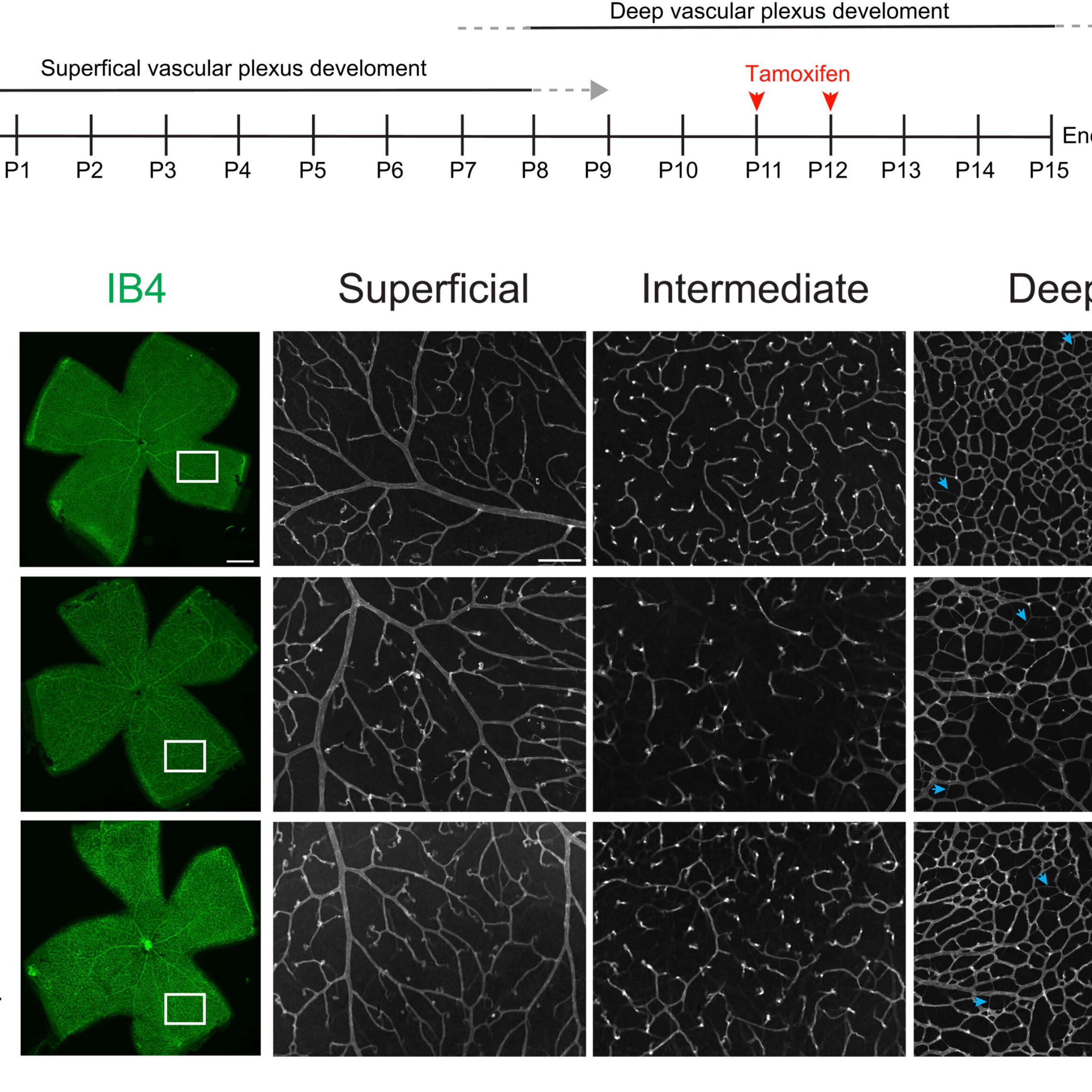
Blood-CNS barriers serve as a protective boundary between the bloodstream and the central nervous system by regulating the transport of nutrients, hormones and metabolic waste and preventing retinal and brain swelling. One of the key mediators of this mechanism is the Norrin/Frizzled4 signaling pathway. Until now, the link between this pathway and the MDM2–p53 axis—which suppresses tumors—had not been recognized.
“My findings reveal an unexpected link between the p53 stress response pathway and Norrin signaling in the vasculature of the central nervous system,” said Harald Junge, Ph.D., an associate professor at the University of Minnesota Medical School. “This has implications for cancer treatments that target MDM2 and increase p53 abundance. It’s important to consider that these treatments could impact barrier function, which could potentially lead to dysregulated transport between blood and CNS, neuroinflammation and swelling.”
The study found that p53—a protein known for protecting against cancer—weakens the Norrin/Frizzled4 signaling system in blood vessels by lowering levels of another protein called NCAPH. These findings suggest drugs that boost p53 levels—such as MDM2 inhibitors—may accidentally damage the protective barriers in the brain and eyes. The study also highlights NCAPH as a new candidate gene linked to familial exudative vitreoretinopathy (FEVR)—a rare, inherited eye condition that affects blood vessel growth in the retina.
Given the critical role of p53 in regulating vascular barrier function, it is important to evaluate whether MDM2 inhibitors—currently in clinical testing for cancer—could adversely affect the blood-retina or blood-brain barriers. The findings also support further investigation into the role of NCAPH in endothelial cells, both as a downstream effector of p53 and as a potential disease gene in vascular disorders like FEVR.
More information:
Jacklyn Levey et al, The MDM2-p53 axis regulates norrin/frizzled4 signaling and blood-CNS barrier function, Science Signaling (2025). DOI: 10.1126/scisignal.adt0983
Citation:
New research uncovers link between cancer pathway and blood-retina barrier function (2025, July 10)
retrieved 10 July 2025
from https://medicalxpress.com/news/2025-07-uncovers-link-cancer-pathway-blood.html
This document is subject to copyright. Apart from any fair dealing for the purpose of private study or research, no
part may be reproduced without the written permission. The content is provided for information purposes only.