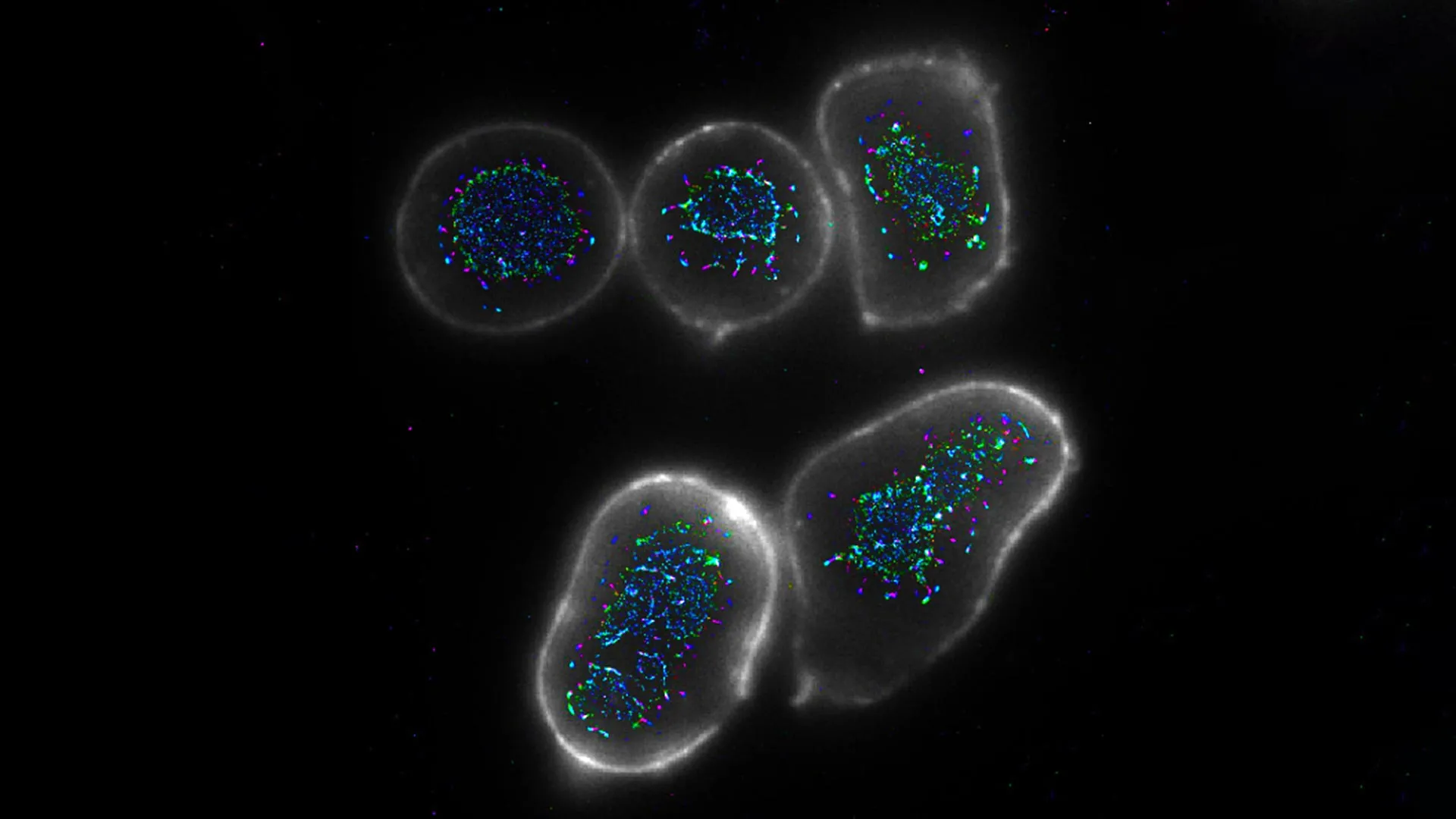
The Food and Drug Administration has approved more than 100 monoclonal antibodies to treat a range of diseases. Other antibodies are used by physicians to diagnose conditions or by scientists to advance research projects.
Even with significant expansion in the global market for antibodies used in clinical care and research, scientists recognize that there is still untapped potential for finding new antibodies. Many proteins group together in what are called protein complexes to carry out biological functions. The traditional method of generating antibodies by immunizing animals struggles to make antibodies related to these protein complexes.
The conventional method is prone to failure because protein complexes are unstable during immunization, disrupting the process by which immune system cells react and generate antibodies.
Scientists at Sanford Burnham Prebys and Eli Lilly and Company published findings March 5, 2025, in the Journal of Immunology demonstrating that fusing protein complexes together adds stability during immunization and enables antibody generation.
The study focused on two proteins that appear on the surface of immune cells, B and T lymphocyte attenuator (BTLA) and herpesvirus entry mediator (HVEM). BTLA and HVEM form a protein complex as they interact with each other to influence the intensity of an immune system response. Scientists have shown that the ratio of these freestanding proteins and their conjoined form may play a role in diseases such as lupus, but it has been challenging to measure this mixture.
The research team began developing a workaround by creating a fusion protein based on the complex formed by BTLA and HVEM. The increased stability from combining these proteins allowed the group to successfully generate monoclonal antibodies. The investigators determined which antibody was best able to specifically bind the fusion protein. They used this antibody to compare the amounts of freestanding BTLA and HVEM and their protein complex in several different immune cells.
“Our study is the first to demonstrate this direct measurement on live cells using a complex-specific monoclonal antibody,” said Carl Ware, PhD, professor in the Cancer Metabolism and Microenvironment Program at Sanford Burnham Prebys. “These findings may help with diagnosing or monitoring lupus and cancers such as lymphoma that tend to have HVEM mutations.”
“In addition, this approach to generating monoclonal antibodies with fusion proteins may unlock opportunities to study other protein complexes linked to disease and potentially lead to new treatments.”
Shane Atwell, PhD, senior director of biologics research at Neurocrine Biosciences, worked at Eli Lilly and Company during the research described in this study. He shares lead authorship with Tim Cheung, PhD, research associate professor in the Ware lab at Sanford Burnham Prebys.