
New research from SUNY Polytechnic Institute introduces an innovative, eco-friendly method to enhance the performance and longevity of titanium-based dental implants, focusing on improving the biocompatibility and mechanical resilience of Ti-6Al-4V alloy implants using hydroxyapatite (HA) coatings derived from biowaste.
The team includes President Dr. Winston Soboyejo and Postdoctoral Research Dr. Tabiri Asumadu from SUNY Polytechnic Institute, in collaboration with peers at the University of Ghana and Worcester Polytechnic Institute. Dr. Sarah Akua Osafo (University of Ghana) is the lead author of the paper, now published in Scientific Reports, and will be joining SUNY Poly as a postdoctoral researcher later this summer.
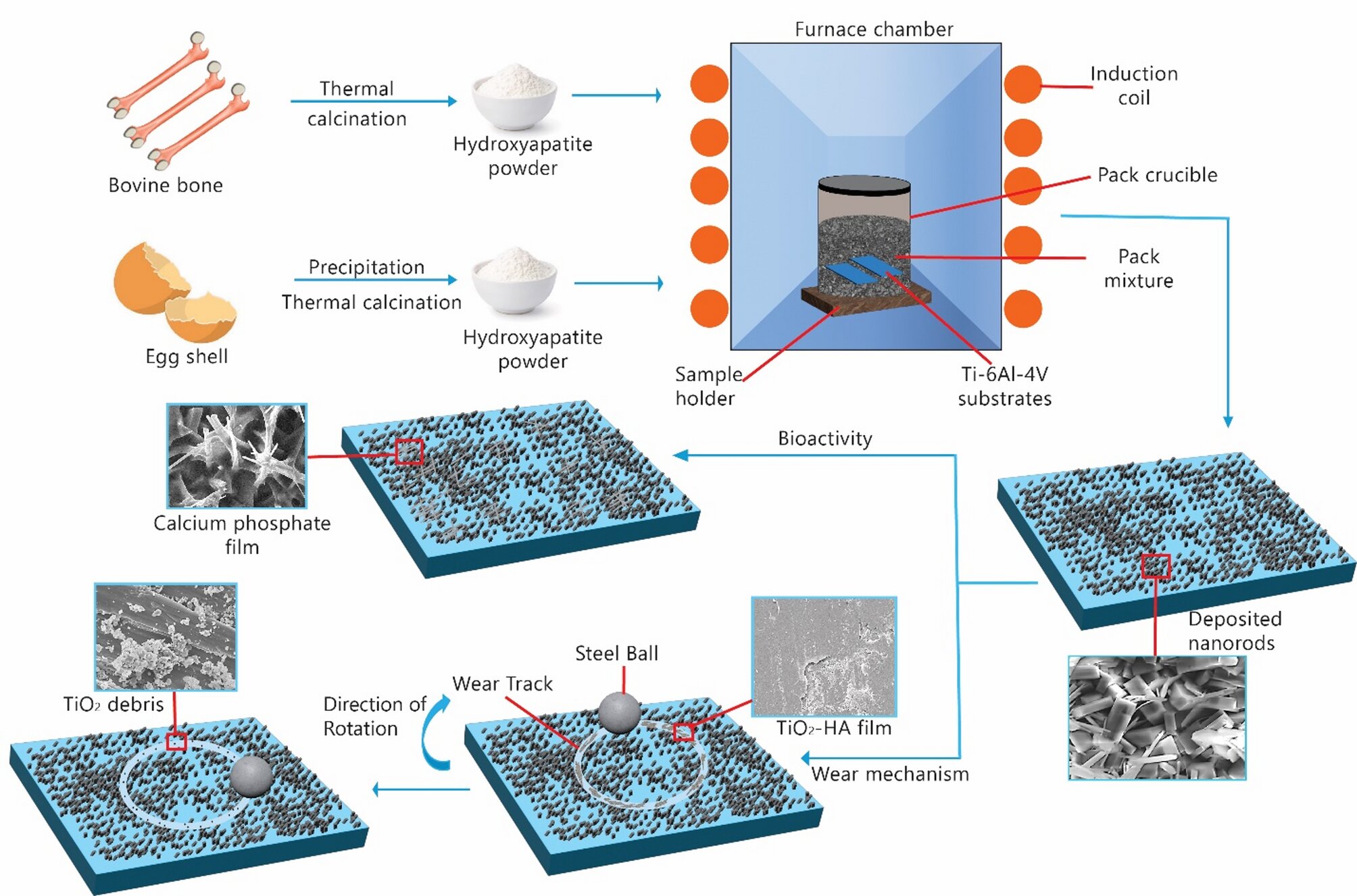
Titanium alloys are widely used in dental implants for their strength and corrosion resistance. However, these materials are bioinert and do not naturally integrate with bone tissue. To address this challenge, the researchers applied a hydroxyapatite coating, a material chemically similar to human bone, through a sustainable process known as pack cementation.
Unlike conventional methods, this approach utilizes waste materials such as bovine bones and eggshells to produce the HA coatings. This not only reduces environmental impact but also offers a scalable, cost-effective solution for improving implant performance.
Through advanced testing methods, including scanning electron microscopy (SEM), X-ray diffraction (XRD), and mechanical wear simulations, the coated implants demonstrated enhanced surface strength, improved osseointegration, and greater resistance to friction and wear under simulated body conditions.
The findings contribute valuable insights into the development of next-generation biomedical implants that are both high-performing and environmentally sustainable. By combining natural material recycling with durable coating technologies, this research supports efforts to create longer-lasting, more affordable, and more biocompatible dental solutions.
More information:
Sarah Akua Osafo et al, Tribological properties of hydroxyapatite-coated nanorods on Ti-6Al-4V surfaces, Scientific Reports (2025). DOI: 10.1038/s41598-025-03253-8
Citation:
Eco-friendly coatings boost strength and biocompatibility of titanium dental implants (2025, June 12)
retrieved 12 June 2025
from https://medicalxpress.com/news/2025-06-eco-friendly-coatings-boost-strength.html
This document is subject to copyright. Apart from any fair dealing for the purpose of private study or research, no
part may be reproduced without the written permission. The content is provided for information purposes only.