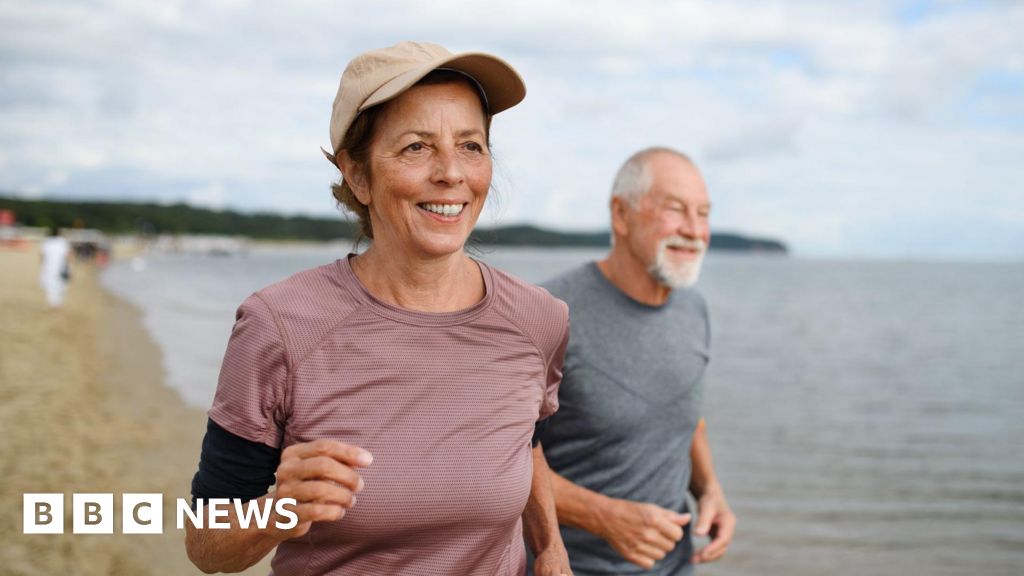
An exercise programme for colon cancer patients can cut the risk of dying by a third, a major international trial shows.
The researchers said it was “not a large amount” of exercise and any type of workout from swimming to salsa classes counted.
The results could change the way colon cancer is treated around the world.
Scientists are already investigating whether similar exercise regimes could improve survival for people with other diseases, such as breast cancer.
“It’s a bit of a mind-shift, thinking of treatment as something you do, not just something you take,” says researcher Prof Vicky Coyle from Queen’s University Belfast.
In the trial, the three-year exercise programme started soon after chemotherapy.
The aim was to get people doing at least double the amount of exercise set out in the guidelines for the general population.
That could be three-to-four sessions of brisk walking a week, lasting 45-60 minutes, Prof Coyle says.
People got weekly face-to-face coaching sessions for the first six months, which then dropped to once a month.
The trial, involving 889 patients, put half on the exercise programme. The other half were given leaflets promoting a healthy lifestyle.
The results, published in the New England Journal of Medicine, showed after five years:
- 80% of people exercising remained cancer-free
- compared with 74% in the other group
- meaning a 28% reduction in the risk of the cancer coming back, or a new one forming
Meanwhile, eight years after the initial cancer treatment:
- 10% of people on the exercise programme died
- compared with 17% in the group given only health advice
- marking a 37% lower risk of death
Exactly why exercise has this beneficial effect is unknown, but ideas include the impact on growth hormones, inflammation levels in the body and how the immune system functions – which patrols the body for cancer.
Dr Joe Henson, from the University of Leicester, said the results were “exciting”.
He added: “I saw first-hand that this reduced fatigue, lifted people’s mood and boosted their physical strength.
“We know that physical activity regulates several key biological processes that could explain these results, and further research will help us uncover why exercise is having such a positive impact.”
Colon cancer is the fourth most common cancer in the UK, with around 31,800 people diagnosed each year.
Caroline Geraghty, from Cancer Research UK, said: “This trial has the potential to transform clinical practice, but only if health services have the necessary funding and staff to make it a reality for patients.”